
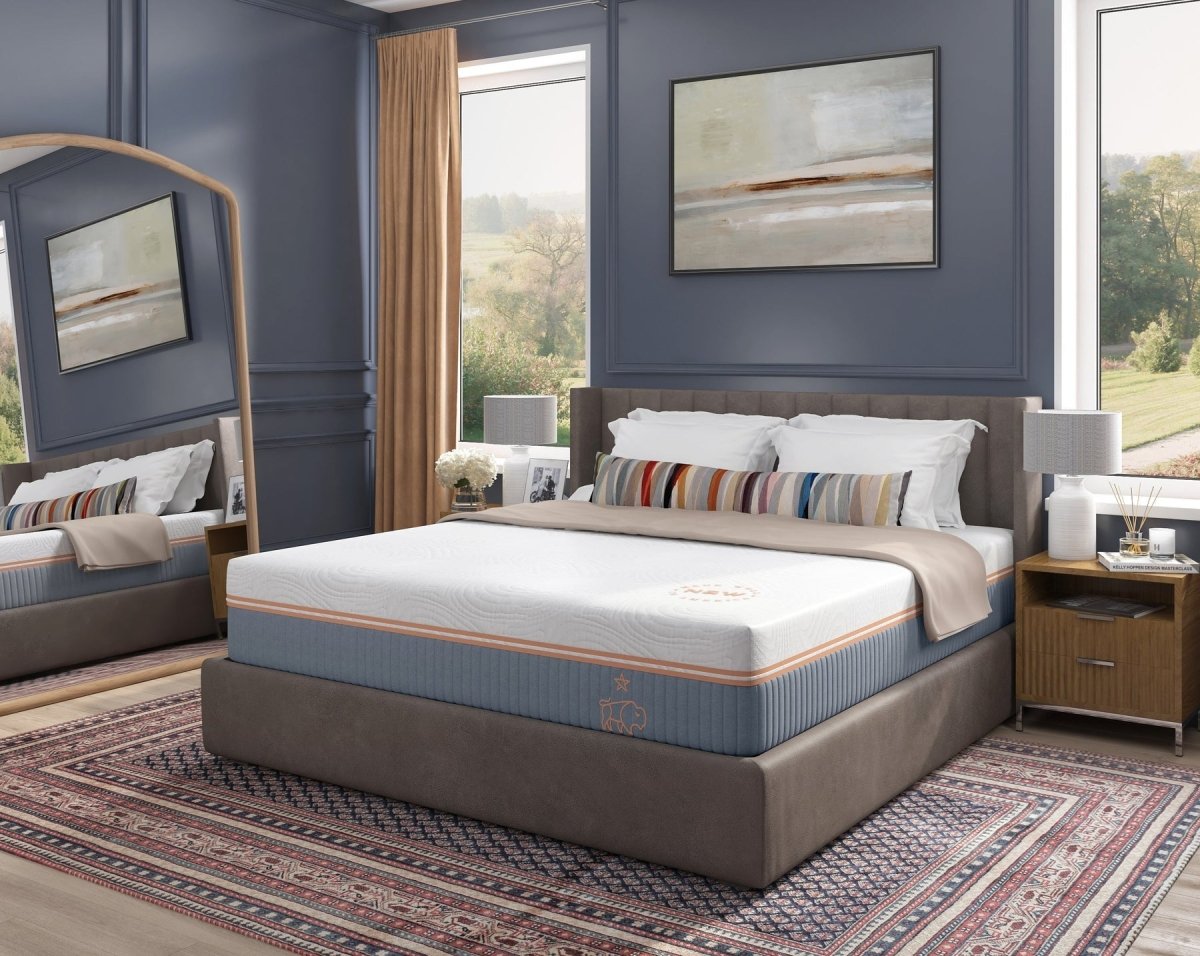
The difference comes down to one layer: the support core. A foam mattress is built entirely of foam, while a hybrid stacks foam comfort layers over a coil core — which is why hybrids feel bouncier, breathe better, and have stronger edges, while foam cradles closer and quiets motion. As the Sleep Foundation puts it, "the main difference between memory foam mattresses and hybrid models lies in the support core."
Key takeaways
- The support core is the dividing line: all-foam versus coils-plus-foam.
- Foam wins on close contouring and motion isolation; hybrids win on bounce, airflow, and edge support.
- Category alone doesn't decide performance — foam density, coil gauge and count, and firmness matter just as much as the label.
- The head-to-head sleep research is thin: mostly small, short-term, industry-sponsored studies, not randomized trials — so no category is proven universally better.
- Match to you: deep cradling and quiet nights point to foam; running hot, switching positions, or needing firm edges points to hybrid.
What's the core difference between a foam and a hybrid mattress?
The support core is the single distinction that matters most: foam mattresses use foam from top to bottom, while hybrids pair foam comfort layers over a coil-based support core. That one structural choice cascades into everything you feel — contouring, bounce, airflow, and edge strength.
Foam compresses and molds around your body, which dampens movement but can hold heat. Coils push back and leave open channels, adding responsiveness and air exchange. According to Casper, "memory foam mattresses provide deep pressure relief and outstanding motion isolation, while hybrid mattresses blend foam comfort layers with coil support for improved breathability, bounce, and edge support."
Here's the thesis most comparisons skip: the category label alone does not determine performance. A premium all-foam bed can outperform a poorly built hybrid, and vice versa. Want to feel the contrast for yourself? You can browse our foam and hybrid collection to see both builds side by side.
Foam vs. hybrid at a glance: how do they compare?
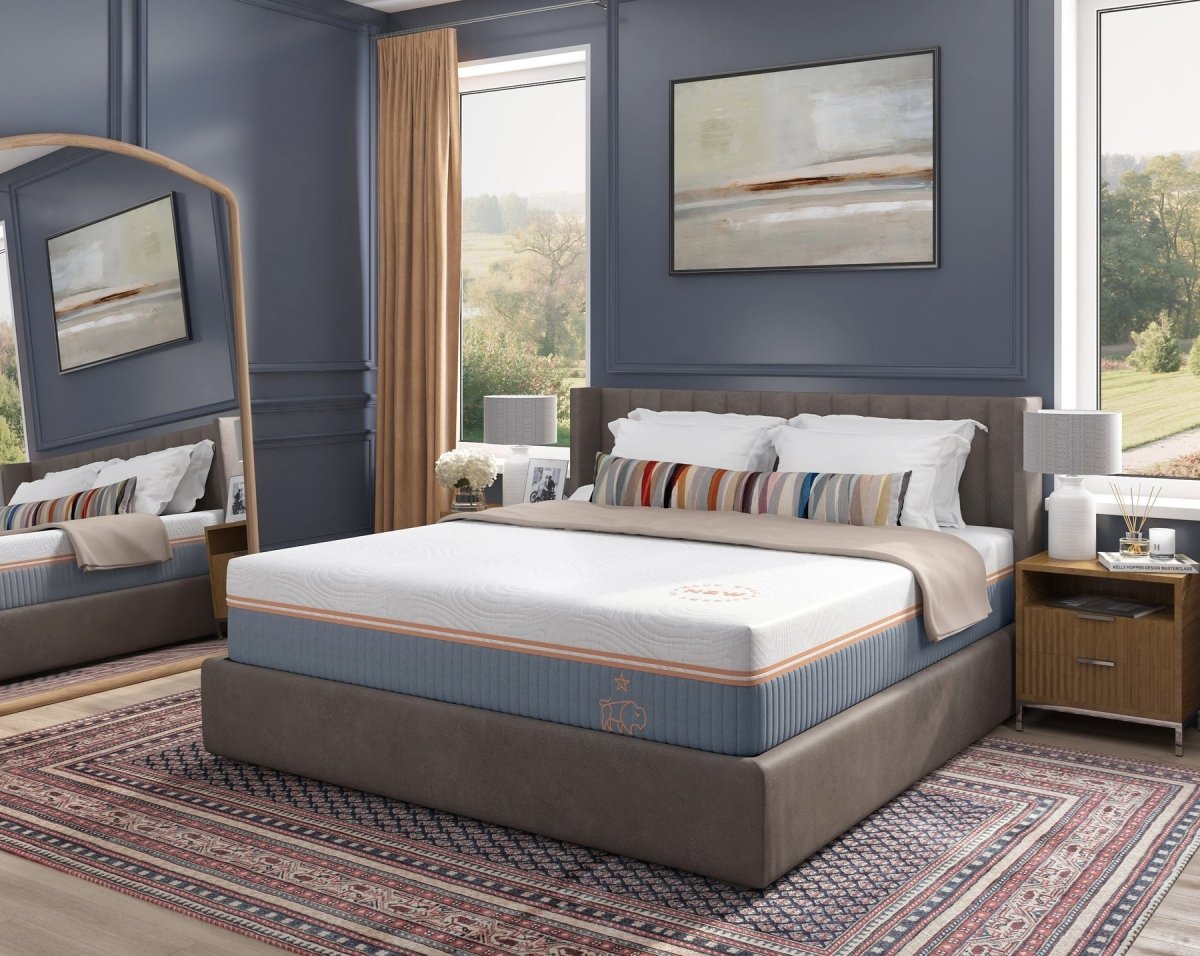
Foam leads on contouring and motion isolation; hybrids lead on bounce, airflow, and edge support — but every row below shifts with build quality, not just category.
| Attribute | Foam mattress | Hybrid mattress |
|---|---|---|
| Support core | All foam (usually high-density polyfoam) | Coil core + foam comfort layers |
| Feel / contouring | Close, cradling, slower response | Buoyant, balanced, faster lift |
| Motion isolation | Stronger — absorbs movement | Good, but coils can transfer more |
| Bounce / responsiveness | Lower — can feel "stuck" | Higher — easy to reposition |
| Edge support | Softer perimeter | Firmer, more usable edges |
| Cooling / airflow | Can trap heat unless cooling-engineered | More airflow through the coil layer |
| Weight / moveability | Lighter, easier to move | Heavier due to coils |
| Typical price tier | Often lower at a comparable quality tier | Often higher at a comparable quality tier |
| Best-fit sleeper | Side sleepers, light sleepers, couples | Hot sleepers, combination sleepers, edge-sitters |
Bottom line: use this table to narrow your shortlist, then judge the specific mattress — coil gauge, coil count, foam density, and firmness all move these results within each category, per the Sleep Foundation.
What is a foam mattress, exactly?
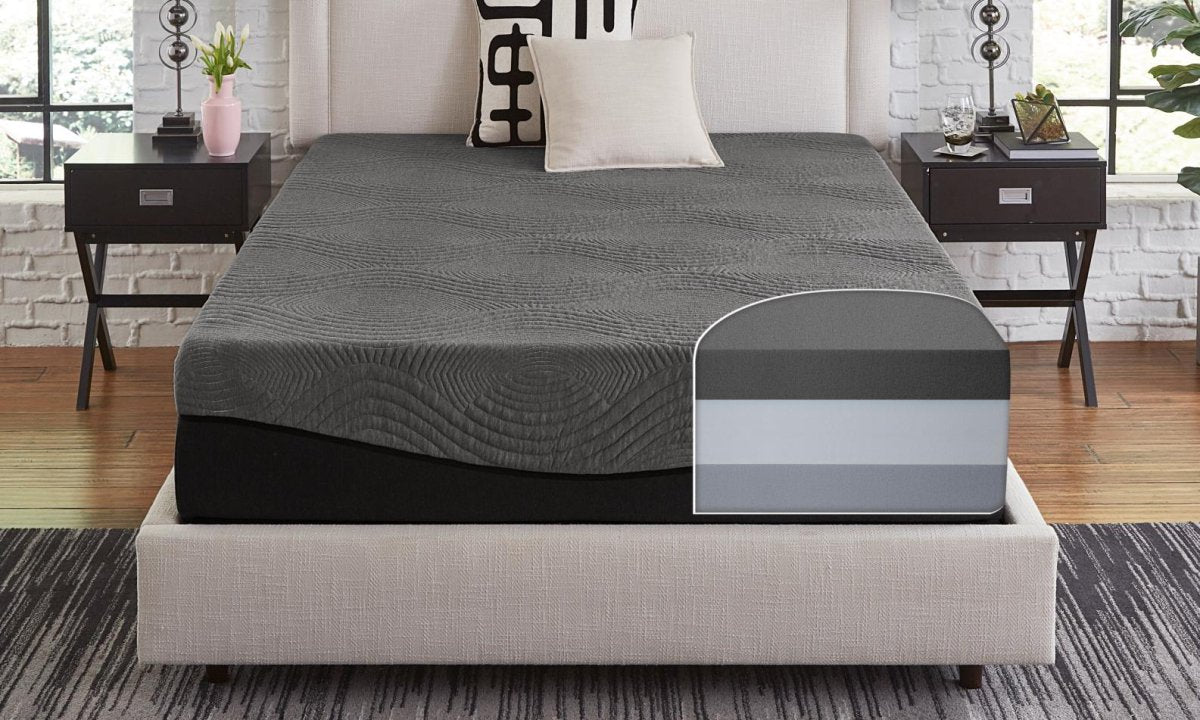
A foam mattress is built entirely of foam layers — typically a softer comfort foam over a high-density polyfoam support core, with no coils anywhere inside.
Not all foam is the same, and competitors often blur the terms. Memory foam is viscoelastic — it softens with body heat and molds slowly for a hugging feel. Polyfoam is more responsive and springs back faster. Latex foam (natural or synthetic) is the bounciest and most breathable of the three. A bed labeled simply "foam" can lean toward any of these, so the feel depends on which foams sit in the comfort layer.
Where foam shines is pressure relief and motion isolation. The Casper comparison notes memory foam delivers "deep pressure relief and outstanding motion isolation" — the cradle that cups a side sleeper's shoulder and hip, and the dampening that keeps a partner's roll from waking you.
The honest caveat: dense foam can trap warmth, because the same close contact that relieves pressure also reduces airflow around your body. Cooling-engineered foams push back on this. The Sandman 8" Cooling Foam is a concrete example: it pairs close contouring with a cooling construction aimed squarely at the side sleeper who wants the hug without the heat. If you're deciding by feel before you buy, our guide on how to test a mattress before buying walks through what to notice in the first few minutes.

What is a hybrid mattress, and how does it work?
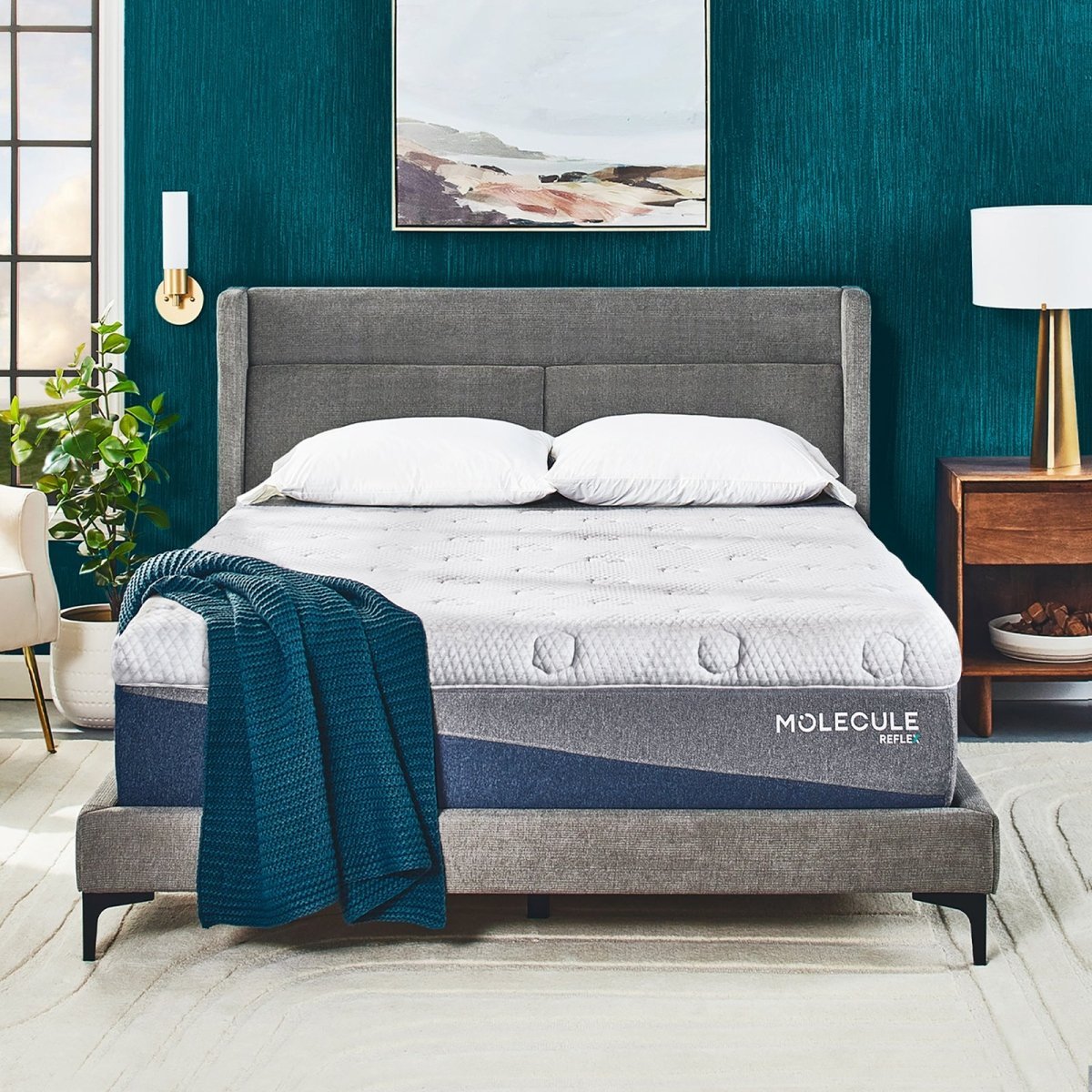
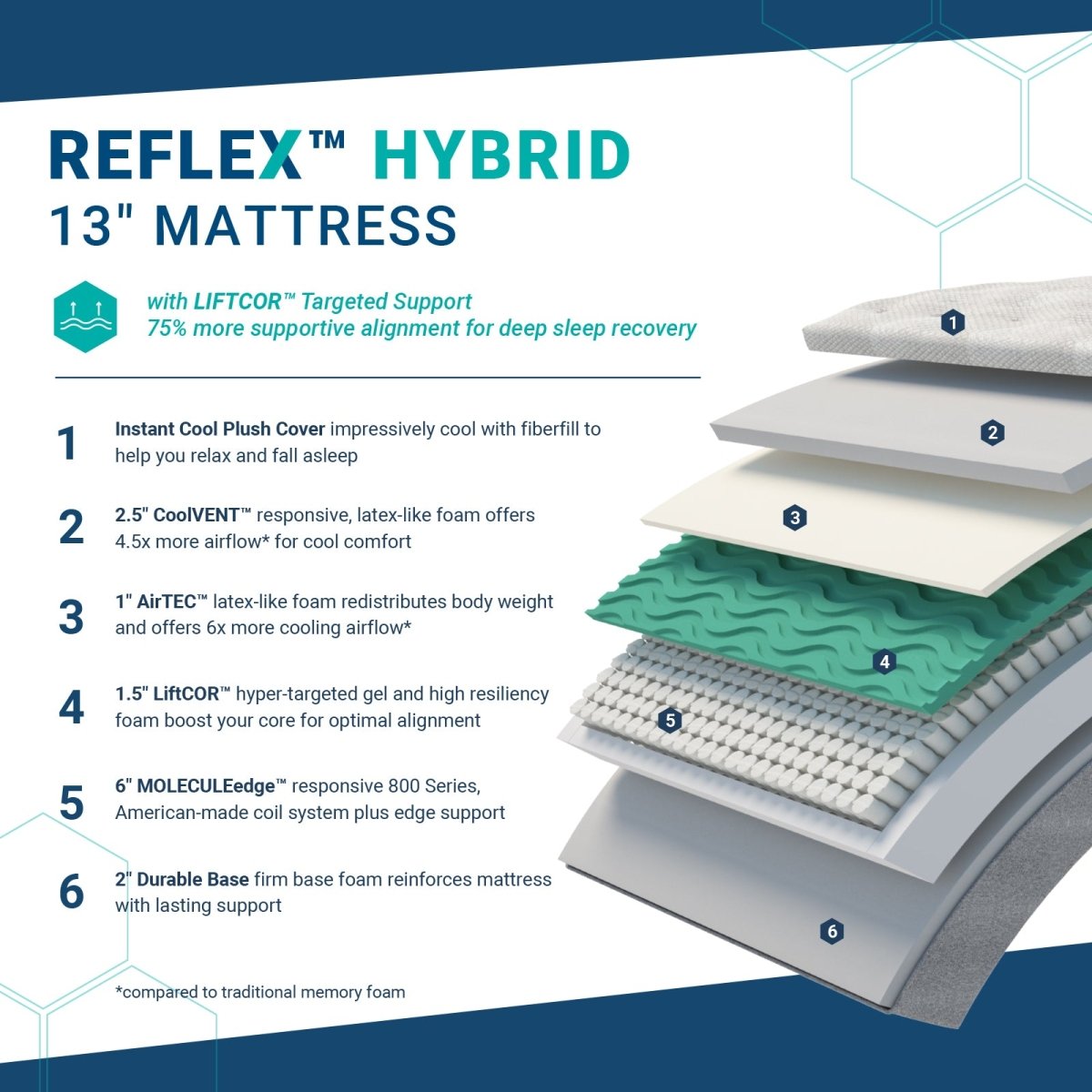
A hybrid pairs a coil-based support core with thick foam (or latex) comfort layers, blending foam's pressure relief with the bounce, airflow, and edge support of springs.
The Sleep Foundation describes hybrids as combining "the coil-based support core of innersprings with a thick comfort system similar to those found in latex or foam models." Most modern hybrids use pocketed coils — individually wrapped springs that move independently, so they contour more and transfer less motion than the old connected-coil innersprings.
That structure produces a more buoyant, breathable feel. Its standout strengths:
- Responsiveness: coils push back, making it easy to change positions or get out of bed.
- Perimeter support: firmer edges mean more usable sleep surface and easier sitting on the side.
- Airflow: the open coil layer moves air, which helps with heat dissipation.
The Moonlight Classic 12" Hybrid illustrates the type — coil support under foam comfort layers, built for sleepers who want contouring without sinking into a deep cradle. If a buoyant, cooler-sleeping feel sounds right, our top mattress-buying essentials can help you compare coil count and comfort-layer depth across models.
Why do foam and hybrid mattresses feel so different?
Foam compresses and contours around your body, cradling and damping movement; coils deflect and spring back, leaving open space that creates bounce and airflow. The feel difference is physics, not marketing.
Picture a 150-lb side sleeper lying down. In a foam bed, the foam cells under the shoulder and hip deform and stay deformed for a beat — that slow recovery is what creates the molded, "sinking-in" cradle and what absorbs a partner's movement before it travels across the bed. The trade-off is that compressed foam wraps your body closely, so less air circulates and warmth can build.
In a hybrid, those same pressure points push coils down, but each coil pushes back independently and recovers fast. You get lift and rebound instead of a long, slow hug — and the gaps between coils act as channels for air to move. That's the mechanism behind the common (but not universal) "hybrids sleep cooler" observation.
The Sleep Foundation synthesizes it cleanly: polyfoam cores usually perform better on motion isolation and noise control, while coil systems tend to earn higher marks for bounce, breathability, and edge support. Same cause every time — how each material responds to load.
Foam vs hybrid by what you care about: pressure relief, cooling, motion, durability, and price: which is better?
Foam leads on contouring and motion isolation; hybrids lead on cooling, edge support, and bounce — but durability and price hinge on materials, not category. Here's how the two stack up on the things buyers actually ask about.
Pressure relief and back pain
Foam's close contouring fills the gaps at your waist and shoulders, which can ease pressure points for side sleepers in particular. Hybrids relieve pressure too, but pair it with firmer pushback that some back and stomach sleepers prefer for spinal support. Pain relief is a health outcome, so treat any claim cautiously — and match firmness to your weight and position, not just the category. Our guide to adjustable mattresses and sleep concerns covers how positioning factors in.
Motion isolation for couples
Foam is generally the stronger choice for couples and light sleepers because it absorbs movement rather than transmitting it. Pocketed-coil hybrids have narrowed the gap, but a connected-coil bed will still pass more motion across the surface.
Cooling and hot sleepers
Hybrids tend to breathe better thanks to the airflow through the coil layer, which is why hot sleepers often gravitate toward them. That said, "hybrids sleep cooler" is a tendency, not a law — a cooling-engineered foam can outsleep a dense hybrid. Side sleeper who runs warm? The close-contouring Sandman 8" Cooling Foam is built for exactly that combination, while combination or hot sleepers often prefer the coil airflow of a hybrid like the Moonlight Classic 12" Hybrid. Not sure where you land? Find your firmness and feel before you commit, and ask our team about 0% APR financing from $29/month.
Edge support
Hybrids usually win here. The coil perimeter keeps the edge firm, which matters if you sit on the side to dress or sleep close to the edge of a shared bed. Foam edges tend to compress more under concentrated weight.
Durability — it depends on build quality
No honest answer says one category simply "lasts longer." Durability tracks materials: foam density, coil gauge and count, and cover construction. A high-density foam can outlast a low-gauge hybrid, and a well-built hybrid can outlast a budget foam. Judge the spec sheet, not the label.
Weight and moveability
Foam mattresses are usually lighter and easier to move or rotate; hybrids are heavier because coils add mass. If you move often or rotate your mattress yourself, that's worth weighing.
Price tier
Many consumer guides note foam models often cost less than hybrids at a comparable quality tier, since coil systems add materials and assembly. But price is set by quality, not category — a luxury foam bed can cost more than an entry hybrid.
Off-gassing and odor
New-mattress smell is common to both and is not the same as a health risk. Independent testing helps put it in perspective: NapLab reports an average odor duration of about 3.08 days for memory foam and 3.31 days for hybrid — close enough that off-gassing shouldn't decide your category. Airing out a new bed for a day or two handles most of it. Certifications like CertiPUR-US and OEKO-TEX speak to material content; check for them if low-emission foams matter to you.
Which mattress is right for you — and who might NOT like each type?
Choose foam if you want deep cradling and quiet motion isolation; choose hybrid if you run hot, switch positions, or need strong edges — but each type has clear exceptions worth knowing before you buy.
Pick foam if you are…
- A side sleeper wanting shoulder and hip pressure relief.
- Part of a couple or a light sleeper sensitive to movement.
- Someone who likes a close, cradling feel and a quiet bed.
- Moving or rotating the mattress yourself (lighter to handle).
Skip foam if you run very hot, switch positions all night, or dislike the "stuck-in-the-bed" sensation. Combination sleepers especially can find deep contouring hard to move on.
Pick hybrid if you are…
- A hot sleeper who wants more airflow.
- A combination sleeper who changes positions often.
- Someone who needs firm edges for sitting or full-surface sleeping.
- A heavier sleeper wanting responsive coil support (matched to coil gauge and firmness).
Skip hybrid if you're a light sleeper or in a motion-sensitive couple wanting maximum isolation, you want the deepest possible hug, or you need the lightest bed to move. Per Medical News Today, both types suit different bodies and positions — so the right pick is the one matched to you, not the trendier label.
If your priorities point toward coil support and cooler airflow, a build like the Moonlight Classic 12" Hybrid is a natural place to start; if close, quiet contouring wins, look at the Sandman 8" Cooling Foam.
What does the sleep research actually say about foam vs. hybrid?
Honestly, not much. The evidence is thin — mostly small, short-term, industry-sponsored pre-post cohorts, not randomized head-to-head trials — so no category is proven universally better for sleep or pain.
Here's the most surprising finding for shoppers: in these studies, how good people feel a mattress is often outpaces what trackers objectively measure. That gap matters when you read marketing claims.
In a 10-week in-home pre-post study of 25 participants, sleeping on a memory foam mattress was associated with objective improvements — wake after sleep onset dropped by about 7 minutes per night, with fewer awakenings and better sleep efficiency (Sleep, Danoff-Burg et al., 2023).
On the hybrid side, a 10-week pre-post study of 33 participants found objective sleep onset about 5 minutes faster (-18%), sleep duration up 4%, and self-reported coolness up sharply (Sleep, Danoff-Burg et al., 2026). But several related cohorts show the pattern of perception running ahead of measurement: in a study of 36 participants across 1,420 nights, objective sleep did not significantly improve, yet self-reported comfort, coolness, support, and pressure relief all rose with p<.001 (Sleep, Danoff-Burg et al., 2025).
What to take from this:
- Both foam and hybrid can improve perceived sleep — neither is proven superior overall.
- Sample sizes are tiny (n = 25–36) and there are no control groups, so causation can't be inferred.
- Most studies are industry-sponsored and short-term, which limits how far the results generalize.
The practical lesson: trust your own body over a study headline. This article is educational and not medical advice; consult a healthcare professional about pain or sleep conditions.
Can you feel both foam and hybrid in person near Huntsville?
Yes — the surest way to settle the foam-vs-hybrid question is to lie on both builds for a few minutes each, side by side, with someone who can match the firmness to your body and sleep position.
If you're in Huntsville, Madison, Athens, Decatur, or anywhere across North Alabama, you can schedule a personalized in-store appointment and compare the close-contouring Sandman 8" Cooling Foam against a coil-cooled hybrid with expert guidance — no pressure, just help finding your match.
A few brand facts that answer the usual hesitations: every mattress ships with free shipping, 0% APR financing from $29/month is available (ask our team to confirm current terms), and our buy-one-donate-one mission means every mattress you buy helps us donate one to a local family in need. Prefer to shop from home? You can browse our hybrid and foam builds online and have quality delivered to your door.
Foam vs hybrid mattress FAQs: which is better?
Is a hybrid mattress better than foam for back pain?
Neither is universally better for back pain — it depends on your firmness, weight, and sleep position. Foam's close contouring eases pressure points for many side sleepers, while a hybrid's firmer coil pushback suits some back and stomach sleepers. Match the support to your body, and consult a clinician for persistent pain.
Which mattress sleeps cooler, foam or hybrid?
Hybrids tend to sleep cooler because the coil layer allows more airflow, per the Sleep Foundation. But it's a tendency, not a guarantee — a cooling-engineered foam can outperform a dense hybrid. If heat is your main concern, prioritize the specific cooling construction over the category label.
Which mattress is better for couples and motion isolation?
Foam is generally better for couples and light sleepers because it absorbs movement instead of transmitting it across the bed. Pocketed-coil hybrids have closed much of the gap, but a connected-coil design will still pass along more motion when a partner shifts or gets up.
Which mattress is more durable over time?
Durability depends on materials, not category. Foam density, coil gauge and count, and cover quality determine lifespan far more than whether a bed is foam or hybrid. A high-density foam can outlast a low-gauge hybrid, and a well-built hybrid can outlast a budget foam — so read the spec sheet.
Are foam mattresses always cheaper than hybrids?
Not always. Many consumer guides note foam models often cost less than hybrids at a comparable quality tier because coils add materials. But price is set by quality, not category — a premium foam bed can easily cost more than an entry-level hybrid.
Do foam or hybrid mattresses off-gas more?
They're close. NapLab testing found an average odor duration of about 3.08 days for memory foam and 3.31 days for hybrid — not enough difference to decide your category. New-mattress smell isn't the same as a health risk; airing the bed out for a day or two resolves most of it. Look for CertiPUR-US or OEKO-TEX certifications if low-emission foams matter to you.


Leave a comment
All comments are moderated before being published.
This site is protected by hCaptcha and the hCaptcha Privacy Policy and Terms of Service apply.