

Most adults sleep best with a bedroom around 60–67°F (15.6–19.4°C) — and a 2019 review in Temperature Dependence of Sleep puts the room optimum near 19–21°C. But here's what trips up hot sleepers: the thermostat sets the room, while the pocket under your covers sets the temperature your body actually feels. Cool that microclimate and a "perfect" thermostat setting finally pays off.
Key takeaways
- 60–67°F (15.6–19.4°C) is the consensus adult range, but no single number is proven optimal for everyone.
- Your skin microclimate target is 31–35°C — and bedding controls it more than your thermostat does.
- Babies and toddlers do best slightly warmer (65–70°F); older adults may prefer 68–77°F.
- You can lower your effective sleep temperature without touching the HVAC — breathable sheets, lighter bedding, airflow, and cooling your feet all help.
- A draughty or cold room can harm sleep too; keep winter indoor temperatures above about 50°F.
What is the best bedroom temperature for sleep?
Most adults sleep best with a bedroom around 60–67°F (15.6–19.4°C). There is no single universal number — it shifts with age, bedding, humidity, and personal comfort.
Clinician-reviewed sources cluster tightly here. GoodRx states plainly: "Most people sleep best when their bedroom temperature is between 60°F and 67°F [16°C to 19°C]." The Cleveland Clinic lands in the same window for adults, and The Sleep Charity recommends 16–18°C (60–65°F), noting that hot, cold, or draughty rooms can all seriously affect sleep — including REM.
The academic literature points the same direction. The 2019 review Temperature Dependence of Sleep summarizes an optimal room temperature of roughly 19–21°C. The honest caveat — the one most articles skip — is that the evidence is heterogeneous and built largely on small or non-randomized studies. Cooler beats warmer; "exactly 65°F" is not proven.
Bottom line: Start in the 60–67°F band, then adjust to your own comfort rather than chasing a magic number.

Why do cooler rooms help you sleep better?
Your core body temperature must drop to fall and stay asleep. A cooler room helps your body release that heat through the skin, while warmth fragments sleep and shortens REM.
The mechanism is straightforward. As you wind down, your body sheds heat from the surface to lower its internal temperature — a signal that helps initiate and maintain sleep. The Temperature Dependence of Sleep review describes sleep as linked to maintaining a skin microclimate between 31 and 35°C; drift outside that pocket and sleep suffers.
"We show that higher outdoor or indoor temperatures are generally associated with degraded sleep quality and quantity worldwide." — A systematic review of ambient heat and sleep in a warming climate
A randomized crossover experiment in Building and Environment (Zhang et al., 2016) compared sleeping at 17°C versus 22°C while testing different bedding and sleepwear, and found thermal conditions and fabric choices shaped sleep initiation and perceived comfort — with cooler conditions generally more favorable in the tested range.
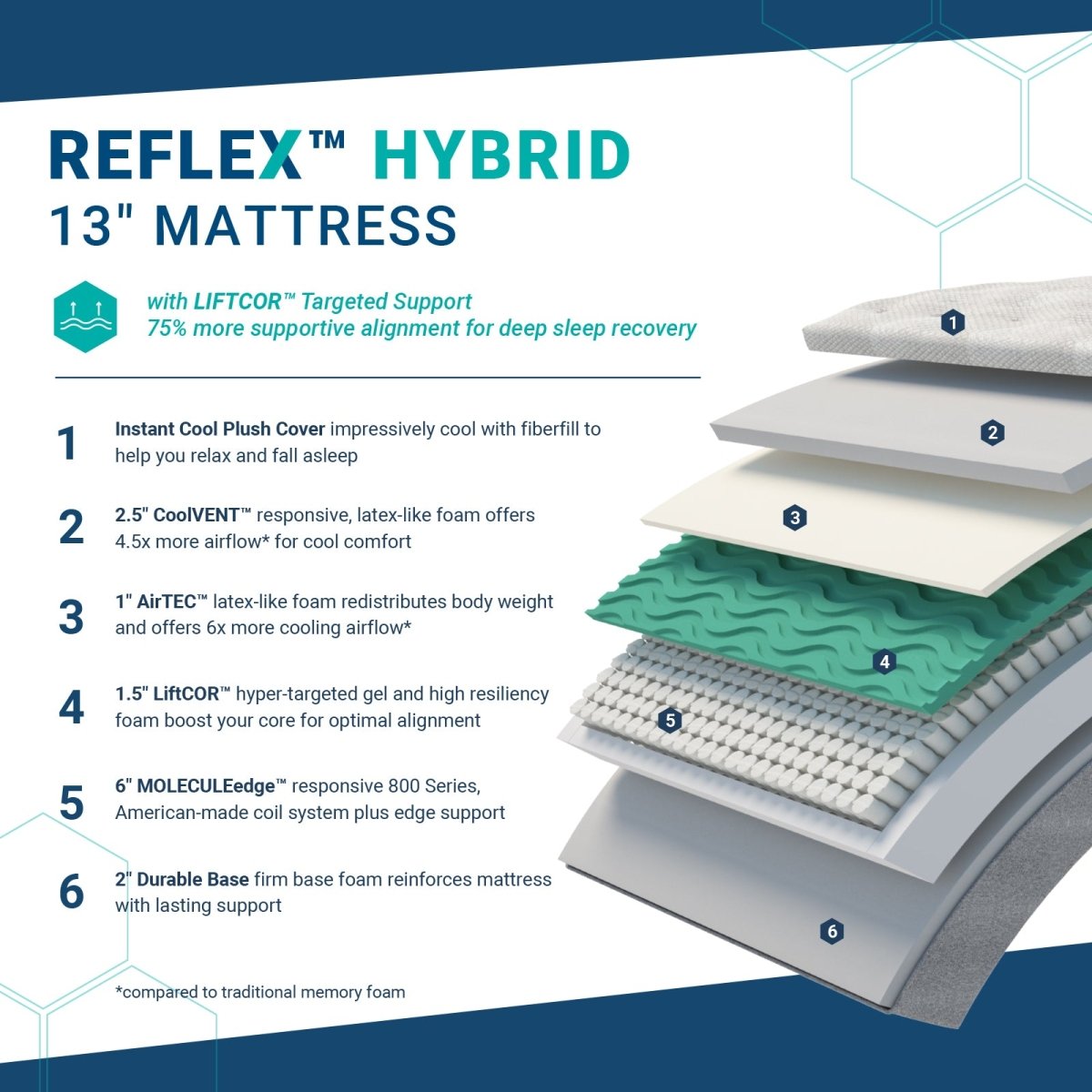
This is exactly why a hot sleeper tosses even when the thermostat reads "correct." Heat-retaining materials trap warmth against the skin and work against that natural temperature drop. If you sleep hot on a dense memory-foam bed, a breathable hybrid built for hot sleepers lets heat escape through its coil layer instead of holding it against your body — addressing the cause, not just the symptom.
Is the room temperature or the temperature under your covers what matters most?
The microclimate under your covers matters more than the thermostat. Your skin sits near 31–35°C in that pocket, and bedding controls it more than the room does.
Think of two layers of temperature. The thermostat sets the room; your mattress, duvet weight, sheets, and sleepwear set the effective temperature against your skin. You can run a 65°F room and still overheat under a heavy duvet on a heat-trapping mattress — or sleep comfortably warmer with breathable layers.
The strongest evidence here is a 2024 systematic review in the Journal of Sleep Research that examined 9 articles comparing sleepwear and bedding fiber types. It found material-specific benefits — wool sleepwear, linen bedsheets, and goose-down duvets each helped under specific thermal conditions — but no single material won universally. The Zhang 2016 crossover reinforced the point: fabric choice measurably shifted comfort at the same room temperature.
The practical reframe: you don't just cool the room — you cool the bed. That's why the choice between foam, hybrid, and latex builds matters as much as your HVAC. Dense foam stores body heat; coil-based hybrids and latex let air move, so heat has somewhere to go.

What is the recommended sleep temperature for each age group?
Adults: 60–67°F. Babies and toddlers: a slightly warmer 65–70°F. Older adults: possibly 68–77°F. Each range reflects a different source and a different level of confidence.
| Group | Recommended range (°F / °C) | Source | Notes / confidence |
|---|---|---|---|
| Adults | 60–67°F (15.6–19.4°C) | GoodRx; Cleveland Clinic; The Sleep Charity | Strong consumer-health consensus; cooler favored |
| Babies & toddlers | 65–70°F (18.3–21.1°C) | Cleveland Clinic | Slightly warmer than adults; clinician guidance |
| Older adults | 68–77°F (20–25°C) | Healthline, citing a 2023 study | Warmer; based on a single cited study |
| "With proper bedding" | 55–73°F (12.8–22.8°C) | Windham Hospital | Lower confidence — no primary source on the page |
Read the table as ranges drawn from different evidence grades, not a single ruling. The adult band rests on broad consumer-health agreement; the older-adult figure comes from one study summarized by Healthline; and the wide "with proper bedding" range from Windham Hospital is best treated as directional, since it names no primary study.
Do babies, kids, and older adults need a different sleep temperature?
Yes. Babies and toddlers do best slightly warmer at 65–70°F, while older adults may prefer 68–77°F — and heat hits seniors' sleep especially hard.
For families, the Cleveland Clinic recommends a nursery a touch warmer than an adult room, around 65–70°F. The reasoning is comfort and safe sleep, not a different physiology.
For older adults, the field evidence is striking. A longitudinal study of community-dwelling older adults reported that warmth eroded sleep even within "recommended" ranges:
"Our findings demonstrated that sleep was most efficient and restful when nighttime ambient temperature ranged between 20–25°C." — Nighttime Ambient Temperature and Sleep in Community-Dwelling Older Adults (Environment International, 2023)
A controlled experiment makes the cost of heat concrete. Comparing 30°C against 27°C in elderly subjects, total sleep time fell 26.3 minutes, sleep efficiency dropped 5.5%, and REM sleep shrank by 5.3 minutes:
"The results showed that at the temperature of 30°C, the total sleep time, sleep efficiency, and duration of REM sleep of the elderly decreased by 26.3 min, 5.5%, and 5.3 min, respectively, in comparison with 27°C, indicating that the sleep quality of the elderly is very vulnerable to heat exposure."
The same researchers stressed that "good ventilation and the avoidance of raised temperatures in the bedroom are thus both important for the sleep quality of the elderly." The takeaway across all ages: personalized adjustment beats one-size-fits-all guidance.
How can you cool your bedroom for sleep without changing the AC?
You can lower your effective sleep temperature without touching the HVAC: switch to breathable sheets and lighter bedding, boost airflow, cool your feet, and manage humidity. For North Alabama households facing long, humid summers, these are the affordable fixes that work without re-engineering central air.
- Lower the thermostat gradually. UCLA Health suggests dropping the temperature 2 to 3 degrees at a time to find your personal comfort zone rather than overshooting.
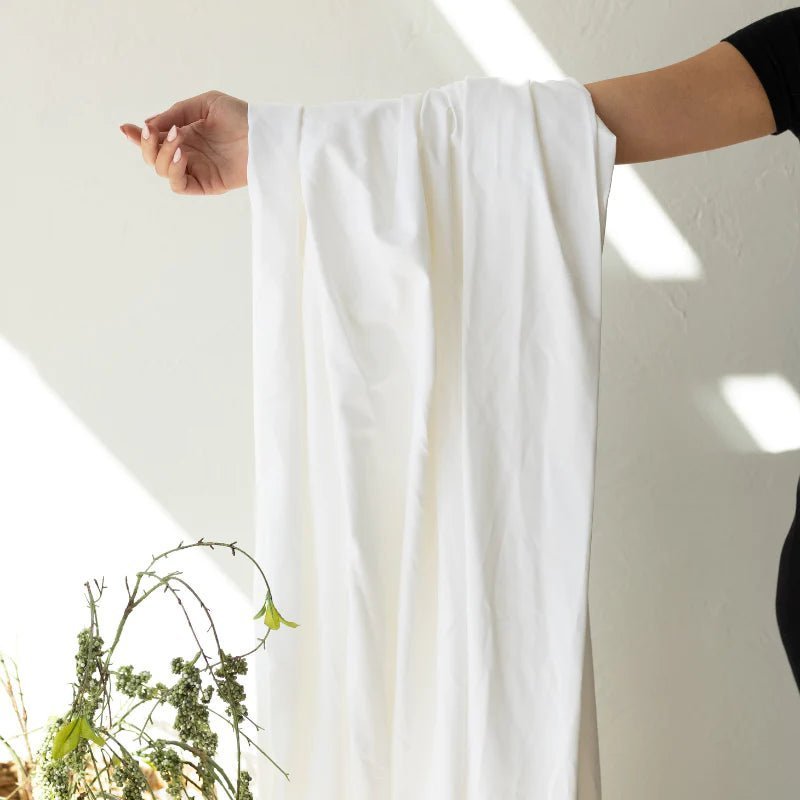
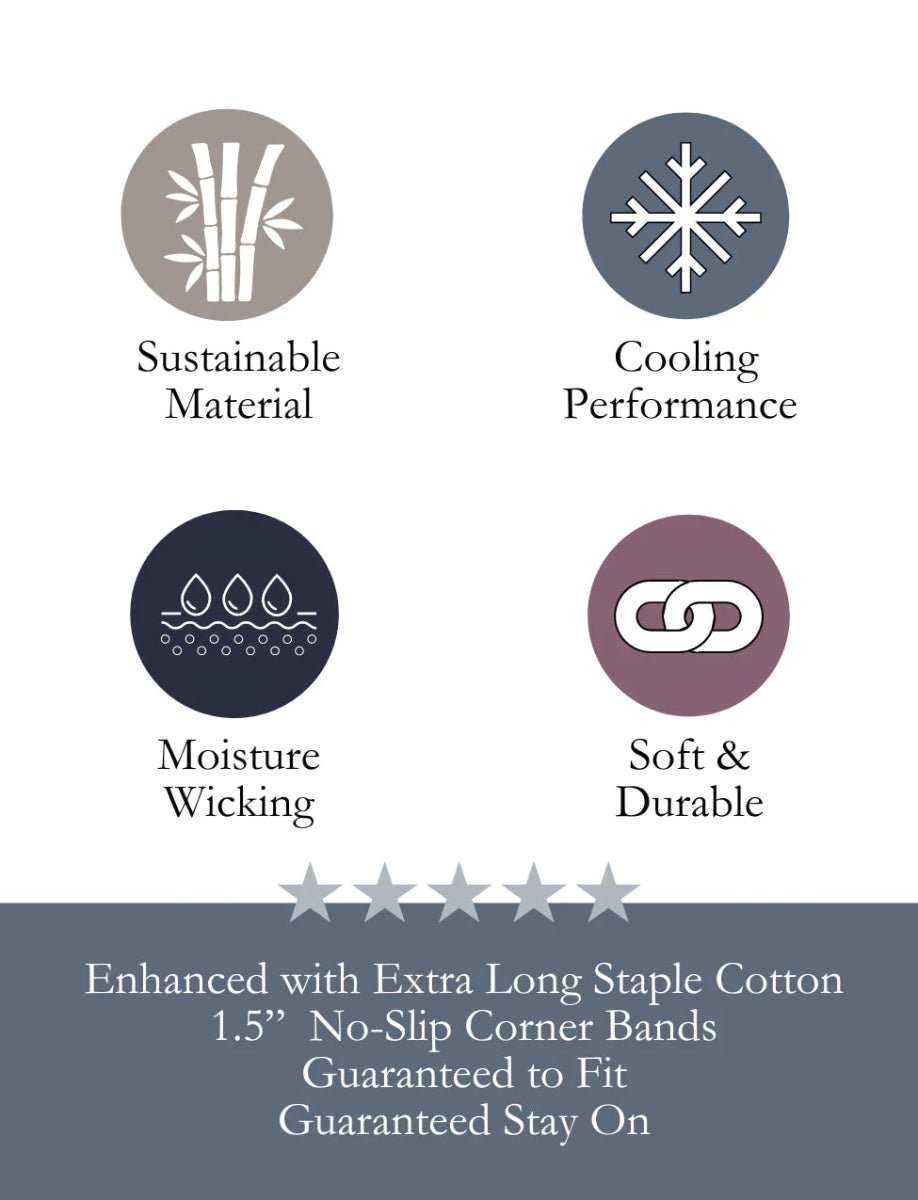
- Switch to breathable, moisture-wicking sheets and a lighter duvet. The Sleep Charity lists lighter bedding among its core cooling strategies — a swap you can make tonight.
- Choose natural-fiber sleepwear. Cotton nightwear breathes and wicks; the 2024 Journal of Sleep Research review confirms fabric choice shifts skin temperature and comfort.
- Add airflow. A fan or cross-ventilation moves heat away from the body; GoodRx recommends fans or open windows when the thermostat can't drop.
- Cool your feet. The Sleep Charity notes that cooling the feet helps the body offload heat — a quick, no-cost trick.
- Manage humidity. Windham Hospital suggests keeping under-bedding humidity in the 40–60% range for comfort. Treat this as comfort guidance rather than proven cause-and-effect, since the page cites no primary study.
If your sheets sleep hot, that's the cheapest lever to pull first. Our moisture-wicking cooling sheets and breathable Chill mattress protectors manage the under-cover microclimate without a costlier HVAC project. Every order ships free, and if you're upgrading the mattress itself, you can ask about 0% APR financing from $29/month to spread the cost.
When is a bedroom too cold for healthy sleep?
A room that's draughty or far below the recommended band can disrupt sleep, particularly REM. In winter, keep indoor temperatures above roughly 50°F.
Cooler is better only up to a point. The Sleep Charity is explicit that hot, cold, or draughty rooms can all seriously affect sleep, including REM. Windham Hospital recommends keeping indoor temperatures above 50°F during winter and pairing the room with the right bedding.
Skip the "cooler is always better" advice if you:
- Live in a cold or poorly insulated home where the room already runs chilly.
- Tend to run cold or wake up shivering.
- Don't have bedding warm enough to keep you comfortable at a low setting.
For those readers, the fix isn't a colder room — it's warm, breathable bedding that traps just enough heat without making you sweat.
How do you choose a mattress and bedding for temperature control?
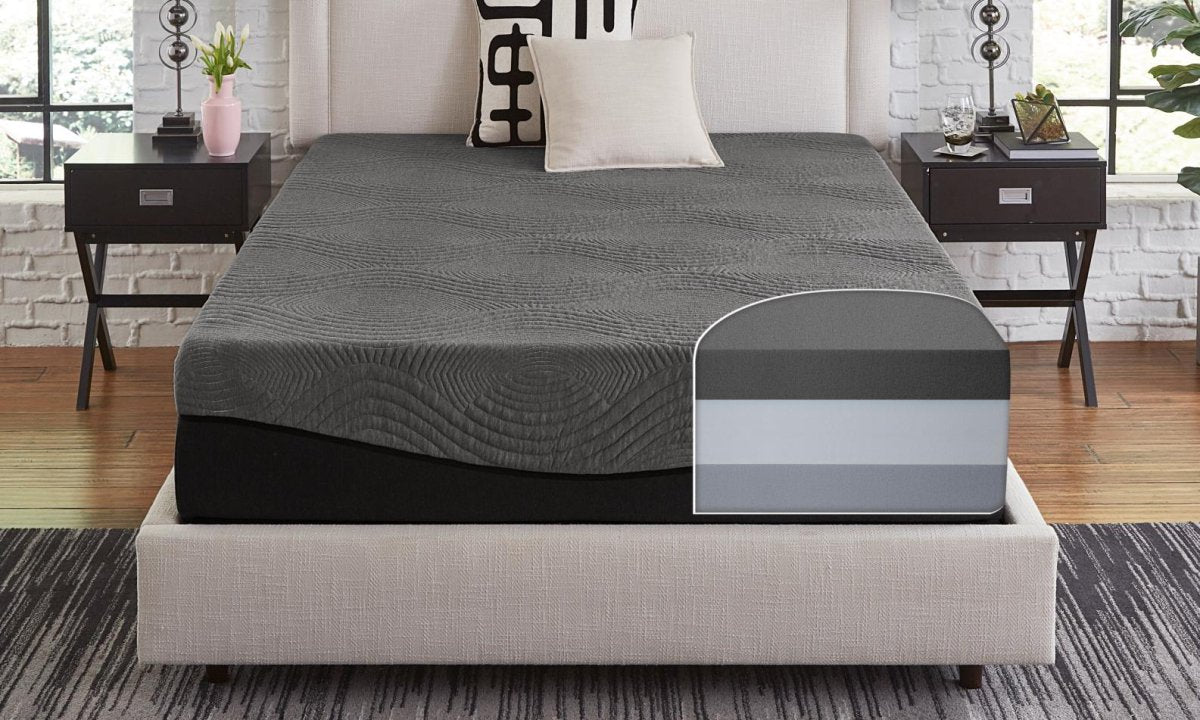
Favor breathable hybrid and latex builds that let heat escape over dense, heat-retaining memory foam, then layer moisture-wicking sheets and breathable protectors to manage the microclimate under your covers.
The research keeps pointing back to two levers you actually control: the surface you sleep on and the layers on top of it. Here's how the categories compare for temperature:
- Hybrid and latex mattresses use coils or naturally aerated latex, so air moves and body heat has an exit — the better default for hot sleepers and humid climates.
- Dense memory foam contours closely but stores heat, which can work against the body-cooling drop that initiates sleep. Better suited to people who run cold or prioritize deep pressure relief over airflow.
- Cooling toppers, breathable protectors, and moisture-wicking sheets fine-tune the microclimate on any mattress — the lowest-cost place to start.
One honest caveat on bedding claims: pilot studies on cooling bedding — including a 2025 Frontiers in Sleep pre-post pilot and a 2025 Sleep conference abstract — report improved perceived sleep, but both are preliminary, non-randomized, or unpublished in full. Treat manufacturer "cooling" marketing as a claim to verify, not settled evidence. The reliable principle is the one the peer-reviewed literature supports: breathable materials help heat escape.
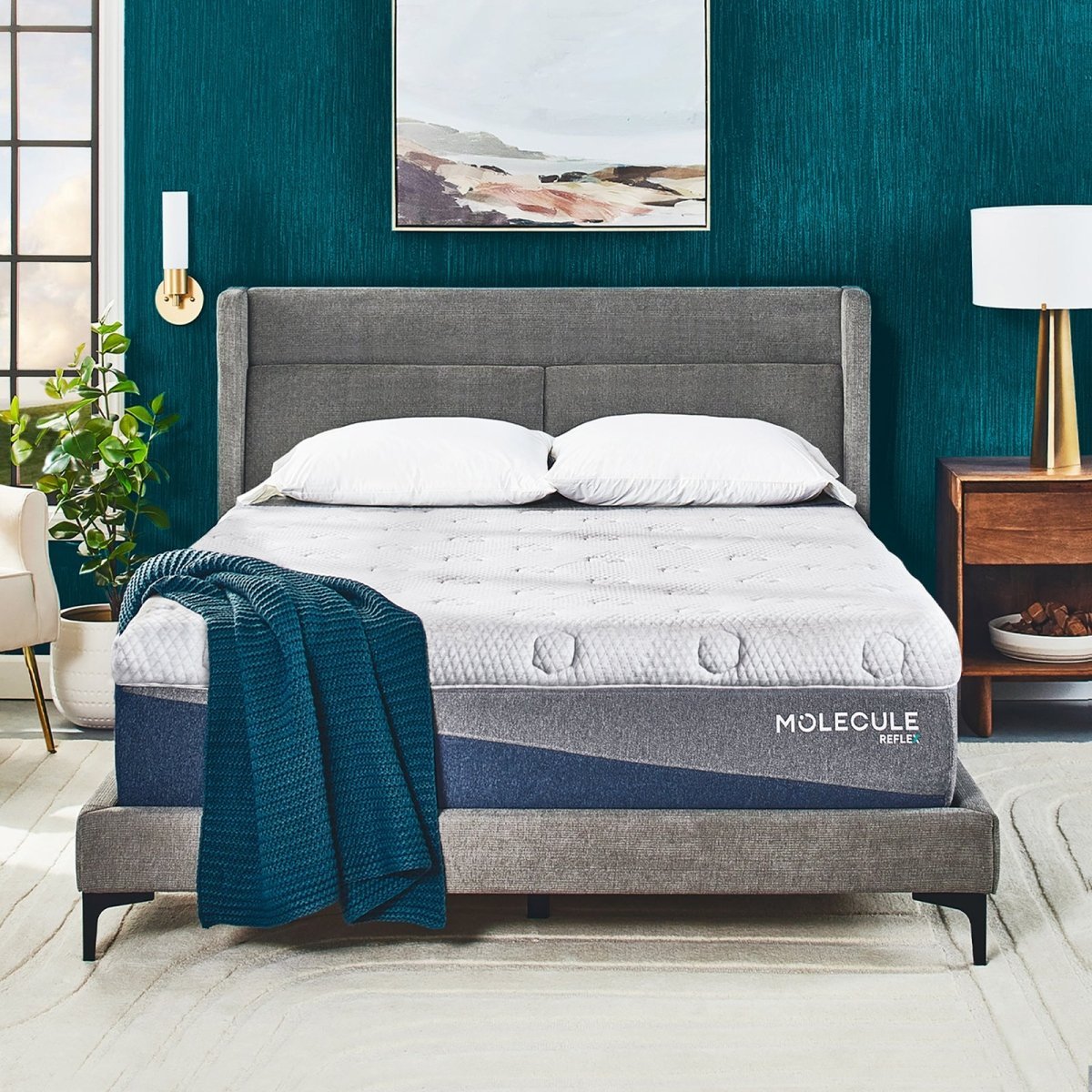
If you sleep hot, a cooling hybrid built to let heat move addresses the exact problem the research describes. Huntsville, Madison, Athens, and Decatur readers can schedule a personalized in-store appointment to feel breathable builds side by side before deciding — every mattress ships free, and for every one you buy, we donate one to a local family in need.
Frequently asked questions about bedroom temperature and sleep
What is the best bedroom temperature for sleep for most adults?
Most adults sleep best between 60°F and 67°F (16–19°C), according to GoodRx and the Cleveland Clinic, while the Temperature Dependence of Sleep review puts the room optimum near 19–21°C. There's no single universal number — start in that band and adjust to your own comfort.
Is the ideal temperature different from the temperature under my covers?
Yes. The thermostat sets the room, but your mattress, duvet, sheets, and sleepwear set the temperature against your skin — which sits near 31–35°C. A 2024 Journal of Sleep Research review found bedding materials measurably shift that microclimate, so the bed often matters more than the room.
What bedroom temperature is best for babies and toddlers?
The Cleveland Clinic recommends a slightly warmer room of 65–70°F for babies and toddlers. The goal is steady comfort without overheating. Use light, breathable layers rather than heavy bedding, and check that the child feels warm but not sweaty.
Do older adults need a warmer room to sleep well?
Often, yes. Healthline cites a 2023 study suggesting 68–77°F for older adults, and an Environment International field study found sleep "most efficient and restful" between 20–25°C. Heat still harms seniors' sleep sharply — one experiment showed 30°C cut total sleep time by 26.3 minutes versus 27°C.
How can I cool my bedroom without air conditioning?
Switch to breathable, moisture-wicking sheets and a lighter duvet, add a fan or cross-ventilation, wear cotton sleepwear, and cool your feet. UCLA Health also suggests lowering any available thermostat 2–3 degrees at a time. These bedding-level fixes lower your effective temperature without an HVAC change.
Does a cooler room help with night sweats and overheating?
A cooler environment supports the natural body-temperature drop that initiates sleep, and systematic-review evidence links higher temperatures to degraded sleep quality. Pairing a cooler room with breathable, heat-releasing bedding and a hybrid or latex mattress is the practical approach for hot sleepers and those prone to overheating.
This article is for general educational purposes and isn't medical advice. If overheating, night sweats, or poor sleep persist, talk with a healthcare professional.
Your next step depends on where the heat is coming from. If it's your sheets or covers, start there — breathable cooling sheets and a cooling pillow for hot sleepers are the fastest, free-shipping fix. If your mattress traps heat, schedule a personalized in-store appointment in Huntsville, Madison, Athens, or Decatur to feel breathable hybrid and latex builds in person, or browse the collection online to compare builds and find your match. Ask our sleep team about 0% APR financing from $29/month — and know that every mattress you buy helps us donate one to a local family in need.


Leave a comment
All comments are moderated before being published.
This site is protected by hCaptcha and the hCaptcha Privacy Policy and Terms of Service apply.