
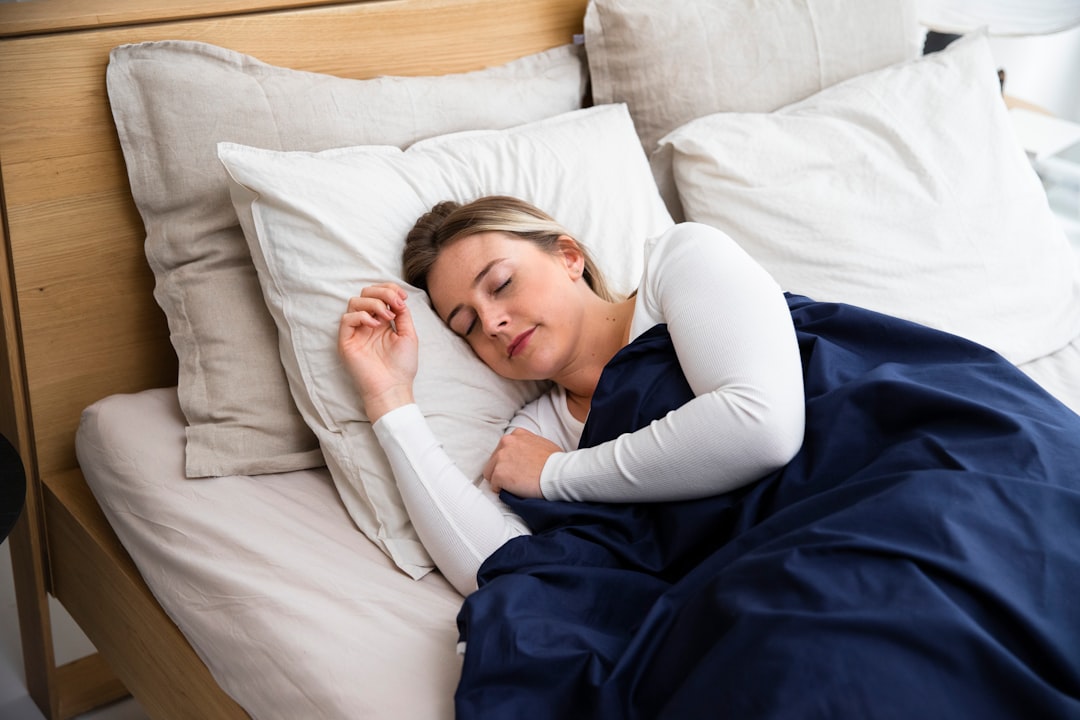
Most healthy adults need at least 7 hours of sleep a night, with 7–9 hours the practical target for ages 18–64 and 7–8 hours for adults 65 and older. That floor comes straight from the CDC's adult sleep duration guidance: "The recommended amount of sleep for adults is at least 7 hours each day." Below, the evidence behind that number — and the honest line between what sleep science says and what a mattress can actually do.
Key takeaways
- 7 hours is the evidence-backed minimum for most healthy adults; 7–9 hours is the practical target for ages 18–64.
- Adults 65+ still need about 7–8 hours — they sleep in more fragmented stretches, but their biologic need does not drop.
- Regularly sleeping under 7 hours is linked to worse cardiometabolic, cognitive, and mood outcomes in systematic reviews.
- Long sleep (over 9 hours) is associated with worse outcomes too, but it's usually a marker of illness, not a proven cause.
- A mattress can't lower your sleep need or treat a sleep disorder — but it can help protect the hours you're losing to heat, pressure, and awakenings.
How many hours of sleep do adults need by age?
Most healthy adults need at least 7 hours nightly, with 7–9 hours the practical target for ages 18–64 and 7–8 hours for adults 65 and older. The recommendations barely shift across adulthood, which is why a single table covers nearly everyone.
| Age band | Recommended sleep | Source |
|---|---|---|
| 18–60 | 7 or more hours | CDC (2024) |
| 61–64 | 7–9 hours | CDC (2024) |
| 18–64 (target range) | 7–9 hours | National Sleep Foundation (2015) |
| 65+ | 7–8 hours | CDC / National Sleep Foundation |
Two authorities say it most plainly. The CDC states, "The recommended amount of sleep for adults is at least 7 hours each day." The National Sleep Foundation adds: "Between the ages of 18 and 64, adults should aim for seven to nine hours of nightly sleep."
One caveat the headline numbers skip: quality matters alongside quantity. Eight hours of broken, restless sleep doesn't deliver the same recovery as seven solid ones. And individual need varies a little around these ranges — the sections below explain why, and what actually moves the needle for you.

Why is 7 hours the line for adults?
Government and expert bodies converge on at least 7 hours because regularly sleeping less is consistently linked to worse cardiometabolic, cognitive, and mood outcomes across large reviews. The number isn't arbitrary — it sits at the bottom of where the population-level health evidence holds up.
What the consensus says
Three independent bodies landed in the same place. The 2015 American Academy of Sleep Medicine and Sleep Research Society consensus statement recommends adults sleep 7 or more hours per night to promote optimal health. The National Sleep Foundation's 2015 Delphi-panel review (Hirshkowitz et al., Sleep Health) placed adults 26–64 at 7–9 hours and older adults at 7–8 hours. The CDC's government guidance matches both. When a government agency, a medical society, and an expert panel reach the same conclusion through different methods, that's the strongest signal sleep science offers.
What happens when you regularly sleep under 7 hours
The risk evidence comes from observational research, so it's about association, not proven cause. A 2015 systematic review in Sleep Health (Watson et al.) found habitual sleep below 7 hours was associated with poorer health outcomes, while the evidence for any exact individual number stayed heterogeneous. A 2010 meta-analysis in Sleep (Cappuccio et al.) pooling prospective cohorts found short sleep linked to higher mortality risk, with the lowest risk generally around 7–8 hours.
"For adults, getting less than seven hours of sleep a night on a regular basis has been linked with poor health." — Mayo Clinic
Why "consensus" and "association" aren't the same thing
This is the distinction most pages skip — and it's worth understanding before you trust any sleep claim. Consensus guidance (the 7-hour floor) is what expert panels recommend after weighing all the evidence. Observational association (the risks of short sleep) tells you two things tend to occur together, not that one causes the other. Short sleepers may differ from long sleepers in dozens of ways — stress, shift work, chronic illness — that also affect health. The 7-hour target is well-supported; the precise harm of any single short night is far less certain. Good sleep is one of the most reliable levers you have for protecting your mood and emotional health, but the relationship is more nuanced than a scary headline.
Is 7 hours of sleep enough for most adults?
Yes — 7 hours is the evidence-backed minimum for most healthy adults, though many feel and function best closer to 8 hours within the 7–9 hour range. Think of 7 as the floor and the range as your room to find a personal sweet spot.
The 7–9 hour band exists precisely because need isn't identical for everyone. A few factors nudge an individual toward the higher or lower end of that range:
- Recovery from illness or injury — your body often demands more sleep while healing.
- Heavy physical exertion — athletes and laborers frequently need the upper end.
- Accumulated sleep debt — after short nights, you'll naturally want more to recover.
- Genetics and age — a small share of people genuinely thrive on the lower end.
Bottom line: consistently hitting your personal spot inside the 7–9 hour range matters more than chasing an exact number. If you wake refreshed and stay alert through the day on 7.5 hours, that's likely your number. As Harvard Health Publishing puts it, "For most healthy adults, guidelines suggest at least seven hours of slumber."

Can you sleep too much?
Regularly sleeping more than 9 hours is associated with worse health outcomes, but long sleep is usually a marker of underlying illness — not a proven cause of harm. This is one of the most misreported areas in sleep science.
The 2010 meta-analysis by Cappuccio et al. in Sleep described a U-shaped curve: both short and long sleep were associated with higher mortality risk, with the lowest risk around 7–8 hours. The trap is reading the long-sleep end of that curve as "sleeping longer damages you." That's not what the data supports.
Long sleep often reflects something else going on. Depression, undiagnosed chronic illness, fragmented low-quality sleep that forces more total time in bed, and the sedating effects of certain medications can all push someone past 9 hours. In those cases, the long sleep is a symptom, not the disease — and the cohort design of these studies can't untangle which came first.
The practical takeaway: if you consistently need far more than 9 hours and still wake unrefreshed, the answer isn't to force yourself to sleep less. It's worth a conversation with a clinician about what's driving the need — a point we return to near the end of this guide.
Do older adults need less sleep than younger adults?
No — adults 65+ still need about 7–8 hours; they simply tend to sleep in shorter, more fragmented stretches and wake earlier, not from a lower biologic requirement. This myth causes real harm when seniors write off poor sleep as inevitable.
What changes with age is sleep architecture, not sleep need. Older adults spend more time in lighter stages, wake more often during the night, and their circadian clock tends to shift earlier — so they get sleepy sooner and rise sooner. The total restorative sleep the body wants stays roughly constant across adulthood, which is why the CDC still recommends 7–8 hours for the 65+ group rather than dropping it.
That distinction matters because an older adult who feels chronically unrested shouldn't shrug it off as "just aging." Fragmented sleep that leaves you exhausted can signal a treatable cause — and it can also be worsened by an aging, unsupportive bed that amplifies the awakenings that already come with age. For sleepers who shift positions often or live with stiffness, the right support setup, including options like an adjustable base that adapts to the body, can reduce some of the discomfort that breaks sleep apart.
What matters more — sleep duration or sleep quality, and where does your mattress fit in?
Both matter: duration sets the target, but quality determines how much of that time is restorative. A supportive mattress influences continuity and comfort — not your underlying biologic need for sleep.
Here's the honest line a lot of bedding pages blur. A mattress can influence the things that fragment your sleep:
- Sleep continuity — fewer awakenings from pressure or partner movement.
- Temperature — a build that sleeps cooler if you run hot.
- Pressure relief — support that eases shoulders, hips, and lower back.
- Comfort across body types — the right firmness for how you actually sleep.
What a mattress cannot do is lower the number of hours your body needs, or treat a sleep disorder like apnea. We'll tell you the truth: a mattress can't make you need less sleep, but the right one can help you stop losing the sleep you should be getting.
If awakenings, heat, or pressure points are stealing hours you should be banking, that's exactly the gap bedding can close. Browse the collection to compare builds and find your match — different constructions solve different sleep-disruptors, so the goal is matching the build to what's actually waking you. Every Select Mattress Co. purchase ships free, and our buy-one-donate-one mission means your better sleep helps a local family rest too.
How do I know if I'm getting enough sleep — and what should I fix first?
If you wake unrefreshed, rely on caffeine to function, or feel sleepy by mid-afternoon despite enough time in bed, you're likely short on quality or quantity. Work through the fixes in order — the cheapest changes first, the bigger investments last.
- Count your actual time asleep for a week. Time in bed isn't time asleep. Track when you genuinely fall asleep and wake — a notebook or a sleep-tracking app works. If you're regularly under 7 hours, duration is your first problem.
- Audit your sleep hygiene. A consistent bed and wake time (even on weekends), a dark cool room, and cutting caffeine, alcohol, and screens before bed often recover more sleep than any product. The Sleep Foundation notes most healthy adults need between seven and nine hours each night — hygiene is what protects those hours.
- Assess your sleep environment. Are you waking up hot? Sore? Disturbed by a partner's movement? Is your bed sagging or past its prime? These are the disruptors bedding can address.
- Decide whether bedding is the likely culprit. If you sleep through the night refreshed once you're warm and comfortable, your environment was the issue. If you feel unrested even after hygiene and a good setup, something deeper may need a clinician.
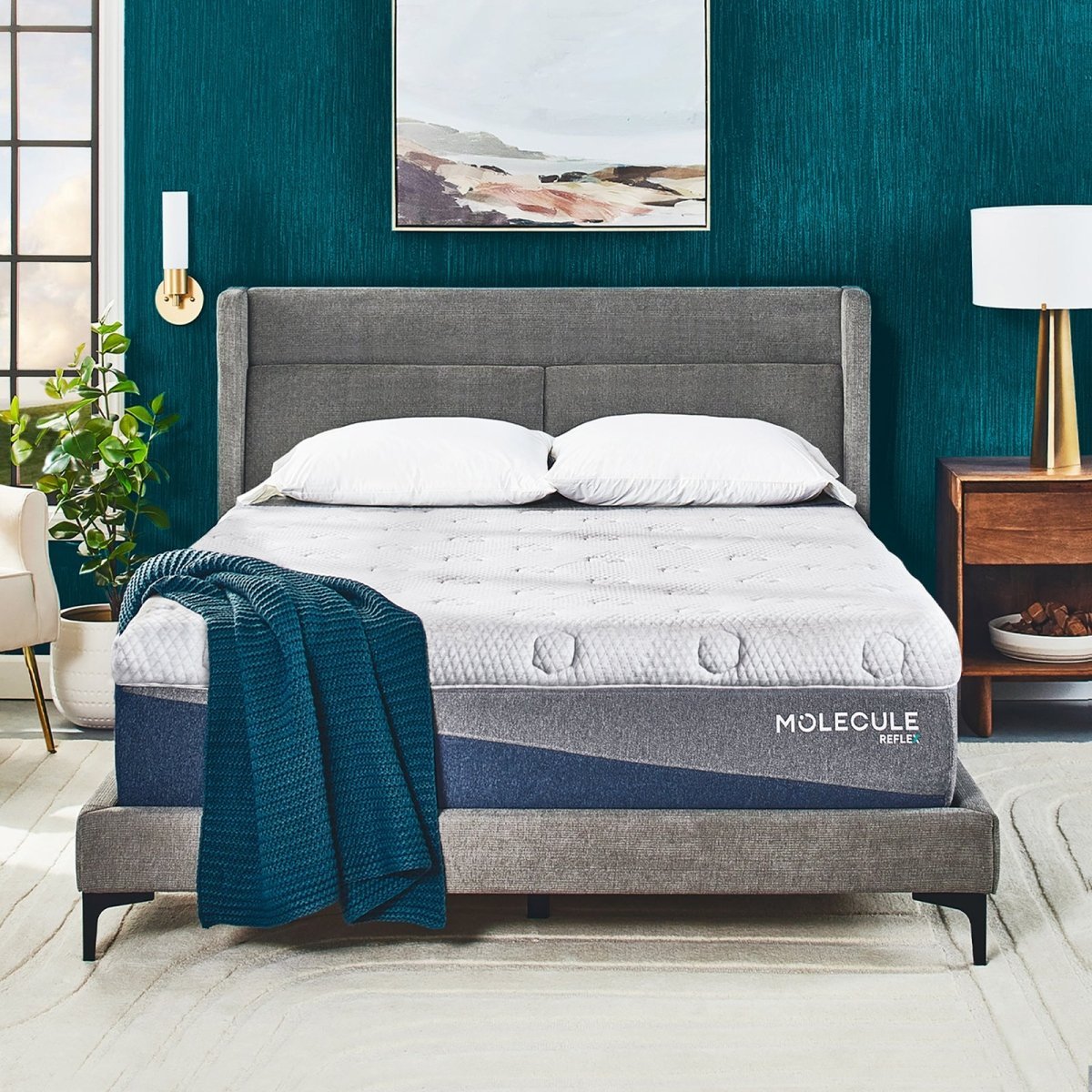
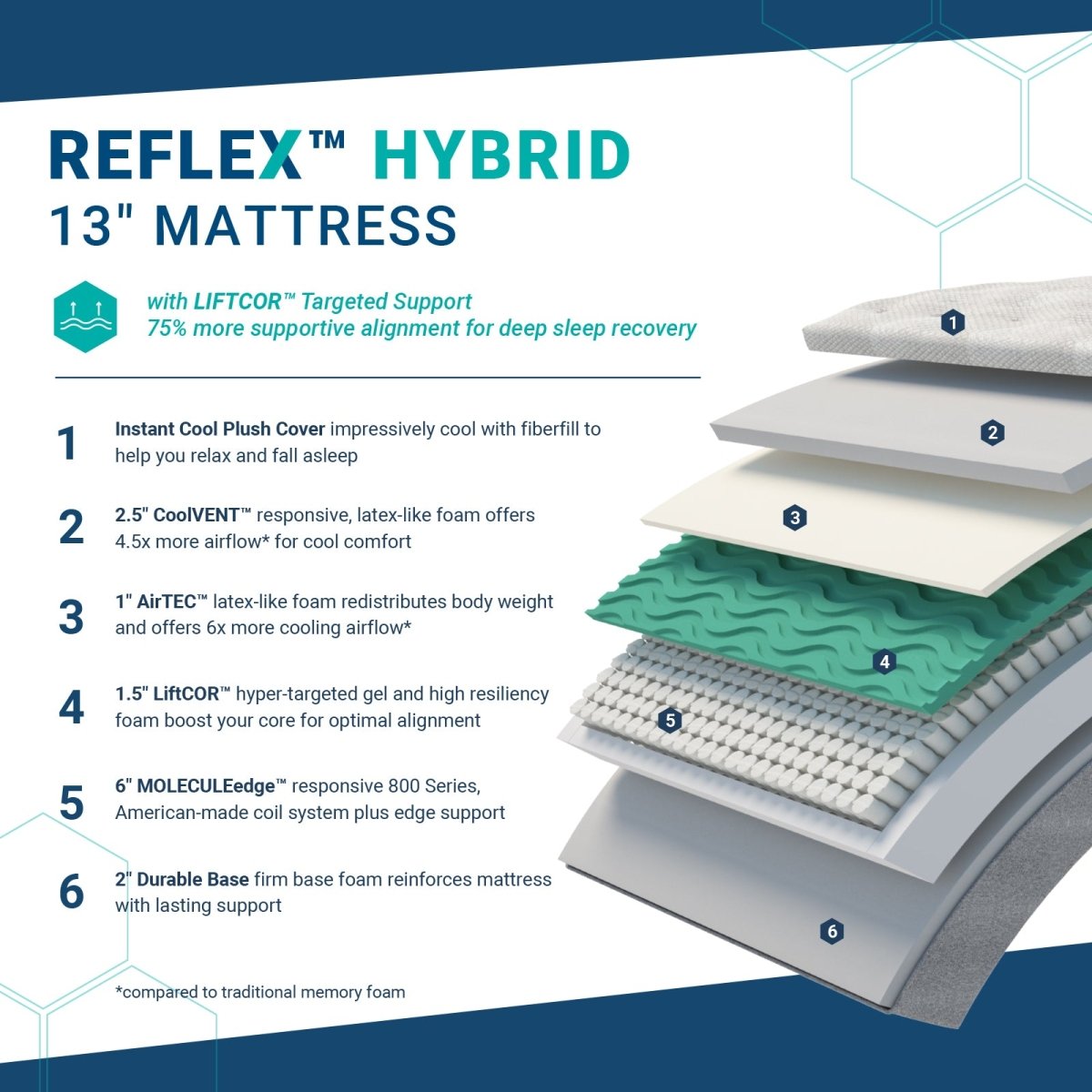
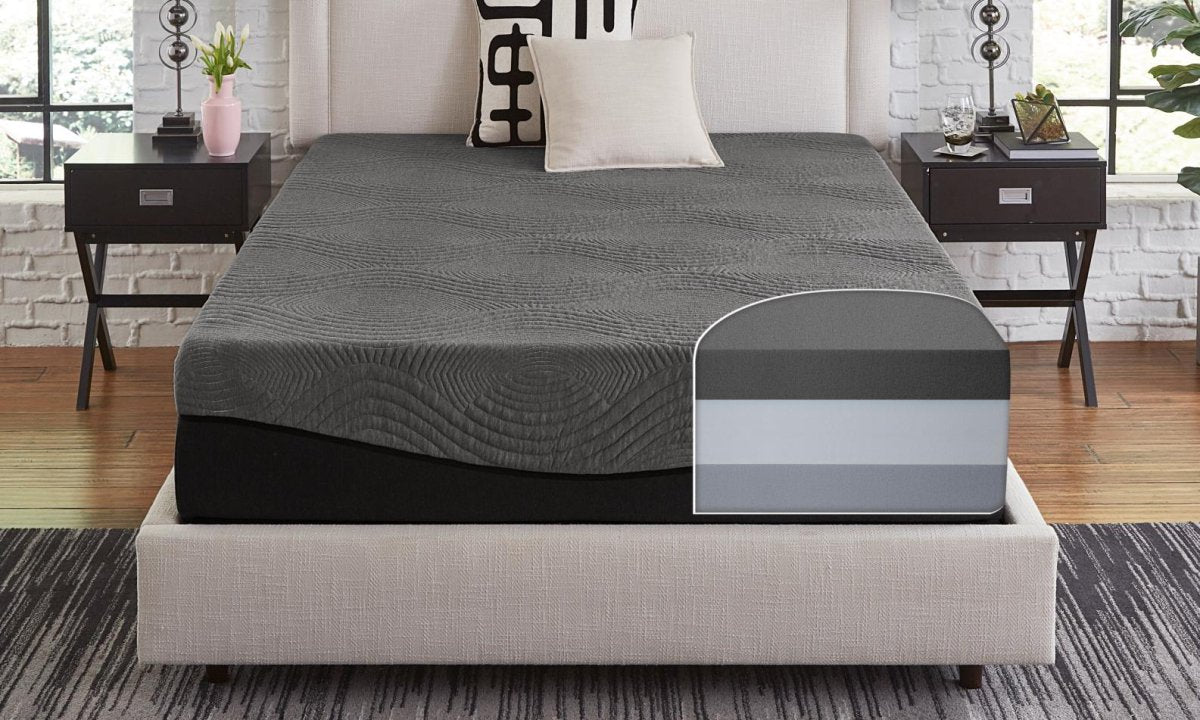
When the environment is the problem, start by matching firmness to your sleep position rather than guessing. Find your firmness in our quick quiz, and if you wake up hot, a temperature-managing build like the Sandman 14" Cooling Hybrid targets exactly that — its hybrid construction and cooling surface help heat dissipate so you're not woken by overheating. Skip a cooling hybrid if you sleep cold or prefer the deep contouring hug of all-foam; in that case a foam build suits you better.
When is tiredness a medical issue, not a mattress issue?
If you feel unrefreshed despite 7–9 hours, snore loudly or gasp at night, or fight daytime sleepiness, see a clinician — these can signal sleep apnea, depression, or medication effects. No mattress can diagnose or treat these, and medical evaluation comes first.
Watch for these red flags that point toward a doctor rather than new bedding:
- Persistent unrefreshing sleep even when you're getting a full 7–9 hours.
- Loud, chronic snoring or witnessed pauses in breathing — a classic sign of sleep apnea.
- Excessive daytime sleepiness that interferes with driving, work, or daily life.
- Consistently needing far more than 9 hours and still feeling drained.
This is where we draw a hard line for your safety and our credibility: a supportive bed improves comfort and continuity, but it does not treat a medical condition. If the signs above describe you, talk to a healthcare provider before assuming it's your bedding. Getting the diagnosis right protects far more than a single night's sleep.
How much sleep do shift workers and parents of young kids need?
The same 7–9 hour target applies — but fragmented or daytime sleep is less restorative, so prioritizing consistency, darkness, and recovery sleep matters even more. The biologic requirement doesn't drop just because life makes it harder to meet.
The National Sleep Foundation's 2015 recommendations don't carve out a lower target for night-shift nurses or new parents. The challenge isn't a smaller need — it's that broken or off-schedule sleep delivers less recovery per hour. A few practical compensations help:
- Protect an anchor sleep block — a core stretch at the same time each day, even on a rotating schedule.
- Use strategic naps to chip away at the gap between what you got and what you need.
- Control light aggressively — blackout curtains and dim evenings cue your body to sleep when the clock is wrong.
- Optimize the environment for daytime rest — cool, dark, and quiet, plus bedding that keeps you comfortable, like a cooling pillow that helps you settle faster during odd hours.
Frequently asked questions about adult sleep needs
Is 7 hours of sleep enough for most adults?
Yes. The CDC and the 2015 AASM/SRS consensus both set 7 or more hours as the recommendation for adults. Seven is the floor for most healthy people, though many feel best closer to 8 within the 7–9 hour range. Consistently waking refreshed is the best sign you've found your number.
Do older adults need less sleep than younger adults?
No. Adults 65+ still need about 7–8 hours. What changes with age is sleep architecture — lighter sleep, more awakenings, and earlier wake times — not the underlying biologic need. Feeling chronically unrested isn't a normal part of aging and may point to a treatable cause.
Can you sleep too much?
Regularly sleeping over 9 hours is associated with worse health outcomes in studies like the 2010 Cappuccio meta-analysis in Sleep. But long sleep is usually a marker of underlying illness, depression, or poor sleep quality — not a proven cause of harm. If you need far more than 9 hours, ask a clinician why.
Does a better mattress mean I need less sleep?
No. Nothing lowers your biologic sleep requirement. A supportive mattress can improve sleep continuity, comfort, and temperature so more of your time in bed is restorative — meaning you lose fewer of the hours you already need. It supports the target; it doesn't change it.
What matters more for health: sleep duration or sleep quality?
Both. Duration sets the target — at least 7 hours — and quality determines how much of that time actually restores you. Eight fragmented hours can feel worse than seven solid ones. Aim to hit your hours and protect them from disruptions like heat, noise, and pressure.
When should I see a doctor about feeling tired all the time?
See a clinician if you feel unrefreshed despite 7–9 hours, snore loudly or gasp at night, fight daytime sleepiness, or consistently need far more than 9 hours. These can signal sleep apnea, depression, or medication effects — none of which bedding can treat.
Better sleep starts with the right foundation
A quality mattress can't change how much sleep you need, but it can help you protect every hour by reducing the awakenings, heat, and pressure that steal restorative sleep. The science is settled on the target: at least 7 hours for most adults, 7–9 for ages 18–64, and 7–8 for adults 65 and older.
So here's the honest path forward. Lock in your schedule and sleep hygiene first — those cost nothing. Then, if heat, soreness, or a worn-out bed is fragmenting the hours you're already in bed for, the right setup closes that gap. Match it to how you sleep with our firmness quiz, and if you'd rather compare side by side, our Schedule a personalized in-store appointment in the Huntsville area pairs you with a sleep team member who'll match a build to your needs — or Shop online — quality mattresses delivered free to your door.
Every mattress carries our buy-one-donate-one mission, so your better sleep helps a local family rest too, and financing from $29/mo is available — ask about our financing options to fit it to your budget.
Quick decision guide: Sleeping under 7 hours? Fix your schedule and hygiene first. Getting your hours but waking hot or sore? That's a bedding fit — start with the quiz. Waking unrefreshed despite 7–9 hours, snoring, or always exhausted? See a clinician before anything else. This article is educational and not a substitute for medical advice.




Leave a comment
All comments are moderated before being published.
This site is protected by hCaptcha and the hCaptcha Privacy Policy and Terms of Service apply.