

The costliest dorm-shopping mistake is simple: assuming the bed is a standard Twin. Most US college dorms use Twin XL mattresses (38" × 80") — 5 inches longer than a standard Twin (38" × 75"), per Mattress Stores Los Angeles. Buy a medium-firm foam or hybrid, verify the size with housing first, and add a protector. Here's the full framework — sizing, firmness, type, toppers, and budget — before you spend a dollar.
Key takeaways
- Most dorms use Twin XL (38" × 80") — 5 inches longer than a standard Twin; always confirm with your housing office first.
- Medium-firm is the safest default — the most consistently supported firmness in sleep and back-pain research.
- Foam and hybrids fit dorm life best — they compress for shipping and isolate motion in shared rooms.
- A $99–$200 topper only makes sense on a firm-but-sound provided bed — not a sagging one.
- A waterproof protector is non-negotiable on loaner or provided beds you didn't buy new.
What size mattress do most college dorms use?
Twin XL is the answer, but always verify with housing before you buy. As Mattress Stores Los Angeles puts it plainly:
"Most US college dorms use Twin XL (38" × 80"). This is 5 inches longer than a standard Twin. Always confirm the specific size with your school's housing office before purchasing."
That 5-inch gap is where families lose money. A Twin XL mattress won't sit right on a standard Twin frame, and a standard Twin comes up short on a Twin XL frame. The bigger trap is sheets: Twin XL fitted sheets and standard Twin fitted sheets do not cross-fit, so guessing wrong means rebuying bedding you already paid for.
The caveat competitors skip: older dorm buildings sometimes still use standard Twin frames. "Most" is not "all," so never assume based on the school's newest halls.
How to confirm your dorm's mattress size (numbered steps)
- Email or call the housing/residence-life office and ask the exact frame size for your assigned building — not the campus average.
- Check your room-assignment portal for a furnishings or dimensions sheet; many schools list bed size there.
- Ask specifically about older buildings. If you're in a historic hall, confirm whether it's Twin XL or standard Twin before ordering.
- Get it in writing. A screenshot or email reply protects you if the answer turns out wrong on move-in day.
Once you've confirmed Twin XL, you know exactly what to shop for. Our curated Twin XL mattresses come in foam and hybrid builds sized for dorm frames, so you can match the spec you just verified. For the full sizing breakdown, see our guide on what size mattress you actually need.
Can I use standard Twin sheets on a Twin XL dorm bed?
No — standard Twin fitted sheets won't fit a Twin XL. The mattress is 5 inches longer, so a standard Twin sheet either won't reach the corners or will pop off during the night, and a Twin XL sheet bunches on a shorter standard Twin.
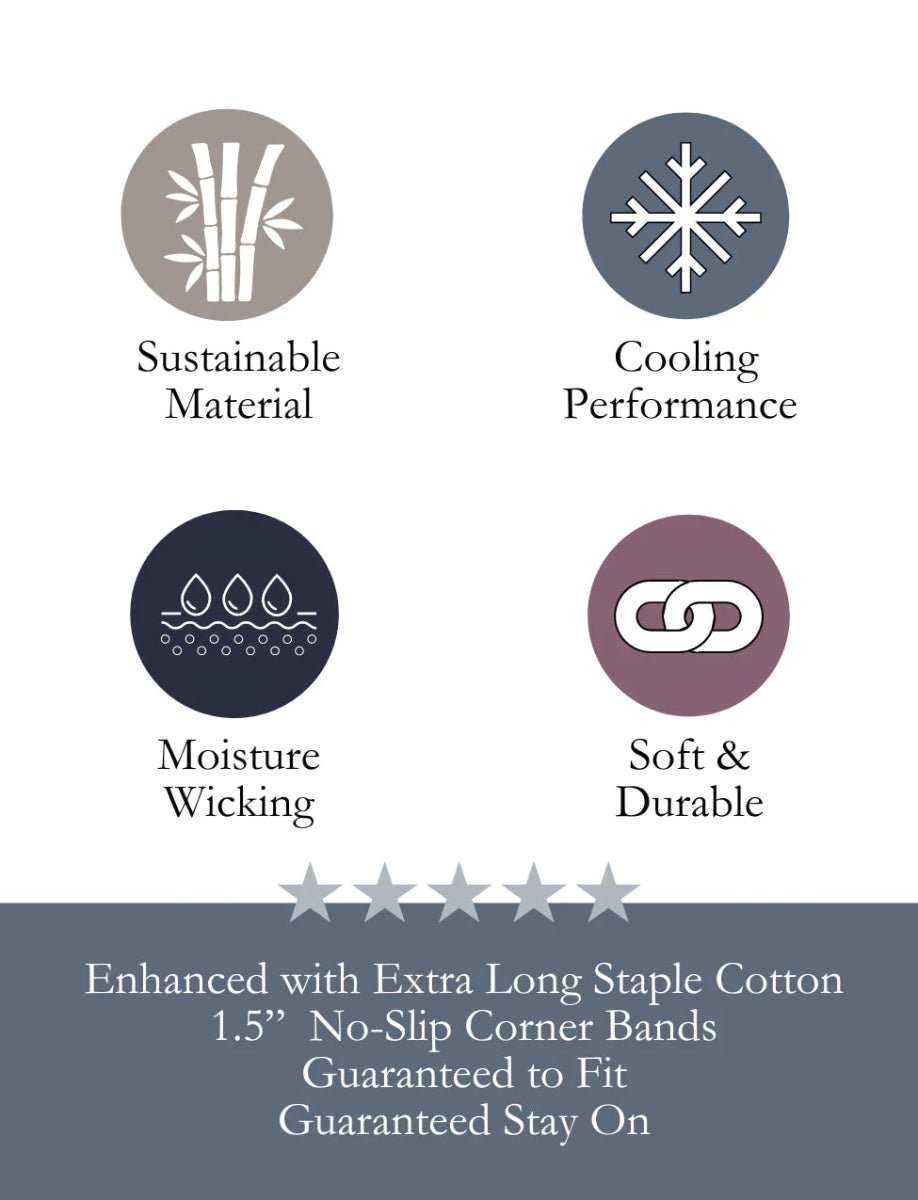
Students who guess the sheet size often end up buying twice, which is exactly the wasted spend a good dorm plan avoids. When you shop Twin XL sheets, look for deep-pocket construction and no-slip corners that grip a taller mattress — a detail our DreamFit microfiber sheets with no-slip corners are built around. Hot sleepers moving into an un-air-conditioned hall may prefer a breathable cotton set instead. Either way, buy the sheets to match the verified frame size, not the mattress you assume is there.
Why is medium-firm the smart default for a student mattress?
Medium-firm mattresses are the most consistently supported firmness in sleep and back-pain research, balancing spinal alignment with pressure relief for most sleepers. That makes them the safest starting point when you're buying for someone whose exact preferences you may not know yet.
The evidence comes from general and clinical populations, not dorm students specifically — an honest caveat most buying guides bury. A landmark 2003 Lancet trial (Kovacs et al.) found that a medium-firm mattress improved pain and disability in patients with chronic nonspecific low-back pain. A 2015 review in Current Pain and Headache Reports summarized clinical trials in which medium-firm mattresses improved sleep quality by 55% and reduced back pain by 48% among chronic low-back-pain patients.
Medium-firm mattresses improved sleep quality by 55% and decreased back pain by 48% in chronic low-back-pain trials — Current Pain and Headache Reports review, 2015.
More recent lab evidence points the same direction. A 2025 PSG/EEG study in Sleep and Biological Rhythms reported that a medium mattress optimized sleep architecture and reduced sleep-onset latency, though the visible research does not state the sample size.
Bottom line: those figures come from back-pain patients and lab volunteers, not dorm residents — so treat medium-firm as the best-supported default, not a guarantee. If a student already knows they run soft or firm, personalize instead. You can work through our essential mattress-buying tips to narrow it down before ordering.
How firm should a dorm mattress be for my sleep style?
Firmness should match body weight and sleep position: lighter sleepers do best around 3–5 out of 10, back sleepers at 6–8, and heavier students at 6–7 with durable coils, according to the 2026 Mattress Buying Guide expert.
| Sleeper type | Recommended firmness | Why | Watch-out |
|---|---|---|---|
| Lighter sleepers | 3–5 / 10 | Softer layers let a lighter body engage the comfort foam instead of feeling a hard surface | Too firm feels like a board and blocks pressure relief |
| Side sleepers | Medium (5–6) | Cushions shoulders and hips while keeping the spine aligned | Too firm creates shoulder pressure |
| Back sleepers | 6–8 / 10 | Firmer support with pocketed coils keeps the spine aligned; zone support redistributes pressure | Too soft lets the hips sink and rounds the lower back |
| Heavier students | 6–7 / 10, durable coils | Firmer builds prevent excess sinkage that throws off alignment | Soft foam bottoms out and wears faster |
| Hot sleepers | Medium, cooling hybrid | Coil airflow plus cooling foams limit heat retention | Dense all-foam without cooling tech traps body heat |
The expert reasoning is worth quoting directly. On lighter sleepers: "If the mattress is too firm, lighter bodies don't sink enough to engage the comfort layers and the bed just feels hard." On heavier sleepers: "Support is non-negotiable… I usually recommend mattresses that are at least a six or seven out of 10 in firmness with durable coils and responsive foams." For back pain specifically: "A firmer mattress with pocketed coils that deliver targeted pushback is ideal, combined with comfort layers that lightly contour and redistribute pressure."
Not sure where a student lands? Find your firmness in our quick quiz — it turns weight and sleep position into a specific recommendation in a couple of minutes.
Foam, hybrid, latex, or innerspring — which is best for a dorm?
Foam and hybrids win for dorms because they compress for shipping, isolate motion in shared rooms, and fit tight spaces; latex is the most durable and breathable option but heavier and pricier, while innerspring is durable yet weaker at isolating motion.
| Type | Portability | Motion isolation | Cooling | Durability | Best for |
|---|---|---|---|---|---|
| Memory foam | Excellent (ships compressed) | Excellent | Weaker unless gel/open-cell | Good | Light budgets, shared rooms, motion-sensitive sleepers |
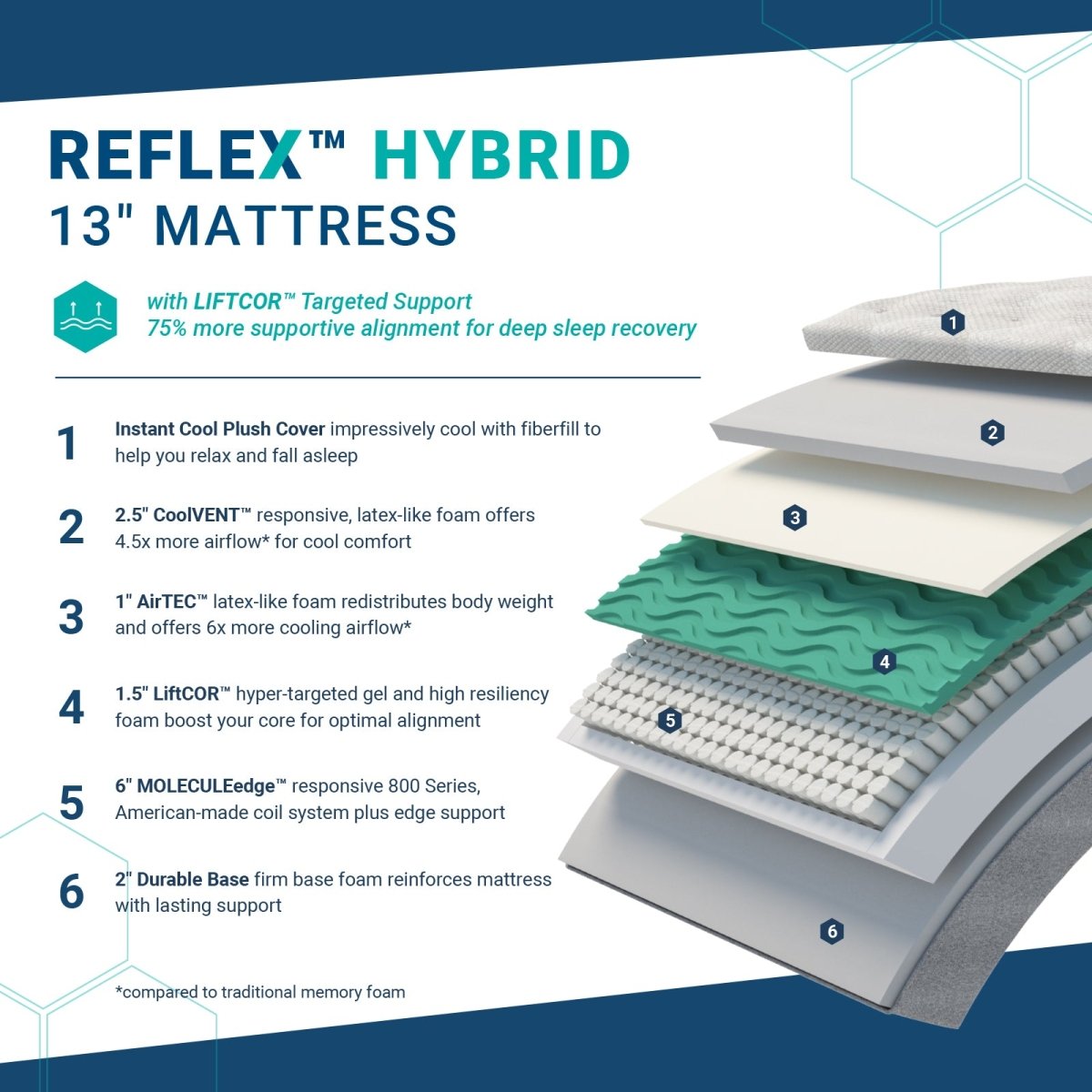
| Hybrid | Good (ships compressed) | Very good | Better (coil airflow + cooling foams) | Very good | Hot sleepers, back sleepers, mixed needs |
| Latex | Poorer (heavy) | Good | Excellent (breathable) | Best | Students keeping the bed for years |
| Innerspring | Moderate | Weaker | Good (airflow) | Good | Solo rooms, breathability-first buyers |
Per Mattress Stores Los Angeles: memory foam and hybrids compress for shipping and absorb motion; natural latex is the most durable and breathable but costs more and is heavier; innerspring is durable and breathable but less effective at motion isolation.
Why does memory foam retain more heat than a hybrid?
The mechanism most guides skip: denser memory foam traps body heat because it hugs the body closely and leaves less room for air to move. Heat that would otherwise dissipate stays trapped against the sleeper. Open-cell and gel-infused foams open up more pathways for airflow, and hybrids add a coil layer whose gaps move air through the mattress — which is why the 2026 buying-guide expert notes, "I often favor hybrids for hot sleepers, especially beds with cooling tech built into the foams and cover."
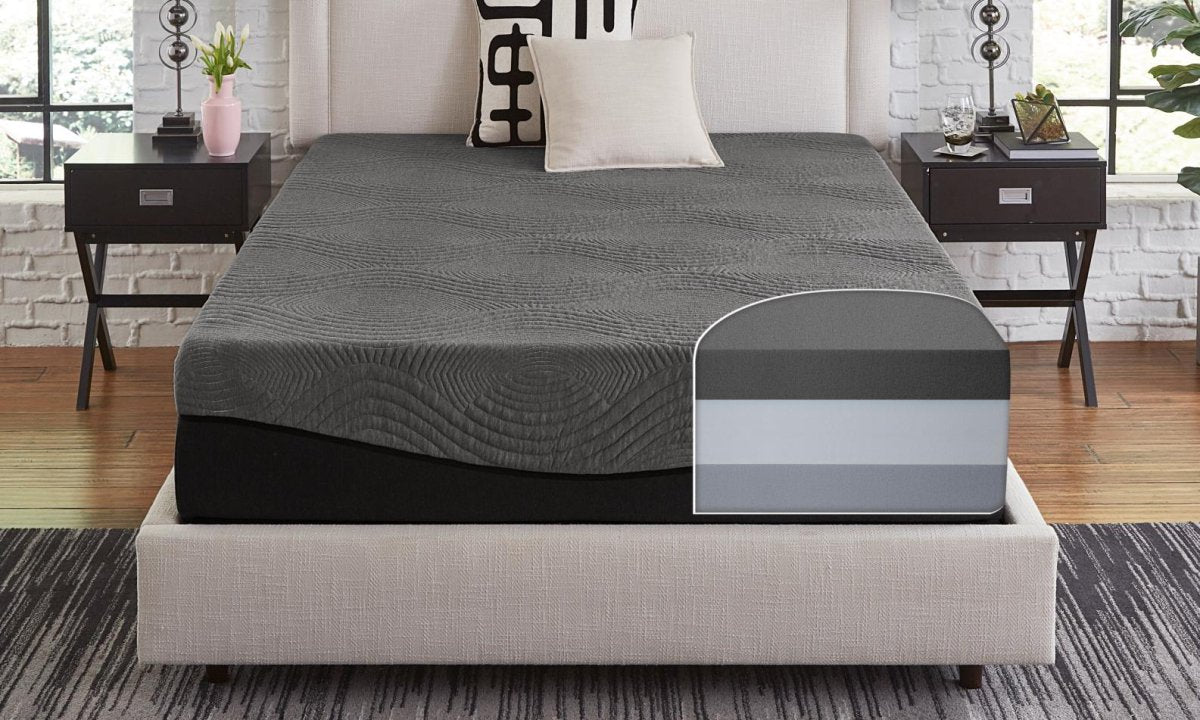
For a dorm, that translates to a clean rule of thumb. If the student sleeps cool and wants motion isolation on a budget, a foam build like the Moonlight Classic 12" Foam fits. If they sleep hot or share a room, a hybrid such as the Moonlight Classic 12" Hybrid adds coil airflow and stronger edge support. Compare the two builds side by side in our Moonlight collection to weigh cooling against price.
Should I buy a new mattress or just add a topper to the dorm bed?
A $99–$200 topper makes sense if the provided bed is firm but structurally sound; buy a new Twin XL if the bed sags, is thin, or you own the frame. A topper adds comfort — it cannot fix a broken base.
Choose a topper when:
- The university provides the bed and you can't replace it.
- The provided mattress is too firm or too thin but the core is still supportive.
- Budget is tight this semester and the bed is otherwise fine.
Buy a new Twin XL when:
- You're in apartment-style housing and own or control the frame.
- The current bed sags, dips, or feels unsupportive.
- The student prioritizes long-term durability and proper support — a topper can't rescue a worn-out base.
The Sleep Foundation's dorm topper guidance agrees a topper is a comfort layer, not a structural fix. If a fresh mattress is the smarter call, browse by budget on our Twin XL mattress collection to match spec to price.
Do I need a mattress protector on a provided or shared dorm bed?
Yes — a waterproof protector or full encasement is essential on loaner and provided beds for hygiene, allergen protection, and guarding against spills in shared rooms. Provided beds carry unknown history: previous students, dust mites, and allergens you can't see.
A protector covers the top and sides against moisture and spills; a full encasement zips around the entire mattress, which matters most on a loaner bed where you want a barrier against what came before you. In shared or bunked rooms, pairing a protector with a motion-isolating mattress keeps one person's movement — and one person's spill — from reaching the other.
Hot sleepers should look for a cooling protector so the barrier doesn't undo a breathable build; our DreamFit cooling waterproof mattress protectors add protection without trapping heat. If you're outfitting a provided or shared bed, shop protectors and encasements as the first layer of the setup — it's the smallest spend with the biggest hygiene payoff.
Who should NOT buy each dorm mattress option?
Skip foam if you sleep hot and hate heat retention, skip latex on a tight budget or if you move often, and skip a topper if the base bed is broken. Naming who each option is wrong for is how you avoid buyer's remorse.
- Skip memory foam if you sleep hot and won't buy a build with gel or open-cell cooling — dense foam traps body heat.
- Skip latex if you're on a tight budget or move frequently — it's the most expensive and the heaviest to haul up dorm stairs.
- Skip innerspring if you share a room and are a light sleeper — it isolates motion less effectively than foam or hybrid.
- Skip a topper if the provided bed sags or feels unsupportive — a topper adds softness, not structure.
When two options both seem to fit, let the quick firmness quiz settle it against the student's actual weight and sleep position.
How do I budget for and finance a dorm mattress setup?
Plan for the mattress, Twin XL sheets, and a protector together; Select offers financing from $29/mo at 0% APR plus free shipping, so cost need not delay a quality bed. Budgeting the three pieces as one setup prevents the "forgot the sheets" scramble on move-in day.
A realistic dorm sleep setup has three line items:
- The mattress — the biggest piece; match type and firmness to the sleeper.
- Twin XL sheets — sized to the verified frame, with no-slip corners.
- A protector or encasement — small cost, big hygiene return on a provided or shared bed.
Rather than delay a good bed over the upfront number, you can ask about our financing options — Select offers financing from $29/mo at 0% APR, with free shipping across Alabama on every order. Confirm current terms at checkout before you buy.
Here's what sets the purchase apart: Select runs a mission-driven buy-one-donate-one model — every mattress you buy donates a bed to a family in need. It also answers the question every family asks at move-out: what happens to the old bed? Select's donation program is built to handle exactly that. Shop online — quality mattresses delivered, and the purchase does double duty for your student and your community.
Does the right dorm mattress actually improve student sleep?
Student sleep is commonly poor and linked to mental-health symptoms, and dorm-environment interventions can improve sleep quality — though direct dorm-mattress evidence is limited and the student data is correlational, not causal.
The honest picture: poor sleep is widespread on campus. CDC commentary in Preventing Chronic Disease (2022) reported an association between insomnia and mental-health conditions among college students. A large multi-university sample analyzed in Sleep (Lund et al., 2018) found ADHD-inattention, anxiety, and depression symptoms each independently associated with poor sleep status. Both are correlational — they don't prove a mattress fixes anything.
What's closest to causal evidence is about the sleep environment, not the mattress alone. A 2022 cluster RCT in the International Journal of Environmental Research and Public Health (Zhang et al.) randomized 106 dormitories and 364 students and found a multidomain dormitory-environment and roommate-behavior intervention improved sleep quality versus control.
The transparent bottom line: direct peer-reviewed evidence testing dorm mattresses in students is sparse, so any dorm-mattress recommendation is partly extrapolated from general mattress research. The most defensible advice is what this guide has laid out — prioritize adequate support, a medium-firm feel, and adjuncts like a topper or protector when the provided bed falls short. This article is educational and not medical advice; students with pain or a sleep disorder should consult a clinician. For more, browse our mattress-buying guide.
Dorm mattress FAQs
What size mattress do most college dorms use?
Most US college dorms use Twin XL (38" × 80"), which is 5 inches longer than a standard Twin (38" × 75"), per Mattress Stores Los Angeles. Some older buildings still use standard Twin, so always confirm the exact frame size with your housing office before buying.
Can I use standard Twin sheets on a Twin XL dorm bed?
No. Standard Twin fitted sheets don't fit a Twin XL because the mattress is 5 inches longer — the corners won't reach or the sheet slips off overnight. Buy Twin XL sheets with deep pockets and no-slip corners sized to your verified frame.
Is memory foam or hybrid better for a dorm room?
Both compress for shipping and isolate motion well for shared rooms. Choose foam for cool sleepers on a budget; choose a hybrid if you sleep hot, since coil airflow and cooling foams reduce heat retention that dense foam tends to trap.
How firm should a dorm mattress be?
Match firmness to body and position: lighter sleepers around 3–5 out of 10, back sleepers 6–8, and heavier students 6–7 with durable coils, according to the 2026 Mattress Buying Guide expert. Medium-firm is the safest default when preferences are unknown.
Is it better to buy a new dorm mattress or add a topper?
A $99–$200 topper works when a university-provided bed is firm but still structurally sound. Buy a new Twin XL if the bed sags, is too thin, or you control the frame — a topper adds comfort but can't fix an unsupportive base.
Do I need a mattress protector on a provided dorm bed?
Yes. Provided and loaner beds have unknown history — previous students, dust mites, and allergens. A waterproof protector or full encasement guards hygiene and spills; hot sleepers should choose a cooling version so the barrier doesn't trap heat.
Your dorm-setup decision rule
First-time buyer, unsure of preferences: verify Twin XL with housing, then pick a medium-firm hybrid and add a protector. Hot sleeper or shared room: choose a cooling hybrid for airflow and edge support. Cool sleeper on a budget: a foam Twin XL with a protector. Provided bed that's firm but sound: a $99–$200 topper, not a new mattress. Sagging or apartment-style bed you control: a new Twin XL.
When you've settled on the build, browse the collection to compare foam and hybrid builds and find the match — delivered with free shipping, backed by financing from $29/mo at 0% APR, and part of a mission that donates a bed with every purchase and helps handle the old one.


Leave a comment
All comments are moderated before being published.
This site is protected by hCaptcha and the hCaptcha Privacy Policy and Terms of Service apply.