
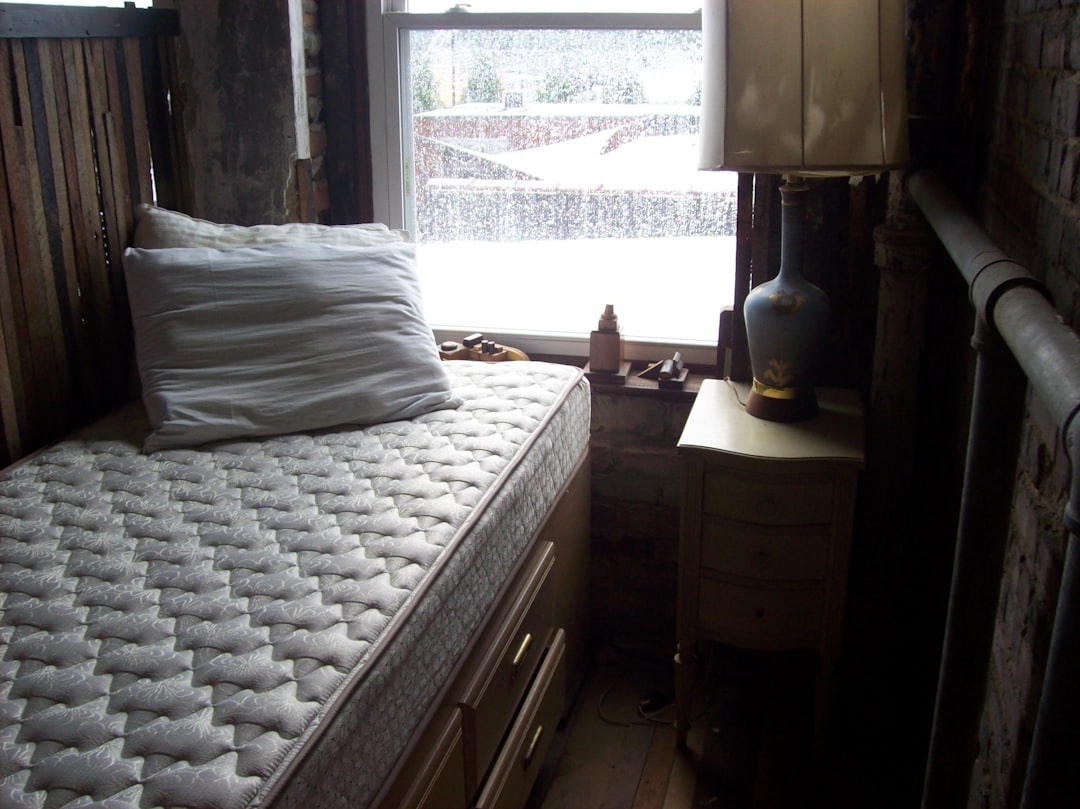
Both mattresses are 38 inches wide. The only difference is length: a Twin runs 75 inches, a Twin XL runs 80 — five extra inches (Sleep Foundation, 2025). That single gap decides everything. Choose Twin XL for a college dorm or any sleeper over 6 feet; choose a standard Twin for younger kids and very small rooms. Here's exactly how to know which one you actually need.
Key takeaways
- Same width, 5 inches of length. Twin is 38" x 75"; Twin XL is 38" x 80" — 190 more square inches, all in legroom.
- Twin XL is the college-dorm standard because the extra length fits taller students in the same footprint.
- Height decides it: feet start hanging off a Twin around 6'0", and above 6'2" a Twin is inadequate (Casper).
- A standard Twin still wins for younger children, bunk beds, and tight rooms.
- Sheets are size-specific — a Twin XL needs Twin XL sheets, the most common dorm-shopping mistake.
Twin vs Twin XL: which one do I actually need?
Both are 38 inches wide, but Twin XL is 5 inches longer (80" vs 75"). Pick Twin XL for dorms and anyone over 6 feet; pick a standard Twin for younger kids and tiny rooms. The width is identical, so "XL" buys you legroom, not sleeping-side space.
That distinction is the whole decision, and it's why the two sizes rarely need a coin flip once you know the sleeper's height and the room. Per the Sleep Foundation's dorm-bed-size guide, Twin XL is the size colleges specify precisely because the extra length accommodates taller students without a wider bed.
If you already know the sleeper's height and room dimensions, you can browse the collection to compare Twin and Twin XL builds and find your match. For the full setup — frame, sheets, protector, delivery timing — see our complete mattress buying guide.

How do Twin and Twin XL compare at a glance?
Twin is 38" x 75" (2,850 sq in); Twin XL is 38" x 80" (3,040 sq in) — same width, five inches and 190 square inches more length, per the Company Store college bedding guide. Everything else is a downstream consequence of that gap.
| Attribute | Twin | Twin XL |
|---|---|---|
| Dimensions (W x L) | 38" x 75" | 38" x 80" |
| Total sleep surface | 2,850 sq in | 3,040 sq in |
| Matching-length size | Full (75") | Queen / King (80") |
| Best sleeper height | Up to ~6'0" | Up to ~6'7" |
| Best use | Younger kids, bunk beds, small rooms | College dorms, teens, taller adults |
| Minimum room size | ~7' x 10' | ~7' x 10' |
| Fitted sheet needed | Twin sheets | Twin XL sheets |
The rows that move the decision are sleeper height and best use — the dimensions themselves are close enough that they rarely tip the scale on their own.
What's the real difference between Twin and Twin XL?
The only difference is length. Twin XL adds 5 inches (80"), matching Queen and King length, while a Twin's 75 inches matches a Full. Width stays 38 inches on both, so neither gives a sleeper more side-to-side room.
That matters more than it sounds. Because "XL" is purely a length upgrade, it does nothing for a sleeper who's short but wants more elbow room — for that, you'd step up to a Full or Queen instead. The Twin XL exists to solve one problem: a tall single sleeper whose feet run off the end of a standard bed.
The length parity is also why Twin XL slots so cleanly into larger setups. Per Saatva's Twin XL dimensions breakdown, its 80-inch length lines up exactly with Queen and King mattresses, which is what makes split-King configurations possible.
One naming note that trips up shoppers: a "single" and a "Twin" are the same mattress — 38" x 75". There's no separate size hiding behind the two labels. If you're still weighing whether to go bigger altogether, our guide on what size mattress you need walks through every option side by side.
Bottom line: Twin XL is a Twin with longer legs — nothing more, nothing less.

Why do colleges default to Twin XL for dorm beds?
Dorms standardize on Twin XL because the extra 5 inches fits taller students in the same floor footprint, and uniform beds let schools furnish every room identically. It's a logistics decision as much as a comfort one.
Mattress Firm's sleep-expert analysis puts the appeal plainly:
"Twin XL beds are ideal for taller individuals and young adults—which is why they've become the go-to bed for college dorms." — Mattress Firm analysis (Twin Size vs Twin XL)
For a school, a room full of identical 38" x 80" beds is far easier to buy, replace, and fit sheets for than a mix of sizes — and the narrow 38-inch width keeps rooms usable for two students without crowding.
One rule before you buy: confirm your specific school's bed spec. Most dorms specify Twin XL, but a handful use standard Twins or lofted frames with unusual clearances, and buying the wrong size means re-buying sheets and possibly the mattress. Our back-to-school and dorm sleep setup guide includes a full move-in checklist so nothing gets missed.
When is a standard Twin still the right call?
Choose a standard Twin for younger children, bunk beds, and very small rooms where 75 inches of length is plenty and the shorter footprint frees up floor space. Over-buying an XL here spends money on legroom nobody uses.
Mattress Firm's John McCarty notes the classic use case:
"Many parents buy them [Twin beds] for their children, for bunk bed setups." — John McCarty, Sleep Expert® at Mattress Firm
A standard Twin makes sense when:
- The sleeper is a younger child comfortably under 6 feet with room to grow into 75 inches.
- You're outfitting a bunk bed — most bunk frames are built for the 75-inch Twin length.
- The room is genuinely small and you want the shorter footprint for a desk, dresser, or play space.
- You're furnishing a guest room or multi-bed setup and want consistent, easy-to-source bedding.
When to size up to Twin XL instead: if your child is already tall for their age, or you want the bed to last through the teen years without a replacement, the extra 5 inches earns its keep. A growing teen who hits a growth spurt at 15 will outgrow a Twin fast.
Still not sure which build suits a kids' room? Take our quick firmness quiz for a personalized recommendation before you commit. If budget is the deciding factor, both sizes qualify for free shipping and 0% APR financing.
How tall is too tall for a Twin mattress?
Feet start hanging off a Twin around 6'0"; above 6'2" a Twin is inadequate. Twin XL fits sleepers up to about 6'7", and anyone over 6'4" may prefer a California King, per Casper's dorm mattress guide.
Casper states the cutoff directly:
"If an individual is taller than six feet two inches, a twin mattress is probably not for them." — Casper mattress guide
Here's the practical height ladder, each rung source-backed:
- Under 6'0": A standard Twin (75") works fine.
- Around 6'0": Feet begin to hang off a Twin — step up to Twin XL.
- Over 6'2": A Twin is inadequate; Twin XL is the right single-sleeper choice.
- Up to ~6'7": Twin XL still accommodates comfortably.
- Over 6'4" (and wanting more space): Consider a California King (72" x 84"), the longest standard size.
Casper also frames the Twin XL's role clearly: "Twin XL beds usually can't comfortably accommodate more than one person, but they are an ideal choice for a single sleeper that's too tall for a traditional size bed."
An honest caveat worth stating: a mattress-evaluation review by Mair and colleagues, published in PeerJ (2019), found insufficient evidence to set universal target values for spine alignment or pressure distribution across mattress types. In plain terms, there's little peer-reviewed proof that bed size alone changes health outcomes. The size choice is dimensional and logistical — about legroom and fit — not a medical fix. If you're choosing a mattress for comfort or pain concerns, the firmness and build matter more than the label, and you should talk to a healthcare professional about persistent pain.
If the sleeper is at or above these thresholds, shop the sizes that fit — compare longer builds in the collection to match height to length.
Will a Twin or Twin XL fit my room?
Plan for a minimum room of about 7' x 10' for either size — enough for the bed plus a nightstand and clear walking space, per the Company Store college bedding guide. Because both sizes share the 38-inch width, the room math is nearly identical.
Here's how to check your space in a few steps:
- Measure the room wall to wall, both dimensions, in feet and inches.
- Mark the bed footprint: plan for 38 inches of width and 75–80 inches of length against a wall.
- Add a walkway: leave roughly 24–30 inches of clear floor on the access side so you can get in and out and make the bed.
- Account for furniture: a nightstand needs about 18–24 inches; a small dresser or desk needs its own footprint plus clearance to open drawers.
Because the Twin and Twin XL differ only by 5 inches of length, that gap almost never decides whether a bed fits a room — it changes the length by less than the depth of a pillow. If a Twin fits your floor plan, a Twin XL almost certainly does too. That's reassuring news for small-room and dorm shoppers: choose by height and use, not by fear of the bed not fitting.
Do Twin and Twin XL use the same sheets, frames, and setups?
No — a Twin XL needs Twin XL sheets; standard Twin sheets are 5 inches too short and won't stay on the corners. Both sizes fit most standard twin frames, and two Twin XL mattresses combine into a split King (76" x 80").
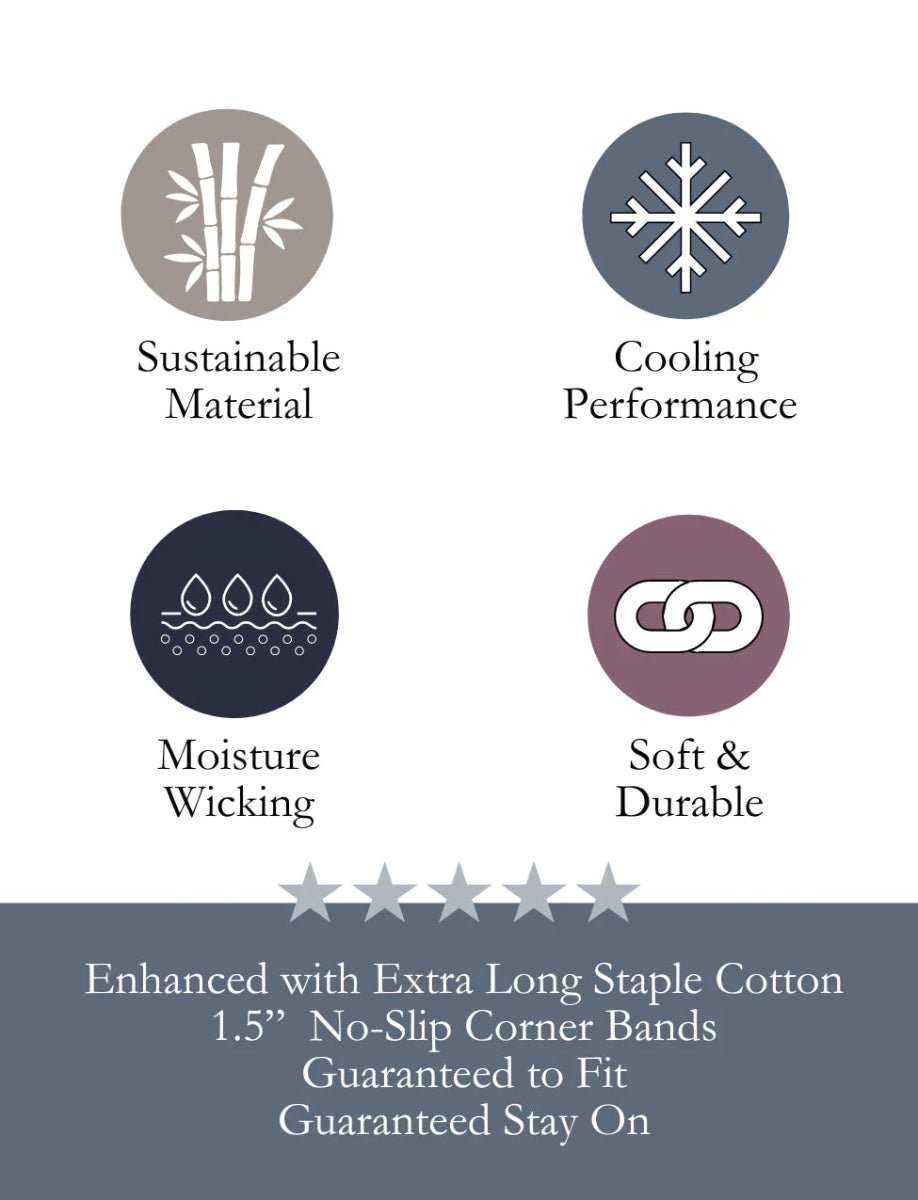
This is the single most common dorm-shopping mistake: buying the right mattress and the wrong sheets. Fitted sheets are cut to the exact mattress length, so a Twin fitted sheet on a Twin XL will pop off the foot of the bed every night. Match your sheets to your size from the start. Our DreamFit Comfort Sheets in microfiber and long-staple cotton both come in Twin XL, and every order ships free.
A few more compatibility notes:
- Frames: most metal and wooden twin platform frames accommodate both the 75" and 80" lengths — check the frame's stated inside length before buying.
- Protectors: a fitted DreamFit mattress protector is a smart dorm add-on for hygiene and spill defense, and like sheets it's size-specific.
- Split King: two Twin XL mattresses placed side by side make a split King measuring 76" x 80", per the standardized dimensions listed on Wikipedia's bed size reference. This is popular with couples on adjustable bases who want independent head-and-foot control.
Bottom line: match the sheets and protector to the mattress size, and don't assume a hand-me-down Twin sheet set will work on a new Twin XL.
Is Twin or Twin XL more budget-friendly?
Twin and Twin XL are usually priced very closely because they use nearly the same materials — the only difference is 5 inches of the same build. Price rarely swings the decision either way, so let fit and longevity lead instead.
Per Serta's help article on Twin vs Twin XL, the two sizes are built the same way and differ only in length, which is why the cost gap tends to be small.
Where value does tilt: for a growing teen, a Twin XL can be the smarter long-term buy because it lasts into adulthood without a replacement. Buying a Twin now and re-buying a longer bed in three years costs more than sizing up once.
- Twin — better value when: the sleeper is a younger child, it's a bunk bed, or the room is tight and you won't outgrow 75 inches soon.
- Twin XL — better value when: the sleeper is a teen or tall adult, or you want one mattress to last through the college years.
Every mattress at Select Mattress Co. ships free, and you can spread the cost with 0% APR financing from $29/month. Confirm current financing terms at checkout before you buy.
How do I decide between Twin and Twin XL in 30 seconds?
Buying for a dorm or anyone over 6 feet? Twin XL. Buying for a younger child, a bunk bed, or a very small room? Standard Twin. If you're between the two, size up.
Run this quick checklist:
- Check the school's required size if it's a dorm — most specify Twin XL.
- Measure the sleeper's height against the thresholds: over 6'0", feet hang off a Twin; over 6'2", go Twin XL.
- Confirm the room is at least about 7' x 10' — either size fits the same footprint.
- Factor how long the bed needs to last — a growing teen favors Twin XL.
- Match your sheets and protector to whichever size you choose.
Once you know your answer, browse the collection to compare Twin and Twin XL builds and find your match.
Twin vs Twin XL: frequently asked questions: which is better?
What is the exact difference between a Twin and a Twin XL mattress?
Both are 38 inches wide. A Twin is 75 inches long and a Twin XL is 80 inches long — a 5-inch, 190-square-inch difference, all in length (Sleep Foundation, 2025). Width and typical build are identical; "XL" simply means extra legroom.
Which size is better for a college dorm room, Twin or Twin XL?
Twin XL is the standard for college dorms because the extra 5 inches fits taller students in the same footprint (Mattress Firm). Always confirm your specific school's required bed size before buying, since a handful of dorms use standard Twins or lofted frames.
How tall can you be before a Twin mattress becomes too short?
Feet start hanging off a Twin around 6 feet tall, and above 6'2" a Twin is inadequate (Casper). A Twin XL comfortably fits sleepers up to about 6'7", and anyone over 6'4" wanting more room may prefer a California King (72" x 84").
Can two Twin XL mattresses be combined to make a King bed?
Yes. Two Twin XL mattresses placed side by side create a split King measuring 76" x 80" (per standardized bed dimensions on Wikipedia). This setup is popular with couples using adjustable bases, since each person can control their own head and foot positions.
What is the minimum room size needed for a Twin or Twin XL bed?
Plan for a minimum room of about 7' x 10' for either size — enough for the bed plus a nightstand and clear walking space (Company Store). Because both share the 38-inch width, the 5-inch length difference almost never changes whether a bed fits a room.
Do Twin and Twin XL use the same fitted sheets?
No. A Twin XL needs Twin XL sheets; standard Twin sheets are 5 inches too short and slip off the corners. Match your fitted sheets and mattress protector to your exact size — mismatched dorm sheets are the most common back-to-school mistake.
The verdict: match the size to the sleeper
College student or anyone over 6 feet: choose Twin XL for the extra legroom. Younger child, bunk bed, or very small room: a standard Twin is plenty. Growing teen you want the bed to outlast: size up to Twin XL now and skip the replacement later.
You've got the rule. When you're ready, browse the collection to find your size — every mattress ships free, and you can spread the cost with 0% APR financing from $29/month. Because we're mission-driven, every mattress you buy helps a local family get a bed of their own. Still deciding for a kids' room? Find your firmness in our quick quiz.
This article is for general sizing and planning guidance only and is not medical advice. If you have persistent back or joint pain, consult a healthcare professional about the right sleep setup for you.


Leave a comment
All comments are moderated before being published.
This site is protected by hCaptcha and the hCaptcha Privacy Policy and Terms of Service apply.