
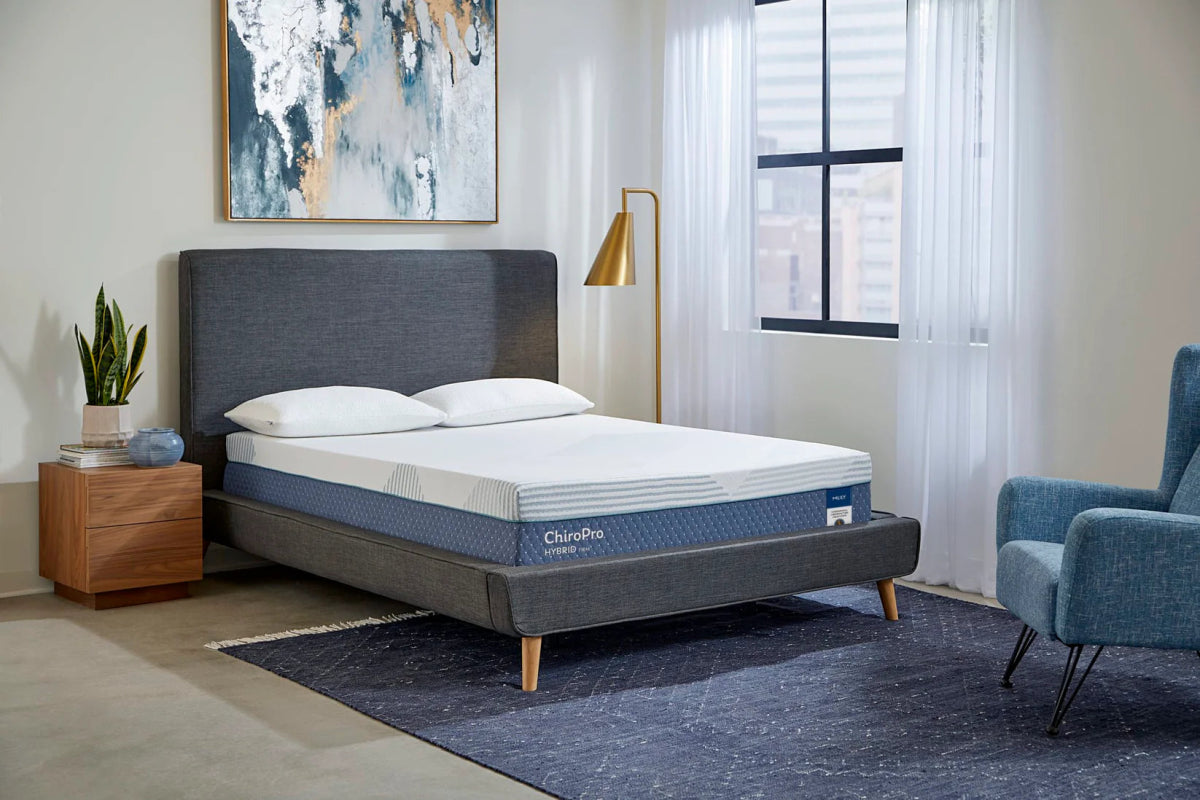
A "6.5 medium-firm" rating won't tell you whether a mattress will actually feel right for your body. The mattress comfort scale runs 1 (softest) to 10 (firmest), with medium-firm near 6.5 the most reliable starting point — but firmness is how a bed feels, while support is how it performs, and the same number sinks differently depending on your weight and sleep position. Here's how to decode the number for you.
Key takeaways
- The scale runs 1–10: soft sits at 3–6, medium-firm near 6.5, and firm at 7–10.
- Firmness ≠ support: firmness is sink depth (feel); support is spinal alignment (performance) — a soft bed can still support you well.
- The same number feels different by body: lighter sleepers find a rating firmer, heavier sleepers find it softer.
- Medium-firm is the best-supported default, per a 2021 systematic review — not a universal rule.
- Scales aren't standardized: some retailers invert them so 1 is firmest, so always confirm direction.
What does the 1–10 mattress comfort scale actually mean?
The comfort scale runs from 1 (softest) to 10 (firmest); soft sits at 3–6, medium-firm lands near 6.5, and firm covers 7–10. It's a quick shorthand for how much you'll sink into a mattress when you lie down.
According to Sleepopolis's mattress firmness guide, a 6.5 out of 10 is widely regarded as the industry standard for medium-firm — which is why so many beds cluster there. Use the table below as a quick translator.
| Rating | Label | How it feels | Best starting point for |
|---|---|---|---|
| 1–2 | Very soft | Deep, immediate sink | Niche preference; rarely recommended alone |
| 3–6 | Soft to medium | Noticeable contour at shoulders and hips | Lighter sleepers, side sleepers |
| ~6.5 | Medium-firm | Balanced — gentle give over clear pushback | Most sleepers as a default |
| 7–10 | Firm to very firm | Sits "on top," minimal sink, strong lift | Heavier sleepers, stomach sleepers |
One number, though, is only a starting point. To see how these ratings translate into real builds, you can browse our curated hybrid mattress collection and compare where each lands on the scale.
What is the difference between mattress firmness and support?
Firmness is how a mattress feels — how far you sink in; support is how it performs — whether it keeps your spine aligned through the night. They're two separate things, and a single rating only captures the first one.
"Firmness describes how the mattress feels. Support describes how it performs." — National Council on Aging (NCOA), Understanding the Mattress Firmness Scale
This is the distinction most shoppers miss — and the one that explains why two beds at the same number can leave you feeling completely different in the morning. A plush mattress can still hold your spine neutral if its support core is well-built, and a rock-hard one can still let your hips fall out of line.
As Sleepopolis puts it in its firmness guide, "Don't forget: firmness isn't support. You can find a mattress with great support that's still soft and meets all of your pressure relief needs." That's why a firmness number alone never tells the whole story.
Bottom line: when you read a rating, ask two questions — how will this feel against my pressure points, and will it keep my spine straight? Our top 10 mattress-buying essentials walk through how to evaluate both before you commit.
Why does the same firmness number feel different on different bodies?
Your weight and shape change how far you sink, so one rating feels firmer to a lighter sleeper and softer to a heavier one. Firmness is measured against a standard load, but your body isn't that standard — it pushes into the foam and coils with its own weight and contours.
A 2019 anthropometric study of 59 healthy participants in Applied Ergonomics found no overall spinal-alignment difference across soft, medium, and firm mattresses in the full group — but subgroup effects told a more useful story: heavier participants aligned better on firmer surfaces, lighter participants on softer ones, and taller people on medium. Larger hip circumference was also linked to more spinal deviation on softer beds. These are subgroup signals, not absolutes, but they match what shoppers report.
Practical thresholds many guides reference put it simply:
- Under ~60 kg (lighter): often need softer comfort, because there isn't enough body weight to compress a firm surface and relieve pressure.
- Over ~95 kg (heavier): often need firmer comfort, because a softer surface lets the hips and torso sink past neutral alignment.
- In between: medium-firm tends to behave closest to its rating.
This is exactly why partners of different weights so often disagree on the "right" number — the same bed can read as supportive to one and sinking to the other. If that's your bed, our overview of how to test a mattress before buying is worth a read.
If you're staring at firmness numbers and can't tell which one is yours, that's the whole point of skipping the guesswork: find your firmness in our quick quiz, which maps your weight, position, and feel preference to a real build.

What firmness should I choose for my sleep position?
Side sleepers generally want 3–6, back sleepers 5–7, and stomach sleepers 7 or higher to keep the spine neutral. Position decides where your body needs give and where it needs lift — so it's one of the biggest modifiers of the "right" number.
- Side sleepers (3–6): need give at the shoulder and hip so those points don't take all the pressure. Strict side sleepers typically want something in the 3–6 range, per Sleepopolis.
- Back sleepers (5–7): need a balance — enough contour to fill the lumbar curve, enough lift to stop the hips dropping. Lighter back sleepers may go as low as 5.
- Stomach sleepers (7+): need firm lift to keep the hips from sinking and over-arching the lower back; anything above a 7 generally provides adequate support.
- Back pain (5–8): medium-to-firm mattresses are the most consistently supported range for people with back pain.
Treat these as starting points, not rules — your weight shifts them, as the section above explains. For a deeper position-by-position breakdown, our mattress-buying essentials guide goes further into matching feel to how you sleep.
Firmer hybrid vs pressure-relieving hybrid: which is better?
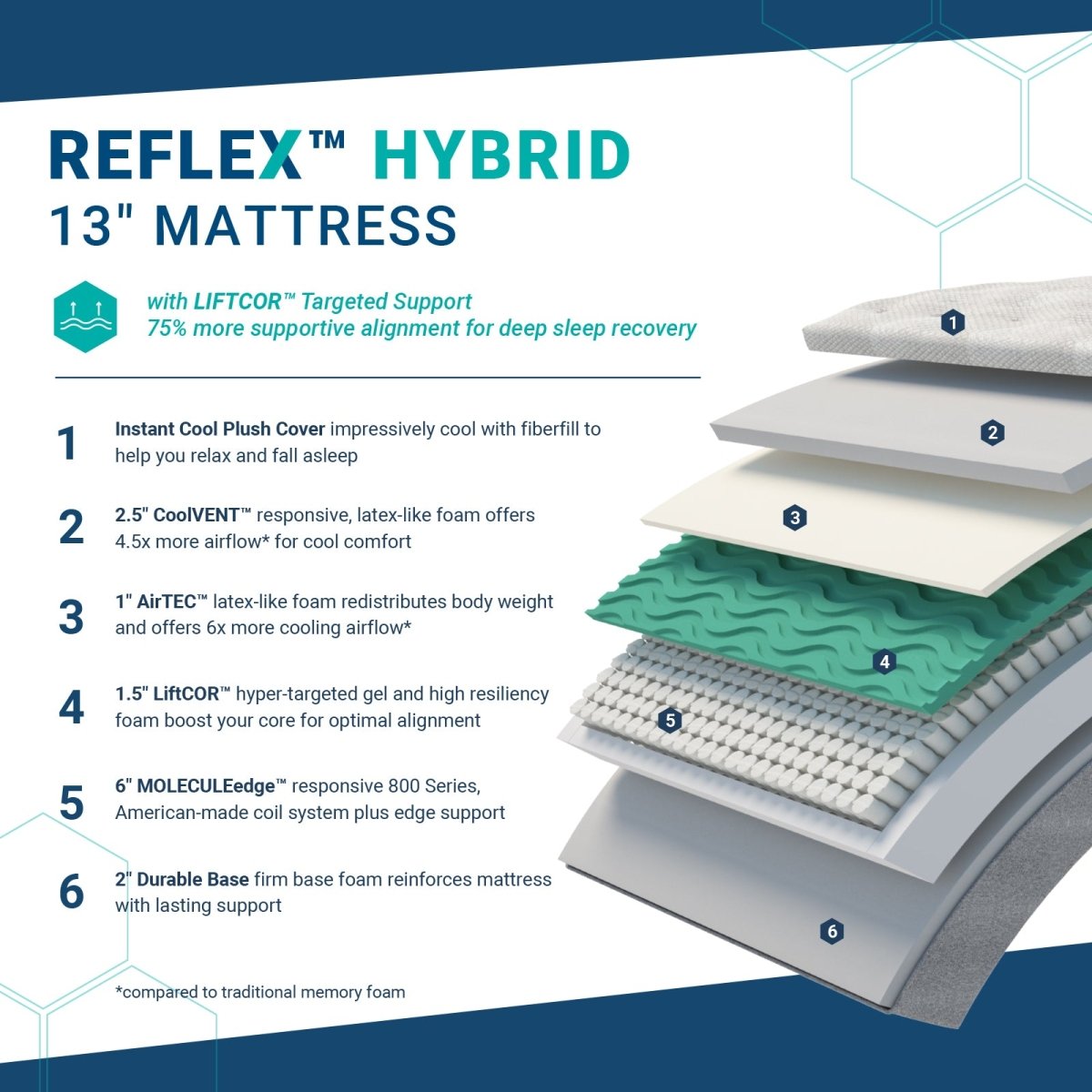
A firmer hybrid uses denser comfort foam over stiffer coils for lift; a pressure-relieving hybrid layers plusher contouring foam over more responsive coils for sink and contour. Same category, two very different readings on the comfort scale — and the difference comes down to engineering, not labels.
Hybrids combine a foam comfort layer with a coil support core, which is what gives them both pressure relief and lift. As Casper's firmness explainer notes, that rating isn't arbitrary — it reflects measurable load-deflection behavior. The engineering principle below is illustrative of how builds map to feel, not a published spec:
| Build trait | Firmer hybrid | Pressure-relieving hybrid |
|---|---|---|
| Comfort foam | Denser, firmer — resists compression | Plusher, softer — cradles and contours |
| Coil feel | Stiffer, more pushback | More responsive, gives at pressure points |
| Where it lands on the scale | Reads higher (7+) | Reads lower (4–6) |
| Main sensation | Lift — you rest "on" the bed | Contour — you settle "into" the bed |
| Best for | Stomach/back sleepers, heavier sleepers, those who want a buoyant feel | Side sleepers, lighter sleepers, shoulder/hip pressure |
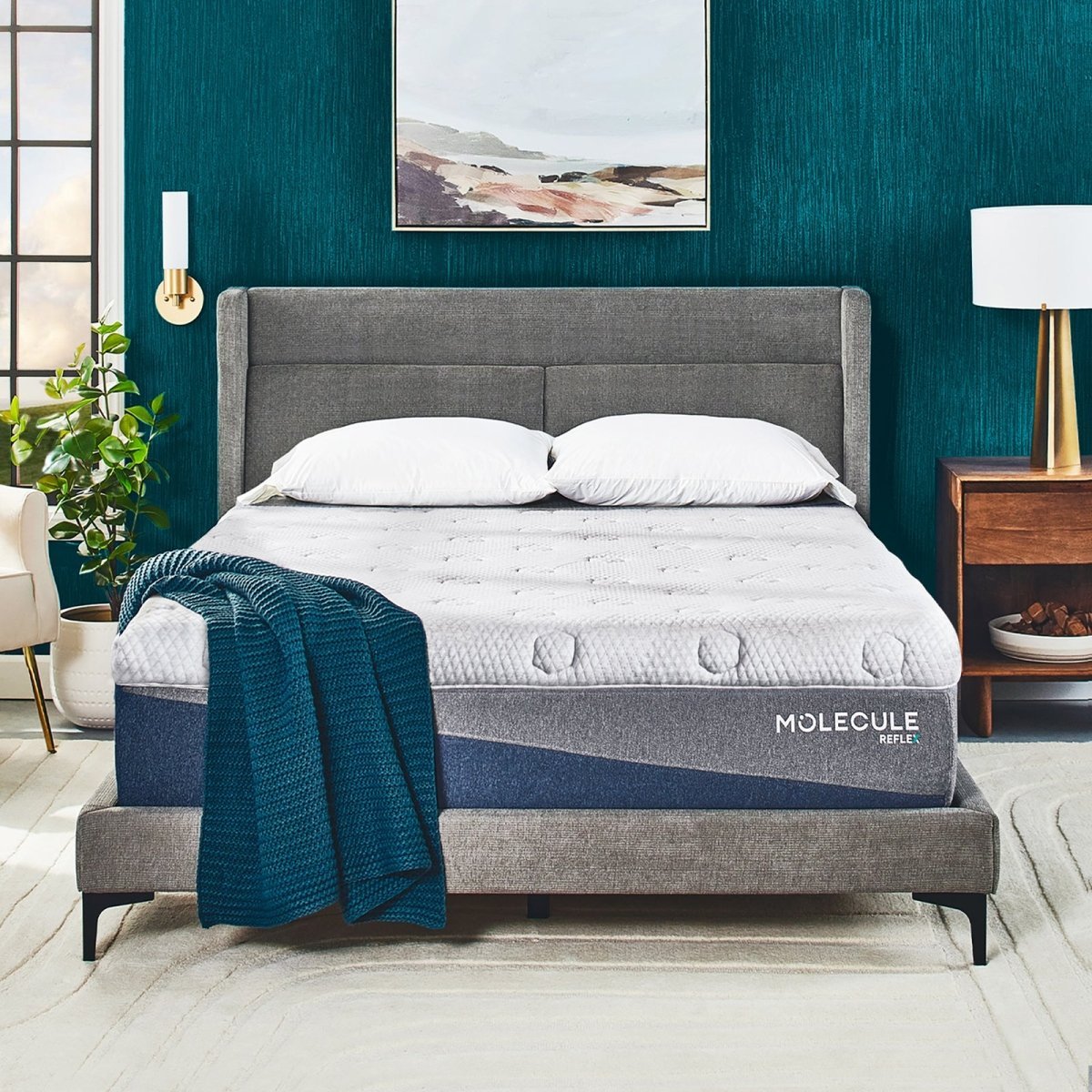
The comfort-layer foam and coil tuning — not the word "hybrid" — decide whether a bed lifts you or cradles you. You can see that range across our own lineup: compare a build like the MLILY ChiroPro Hybrid against one like the Sandman NatureFlex Hybrid and read each product's comfort-layer and coil notes to predict how it will feel for you.
The takeaway: never buy on the category alone. Read the comfort-layer and coil notes to predict whether a hybrid will lift you or cradle you. When you're ready to compare real builds side by side, our hybrid mattress collection shows where each one sits.
Why is medium-firm the "safe" default for most sleepers?
A 2021 systematic review found medium-firm mattresses generally balance comfort and spinal alignment better than very soft or very firm surfaces — making it the best-supported starting point, not a universal rule. That nuance matters: "default" means a smart first guess, not a guarantee.
The 2021 systematic review concluded medium-firm surfaces tend to promote comfort, sleep quality, and alignment across the included trials — but it explicitly flagged heterogeneity and limited study quality. In other words, it's a synthesis of small experimental studies, not one definitive effect.
"If you still have no idea what firmness you should go with... Go with the majority. We recommend choosing a medium-firm mattress." — Sleepopolis, Mattress Firmness Guide
A small 2025 polysomnography study of 12 participants in Nature and Science of Sleep points the same direction: sleepers on a medium-firm mattress fell asleep faster (7.71 ± 1.31 minutes vs. 12.42 ± 1.94 on a soft mattress) and had fewer stage transitions (21.75 ± 2.13 vs. 29.17 ± 2.35), both statistically significant. With only 12 people, it's preliminary and shouldn't be generalized — but it lines up with the broader literature.
Bottom line: if you genuinely don't know where to start, medium-firm is the evidence-backed bet — then adjust for your weight and position. Our step-by-step guide to buying a mattress online shows how to refine from there.
Why doesn't every brand's firmness scale read the same way?
Some retailers invert the scale so 1 is firmest, and a European load-deflection testing standard measures firmness at three forces — so ratings aren't universal. A "4" on one site can mean the opposite of a "4" on another.
This is the trap competitors rarely warn about. US Mattress uses an inverted comfort scale where 1 is the firmest and 10 is the softest — the reverse of the more common direction. Buy on the number alone across two brands and you can end up with the exact opposite of what you wanted.
On the engineering side, Casper describes "a European standard that measures firmness by pressing into the mattress and measuring the slope of the load-deflection curve at three forces" — reported as 210N, 275N, and 340N — to translate physical resistance into a rating. The point isn't to memorize the standard; it's to understand that a firmness rating is engineered and measurable, not a vibe a marketer picked.
So-what: two safeguards before you trust any number — confirm which direction the scale runs, and remember that a rating reflects a specific test, not a guarantee for your body.
How do I read a firmness rating when shopping online?
Confirm which direction the scale runs, match the number to your weight and sleep position, check the foam-density and coil notes, and prioritize support over feel. A rating is a clue, not a verdict — here's how to read it like a pro.
- Verify the scale direction. Is 1 soft or firm on this site? Most use 1 = softest, but some (like US Mattress) invert it. Never assume.
- Translate the number to your body. Apply your weight (lighter feels it firmer, heavier feels it softer) and your sleep position (side 3–6, back 5–7, stomach 7+).
- Read the build notes, not just the label. Comfort-layer foam type and density, plus coil feel, tell you whether a hybrid will lift you or cradle you — far more than the word "hybrid" or "plush."
- Prioritize support over initial feel. A bed can feel great in the showroom and still misalign your spine. Ask how it performs, not just how it feels.
- Use trials and quizzes to confirm. The fastest way to translate all of the above for your body is a guided match.
Want to skip the math? Find your firmness in our quick quiz — it folds your weight, position, and feel preference into a build recommendation in about two minutes. For more hands-on tactics, see how to test a mattress before buying.
Who is each firmness level NOT for?
Very firm beds aren't for lighter side sleepers who'll feel pressure points; very soft beds aren't for heavier or stomach sleepers whose hips will sink out of alignment. There's no universal best — only a best for your body, which is why honest trade-offs matter.
- Very firm (7+) — skip if you're a lighter sleeper or strict side sleeper. The 2019 Applied Ergonomics study found lighter participants aligned better on softer surfaces; a firm bed can leave shoulders and hips taking too much pressure.
- Very soft (3–4) — skip if you're heavier or sleep on your stomach. The same research linked larger hip circumference and heavier bodies to more spinal deviation on softer beds — the hips dip out of line.
- Medium-firm (~6.5) — not automatically ideal for everyone. It's the best-supported default, but a dedicated side sleeper with shoulder pain may still want softer contour, and a heavy stomach sleeper may want firmer lift.
That honest reality — that the "perfect number" depends entirely on your shape and how you sleep — is exactly why a quiz beats a star rating. Our mattress-buying essentials reinforce the same point: match the bed to the sleeper, not the sleeper to the bed.
Frequently asked questions about the mattress comfort scale
What does "medium-firm" mean on a mattress comfort scale?
Medium-firm sits near 6.5 out of 10 and is widely regarded as the industry standard, per Sleepopolis. It offers gentle contour over clear support — enough give to relieve pressure, enough pushback to keep your spine neutral for most sleepers.
Is a firmer mattress always better for back pain?
No. Medium-to-firm mattresses (roughly 5–8 on the scale) are the most consistently supported range for back pain — not the firmest possible bed. A 2021 systematic review in PMC found medium-firm surfaces balance comfort and spinal alignment better than very soft or very firm ones.
How do I know if a brand's firmness scale is inverted?
Check the brand's own scale guide. Most use 1 = softest, but some retailers invert it so 1 = firmest — US Mattress is one documented example. Confirm the direction before comparing numbers across two different sites.
Why do hybrids feel different from all-foam mattresses at the same firmness number?
A hybrid's coil core adds buoyant lift and responsiveness that foam alone doesn't, so a "6.5" hybrid can feel more supportive underfoot than a "6.5" all-foam bed even at the same rating. The comfort-layer density and coil tuning shape the feel as much as the number does.
Which firmness level is best for side sleepers with shoulder pain?
Side sleepers generally do best in the 3–6 range, per Sleepopolis, because the surface needs to give at the shoulder and hip. With shoulder pain, a more pressure-relieving, contouring build usually beats a firm one that concentrates pressure on the joint.
Is a medium-firm (6.5) mattress the best choice for everyone?
No — it's the best-supported default, not a universal optimum. A 2019 Applied Ergonomics study showed lighter sleepers often align better on softer beds and heavier sleepers on firmer ones, so your weight and position can move the ideal number up or down.
How do you find the firmness that's right for you?
Start with medium-firm, then adjust for your weight, sleep position, and whether you want lift or contour — or take a quick quiz that maps all three to a real mattress. The comfort scale is a useful translator, but the "right" number is personal, not universal.
Here's the quick decision rule:
- Side sleeper or lighter build: lean softer (3–6), toward a pressure-relieving hybrid.
- Back sleeper or back pain: stay in the medium-to-firm range (5–8).
- Stomach sleeper or heavier build: lean firmer (7+), toward a firmer hybrid with stronger lift.
- Couple with different weights: compare builds in person, or use the quiz for each of you.
Not sure which number is yours? Find your firmness in our quick quiz, then browse our curated hybrid mattress collection to compare firmer and pressure-relieving builds side by side. Prefer to feel them first? You can schedule a personalized in-store appointment in Huntsville or ask our sleep team about 0% APR financing from $29/month — and because we're mission-driven, every mattress you buy helps us donate one to a local family in need.
With free shipping on every order and a team ready to help by text or call, the goal is simple: translate the comfort scale into the one number that's right for your body.



Leave a comment
All comments are moderated before being published.
This site is protected by hCaptcha and the hCaptcha Privacy Policy and Terms of Service apply.