

Wake up with a stiff, achy lower back even though you fall asleep face-down with no trouble? The fix is usually a firmer, more supportive surface. Stomach sleepers do best on a medium-firm to firm bed — often described as 6.5 to 9 out of 10 on the firmness scale (Mattress Firm) — because it stops the midsection from sinking and keeps the lumbar spine closer to neutral. The catch: the right pick depends on your weight, pain history, and feel.
Key takeaways
- Stomach sleepers need support over plushness: a medium-firm to firm surface (~6.5–9/10) limits midsection sink and keeps the spine near neutral.
- The strongest evidence is indirect: a 2003 Lancet RCT of 313 back-pain patients found medium-firm beat firmer for low-back pain — but it didn't study stomach sleepers specifically.
- Support and comfort aren't the same thing: the bed that aligns you best may feel less cushioned.
- Firmness labels aren't standardized — a "7" at one brand differs from another, so test or use a quiz.
- Heavier sleepers generally need firmer support; pillow loft and pelvic support matter, too.
What is the best mattress for stomach sleepers?
Stomach sleepers do best on a medium-firm to firm, highly supportive surface (roughly 6.5–9/10) that limits midsection sink and keeps the lumbar spine near neutral. Mattress Firm notes that "beds for stomach sleepers are typically designed with a firm to medium-firm feel, often rated between 6.5 and 9 out of 10 on the firmness scale" — useful industry guidance, though not a clinical standard.
The honest answer is that there is no single universal number. Your best pick depends on body weight, whether you wake with back stiffness, and how cushioned you like a surface to feel. A lighter front sleeper can land at the softer end of that range; a heavier one usually needs more support to stop the hips from dipping.
Not sure where you fall on the scale? Our firm responsive-support hybrids are built for exactly this need, and a quick firmness quiz can narrow it down before you ever shop.
Why does stomach sleeping strain your lower back?
Lying face-down lets the heavier abdomen and pelvis sink into the mattress, pulling the lumbar spine into extension and concentrating strain on the lower back. The goal of a good stomach-sleeper bed is to resist that sag and hold the spine closer to neutral alignment.
The mechanism is straightforward. Your torso and pelvis carry most of your body weight. On a too-soft surface they press in deeper than your chest and legs, tipping the pelvis forward and arching the low back beyond its resting curve. Hold that arch for hours and the muscles and joints of the lumbar spine fatigue.
This isn't just theory. In a 2023 MRI study in European Radiology Experimental of 20 healthy subjects, researchers found that sleeping on a mattress versus a rigid surface produced small but statistically significant changes in lumbar angles — the L1–L5 angle increased by 2.9°, sacral slope by 2.0°, and L5–S1 dropped 1.6°. The takeaway: the surface under you measurably changes how your lower spine sits.
"Overly soft mattresses can lead to back discomfort if the abdomen sinks excessively, resulting in strain on the lower back." — Terri Long, Long's Bedding & Interiors, quoted in The New York Times Wirecutter
That's why firmness matters more for front sleepers than for most other positions — and why good sleep posture is tied so closely to how rested and emotionally recovered you feel each morning.
What firmness do stomach sleepers actually need?
Most stomach sleepers want medium-firm to firm — often cited as 6.5–9/10 — firm enough to stop midsection sink but not so hard it kills contouring. Forbes Vetted puts it plainly: "Stomach sleepers can go firmer than both side and back sleepers to keep their midsection from sinking into the bed and putting stress on the lower back."
Support is not the same as comfort
This is the distinction most guides skip. Support is how well the surface resists sink and holds your spine in line. Comfort is the cushioning you feel against your skin. The bed that aligns a stomach sleeper best can feel firmer and less plush — and that's fine, as long as there's still enough surface give to relieve pressure at the chest and hips.
Think of it as two separate jobs: a strong core does the aligning, and a thinner comfort layer takes the edge off. When you understand that split, a firm bed stops feeling like a punishment and starts feeling like the right tool. Our mattress-buying essentials guide walks through how to weigh both.
Firmness labels aren't standardized
Bottom line: a "7/10" at one brand can feel like a "5" or a "9" at another, because there is no industry-wide firmness standard. Two beds with the same label can sleep very differently depending on the foams, coils, and layer thicknesses inside. That's why testing in person — or using a guided firmness quiz that accounts for your body and preferences — beats shopping by a number alone.

What does the research actually say (and not say) about firmness and back strain?
The strongest evidence shows medium-firm surfaces improve low-back pain and alignment — but it studied back-pain patients generally, not stomach sleepers specifically. So the smart move is to treat this as well-reasoned guidance, not proof.
The clearest higher-tier trial is a 2003 randomized, double-blind study in The Lancet of 313 adults with chronic nonspecific low-back pain, which found a medium-firm mattress improved pain and disability compared with a firmer one. A 2021 systematic review reached a similar conclusion: medium-firm mattresses were linked to better comfort, sleep quality, and spinal alignment than other firmness levels.
Here's the part most listicles leave out. None of these studies tested stomach sleepers as a group. A 2024 cross-sectional Cureus study of 375 chronic low-back-pain patients found prone (stomach) sleeping was among the positions people commonly avoided because of pain — but that's observational. It can't prove stomach sleeping causes back pain; people in pain may simply avoid the position.
Older reviews are just as cautious. A 2006 systematic review concluded mattresses and bedding may influence low-back pain, but called the evidence limited and heterogeneous. So the recommendation here — medium-firm to firm for stomach sleepers — is sensibly extrapolated from related research, not handed down by a stomach-sleeper trial. For a deeper look at how the right surface supports the spine, see our guide to how the right mattress supports back health.
Which mattress build types work best for stomach sleepers?
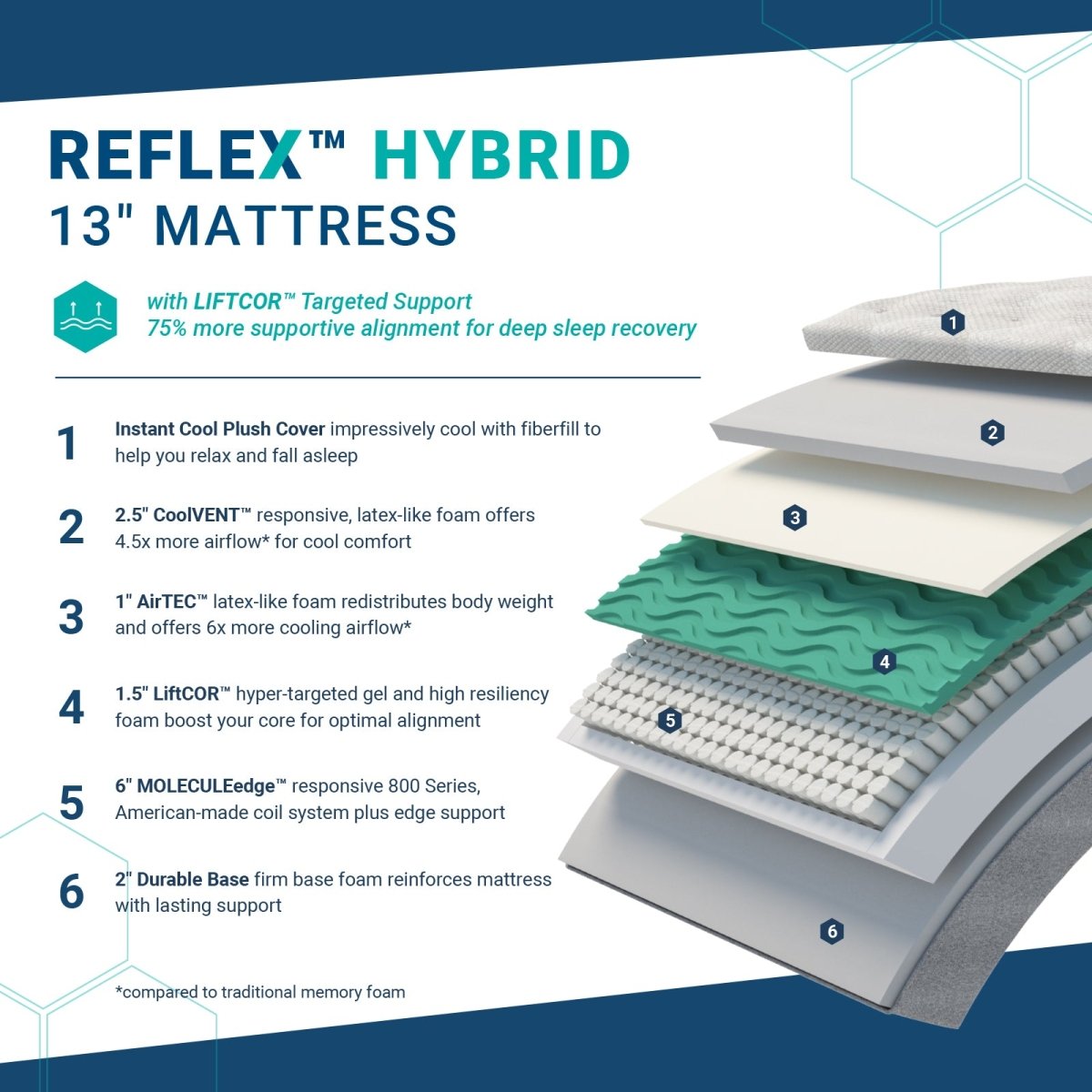
Firm hybrids and firmer latex lead because their responsive support resists deep sink; firm all-foam can work only if it stays genuinely firm. The construction matters as much as the firmness rating, because the support core is what stops your hips from dropping.
| Build type | Typical feel / firmness | Midsection support | Pressure relief | Best-fit stomach sleeper |
|---|---|---|---|---|
| Firm hybrid (coil core + thin comfort layer) | Medium-firm to firm; responsive | Strong — coils push back against sink | Moderate; surface foam takes the edge off | Most stomach sleepers, especially heavier bodies wanting bounce and airflow |
| Firm latex | Firm, buoyant, lively | Strong — resilient and resists deep compression | Moderate; supportive rather than cradling | Those who want durable, responsive support and don't like a sink-in feel |
| Firm all-foam | Firm only if not overly plush | Adequate if genuinely firm; deep memory foam risks sink | Good surface cushioning | Lighter stomach sleepers who prefer a foam feel and choose a firm model |
Hybrid and latex builds are recommended most often because they tend to deliver responsive support — they hold you up rather than letting you settle in. Among hybrids, responsive-support models like the firm MLILY Chiropro Firmer hybrid and the Sandman NatureFlex hybrid illustrate the build type well: a sturdy coil core under a thin comfort layer keeps the midsection from sinking.
Skip a soft, deep-contouring all-foam bed if you sleep on your stomach. The plush models that side sleepers love are usually the wrong call here — they let the torso compress too far. If you're torn between constructions, our overview of mattress materials and builds can help.
How do you match firmness to your body, pain history, and feel?
Pick firmness using four inputs — body weight, existing back pain, preferred feel, and construction — rather than one universal "stomach sleeper" number. Working through them in order gets you far closer to a match than any single label.
- Body weight. Heavier stomach sleepers generally need firmer support, because greater mass increases the chance of midsection sink. Lighter sleepers can sit at the softer end of the range without their hips dropping. There's no exact weight cutoff worth quoting — treat it as a sliding scale, not a hard line.
- Existing back pain. If you already wake stiff, lean toward the supportive medium-firm end. That's consistent with the 2021 systematic review linking medium-firm surfaces to better alignment and comfort in back-pain populations.
- Preferred feel. Within the firm range, choose where you actually like to land. Some people want a near-floor-flat firm; others want a touch of cushion. Both can keep you aligned if the core is strong.
- Construction. A thinner comfort layer over a strong support core is the classic stomach-sleeper recipe — it limits deep sink while preserving a little surface softness.
This is the decision point where browsing pays off. To compare responsive-support builds side by side, look at the firmer hybrid and foam collections, and if you'd rather skip the guesswork, our quick firmness quiz turns these four inputs into a personalized number. That's far more reliable than buying off a brand's firmness label alone.
How can stomach sleepers reduce lower-back strain beyond the mattress?
Use a thin or no head pillow, slip a slim pillow under your pelvis to flatten the lumbar arch, and ease toward a side position over time. The mattress sets the foundation, but these small adjustments protect your lower back further.
- Lower your pillow loft. A tall pillow cranks your neck up and back, which can deepen the arch in your lower spine. A thin pillow — or none — keeps your head closer to neutral. A low-loft cooling pillow is an easy swap for front sleepers.
- Support the pelvis. Placing a slim pillow under your pelvis or lower abdomen gently lifts the midsection, which reduces the lumbar extension that drives strain.
- Transition gradually. If pain persists, easing toward side sleeping over time can help, since side and back positions are generally easier on the lumbar spine. Make the change slowly rather than forcing it in one night.
One caveat: if you're pregnant or managing a specific back condition, check with a clinician before changing your sleep position or adding positional aids. The general tips above are guidance, not medical advice.
Who should be cautious about stomach sleeping — and when isn't a new mattress the answer?
If pain persists despite a firm, supportive bed, the position itself — not the mattress — may be the driver, and changing position can help more. A new mattress is a powerful lever, but it isn't a cure-all, and it's worth being honest about that.
A firm stomach-sleeper setup is not a complete fix for everyone. The 2024 Cureus study of 375 back-pain patients found prone sleeping was commonly avoided due to pain — a signal that for some people, the position aggravates symptoms regardless of the surface. Because that data is observational, it can't prove cause, but it's a reasonable reason for caution.
Be especially thoughtful if you:
- Have chronic low-back pain that doesn't ease on a firm surface — a position change or clinical advice may matter more than a purchase.
- Are pregnant — confirm safe sleep positions with your provider.
- Find firm surfaces genuinely uncomfortable — forcing a too-hard bed can trade one ache for another, since an overly firm surface can reduce pressure relief.
If you're unsure whether your current bed or your position is the culprit, our guide to testing a mattress before buying can help you diagnose the difference before you spend a dollar.
Frequently asked questions about mattresses for stomach sleepers
Is a firm or medium-firm mattress better for stomach sleepers?
Most stomach sleepers do well anywhere from medium-firm to firm — roughly 6.5–9/10 per Mattress Firm's industry guidance. Lighter sleepers can lean medium-firm, while heavier sleepers usually need the firmer end to stop midsection sink. The right spot depends on your weight, pain history, and feel.
Are memory foam mattresses bad for stomach sleepers?
Soft, deep-contouring memory foam is risky for stomach sleepers because it lets the torso and hips compress too far, pulling the lower back out of line. An all-foam bed can work only if it's genuinely firm and not overly plush. Many front sleepers prefer hybrids or latex for their more responsive support.
Do heavier stomach sleepers need a firmer mattress?
Generally, yes. Greater body mass increases the chance of midsection sink, so heavier stomach sleepers usually need firmer support to keep the spine near neutral. There's no exact published weight cutoff, so treat it as a sliding scale and test or use a quiz to find your match.
Is sleeping on your stomach bad for your back?
It can place more strain on the lower back than side or back sleeping, because the midsection tends to sink and arch the lumbar spine. A 2024 Cureus study found prone sleeping is commonly avoided by back-pain patients, but that's observational and doesn't prove the position causes pain. A firm, supportive surface reduces the risk.
What's the best supportive mattress for stomach sleepers on a modest budget?
Look for a firm or firm-leaning build with a strong support core and a thin comfort layer — a responsive firm hybrid or a genuinely firm foam model offers good value. Prioritize support over plushness. Browsing by price range or taking a firmness quiz helps you find the most supportive option within your budget.
How do I know if my mattress is too soft for stomach sleeping?
Tell-tale signs include waking with lower-back stiffness, feeling like your hips "hammock" into the bed, or a visible dip where your torso rests. If you can press your hand into the surface and feel it swallow your palm, it likely lets your midsection sink too far. A firmer surface usually relieves this.
How do you find your perfect-match firmness and next step?
Match firmness with four inputs — body weight, existing back pain, preferred feel, and construction — then choose a supportive medium-firm to firm surface that keeps your midsection from sinking. That's the whole framework, and it beats shopping by a single firmness label every time.
From here, narrowing it down is easy. Find your firmness in our quick quiz to turn those four inputs into a personalized number, then compare our firm responsive-support hybrids built to hold front sleepers near neutral. Every Select Mattress purchase comes with free shipping, and 0% APR financing is available from $29/month — ask our team for current terms.
Near Huntsville, Madison, Athens, or Decatur? Schedule a personalized in-store appointment to feel the difference between support and softness for yourself — the distinction is far clearer in person than on a spec sheet. You can also shop online with our step-by-step buying guide if you'd rather have it delivered.
And because better sleep shouldn't be a privilege, every mattress you buy helps us donate one to a local family in need — quality rest, shared with our community.
This guide is educational and not medical advice. If you have ongoing back pain, are pregnant, or are managing a specific condition, consult a qualified clinician before changing your mattress or sleep position.


Leave a comment
All comments are moderated before being published.
This site is protected by hCaptcha and the hCaptcha Privacy Policy and Terms of Service apply.