

Use a protector from night one, air the mattress out before sleeping on it, rotate it on a schedule matched to its build, and never bend or under-support it. That routine does three things: it shields the surface from moisture, evens out early wear while the materials settle, and protects the support system that keeps your warranty valid.
Key takeaways
- Use a mattress protector from the first night—moisture is the most common invisible damage to foam and fiber layers, and stains are a frequent reason warranties are denied.
- Air a new foam mattress for at least 8 hours before adding bedding, per John Ryan by Design, to let off-gassing fade.
- Rotate foam, latex, and newer innerspring mattresses every 6 to 12 months (Sleep Foundation); older innersprings every 2 to 6 months.
- Don't flip most modern mattresses—they're built with a designated sleep side (Mattress Firm).
- A proper, firm foundation resists premature sagging; bending the mattress can void the warranty (Serta).
- Break-in typically runs two weeks to about 60 days—and some care steps are universal while others depend entirely on the mattress you own.
What are the three real goals of new-mattress care?
Good care does three distinct jobs: it protects the surface from liquids and soil, reduces uneven early wear as the materials settle, and preserves the support system that keeps your warranty valid. Sorting every tip into one of these three buckets is what separates useful routine from folklore.
Durability isn't a vague idea—it's measured. The ASTM F1566 testing standard evaluates mattresses for firmness retention and surface deformation across repeated load cycles. Those two measures—how well a mattress holds its feel and resists permanent body impressions—are the real markers of a long life.
Here's the honest part most retailers won't tell you: there is no strong peer-reviewed study proving that any specific home care routine extends a mattress's lifespan. What we have is consistent expert-retailer convention plus standards-informed practice. That doesn't make rotation or protection pointless—it makes them sensible insurance against known failure modes (moisture damage, lopsided wear, sagging from poor support), not magic.
- Goal 1 — Protect the surface: keep sweat, spills, dust, and allergens out of the comfort layers. Universal.
- Goal 2 — Even out early wear: rotate on a schedule so the busiest sleep zones aren't always the same. Construction-specific.
- Goal 3 — Preserve support and warranty: use the right base, never bend the mattress, and follow the warranty's care terms. Warranty-sensitive.
If you're still choosing a bed and want the build that's easiest to live with, our complete guide to testing a mattress before buying walks through feel, support, and trial periods first.

What should you do in the first 24 hours after delivery?
Unbox the mattress promptly, lay it flat on its base, open a window or run a fan, and let a new foam mattress air out for at least 8 hours before adding bedding or sleeping on it. That first day sets the tone for both comfort and freshness.
Follow this order:
- Remove all packaging right away. A compressed bed-in-a-box needs room to expand fully—leaving plastic on slows that down.
- Place it flat on a supportive base. Never leave a new mattress folded or propped against a wall longer than necessary.
- Ventilate the room. John Ryan by Design recommends airing a new mattress for at least 8 hours after delivery, and airing it weekly thereafter by turning back the bedding for a few hours.
- Wait for the smell to fade before remaking the bed.
Why off-gassing happens and when it fades
That "new mattress" smell is off-gassing—the release of volatile organic compounds from fresh foams and adhesives as they reach open air. It's a common, usually short-lived part of new foam products. The EPA's indoor air quality guidance notes that ventilation is the simplest way to reduce indoor pollutant concentrations, which is exactly why an open window and a few hours of airflow help the odor clear faster.
Certified foams tend to clear faster and emit less. If low emissions matter to you, look for independently verified certifications like CertiPUR-US, GREENGUARD, or OEKO-TEX directly from the certifying body rather than relying on marketing copy—our explainer on eco-friendly mattresses covers what those labels actually mean. New to ordering online? Our step-by-step guide to buying a mattress online covers delivery and setup, too.
Bottom line: ventilate, wait, and don't panic about a faint smell—it's normal and temporary. If a strong odor lingers past a few days, that's worth a call to your retailer.
Do you really need a mattress protector on a brand-new bed?
Yes—a protector from night one shields foam and fiber layers from sweat, spills, and allergens, which is the moisture that does the most invisible damage to a new mattress. It's the single highest-leverage care step you can take, and it's cheaper than the bed it protects.
The risk is real and physical. The Sleep Foundation warns against getting a mattress too wet, especially memory foam or polyfoam, and Serta cautions that saturating foams and fibers with liquids can damage them. A protector stops sweat and spills before they ever reach those layers—and because surface stains are a frequent reason warranty claims get denied, it quietly protects your coverage, too.
Standard protector vs full encasement: which is better?
- Standard fitted protector: covers the top and sides, defends against sweat and spills, and stays nearly invisible under your sheets. Best for most sleepers who just want everyday moisture and stain defense.
- Full-encasement protector: a zip-around cover that seals all six sides. Best for allergy-prone households, anyone worried about dust mites or bed bugs, or families who want maximum protection on a long-term investment.
If sweat, spills, or allergens are your concern, our DreamFit Comfort Mattress Protectors address exactly that with a breathable, waterproof barrier, while the zip-around DreamFit Comfort Mattress Encasements seal the whole mattress for allergen and pest defense. Browse the collection to compare and find your match.
One honest caveat: whether a protector is strictly required to keep your warranty valid depends on the specific brand and its warranty terms—don't assume it's universal. Check your warranty paperwork, or our guide to mattress warranties, to confirm what yours says.

How long does it take to break in a new mattress?
Break-in usually takes two weeks to about 60 days as the comfort layers settle—give your body up to 30 nights to adjust before judging the feel. A brand-new mattress is firmer than it will be in a month, because the foams and fibers haven't yet relaxed under your regular weight and movement.
Mattress Firm puts the break-in window at a couple of weeks to about 60 days, and their top advice is refreshingly simple:
"The Sleep Experts'® top recommendation for getting your mattress to the comfort level you desire is something you're probably already planning to do: Sleep on it every night." — Mattress Firm
Consistency is the real driver. Dreams notes it can take up to 30 nights for your body to adjust and the fillings to settle. So before you decide a new bed is wrong for you, give it a full month of normal, every-night use.
Too firm, or still breaking in?
There's a difference between a mattress that's genuinely the wrong firmness and one that's simply still settling:
- Still breaking in: the bed feels a little stiff but slightly softer each week, and you wake without new aches. Give it the full window.
- Wrong firmness for you: you wake with consistent pressure-point pain or back discomfort that isn't easing after several weeks. That's a fit question, not a break-in one.
You'll see "active break-in" tips—walking or pressing on the surface, or rolling across it—to speed things along. Treat that as practical retailer suggestion, not proven best practice; there's no rigorous study showing it changes the outcome versus simply sleeping on the bed nightly. If you're still inside a trial period and the firmness feels off, our mattress testing guide can help you tell a fit problem from a settling one—and you can always text or call our sleep team for model-specific guidance.
Should you rotate or flip your mattress, and how often?
Rotate most modern mattresses every 6 to 12 months—more often early on—but don't flip one-sided or pillow-top models, because they have a designated sleep side. Rotating spreads wear across the surface so the zones under your hips and shoulders aren't always carrying the load.
The clearest intervals come from the Sleep Foundation: foam, latex, and newer innerspring mattresses should be rotated every 6 to 12 months, while older innerspring mattresses should be rotated every 2 to 6 months. Two sources add a useful "break-in" twist for the early months:
- First few months: Dreams suggests rotating weekly for the first three months, then monthly thereafter, to help the fillings settle evenly.
- Mattress Firm's version: rotate head-to-toe every three weeks to a month during the first few months so the bed breaks in evenly.
- After settling: drop back to the Sleep Foundation's 6-to-12-month rhythm for foam, latex, and hybrid builds.
When NOT to flip
Most modern mattresses are built to be slept on one side only—the comfort layers are on top and the support core is underneath. Flipping puts you face-down on the firm base and stresses the bed in ways it wasn't engineered for. As Mattress Firm states plainly:
"It's important to not flip the mattress, as modern mattresses have a designated side to sleep on." — Mattress Firm
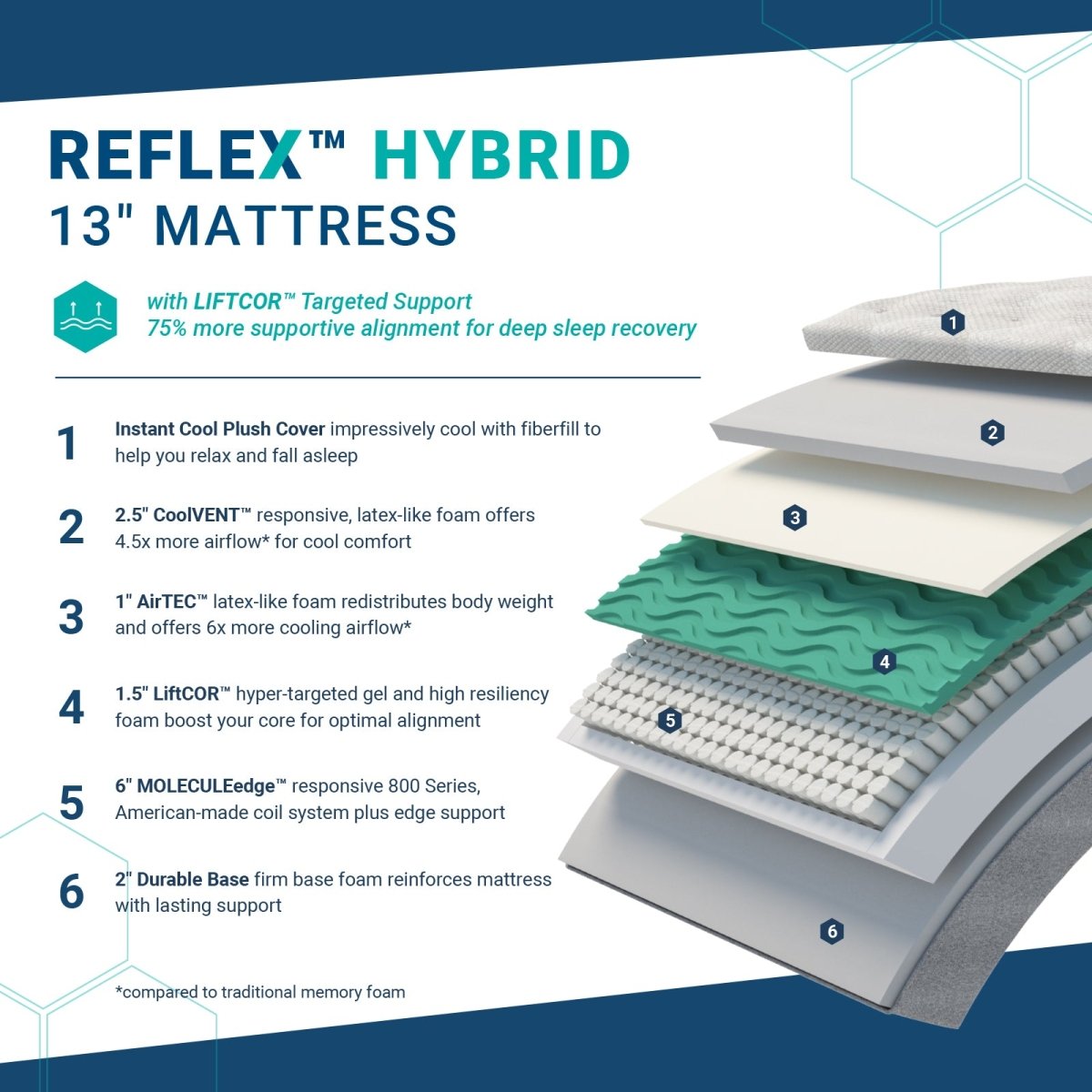
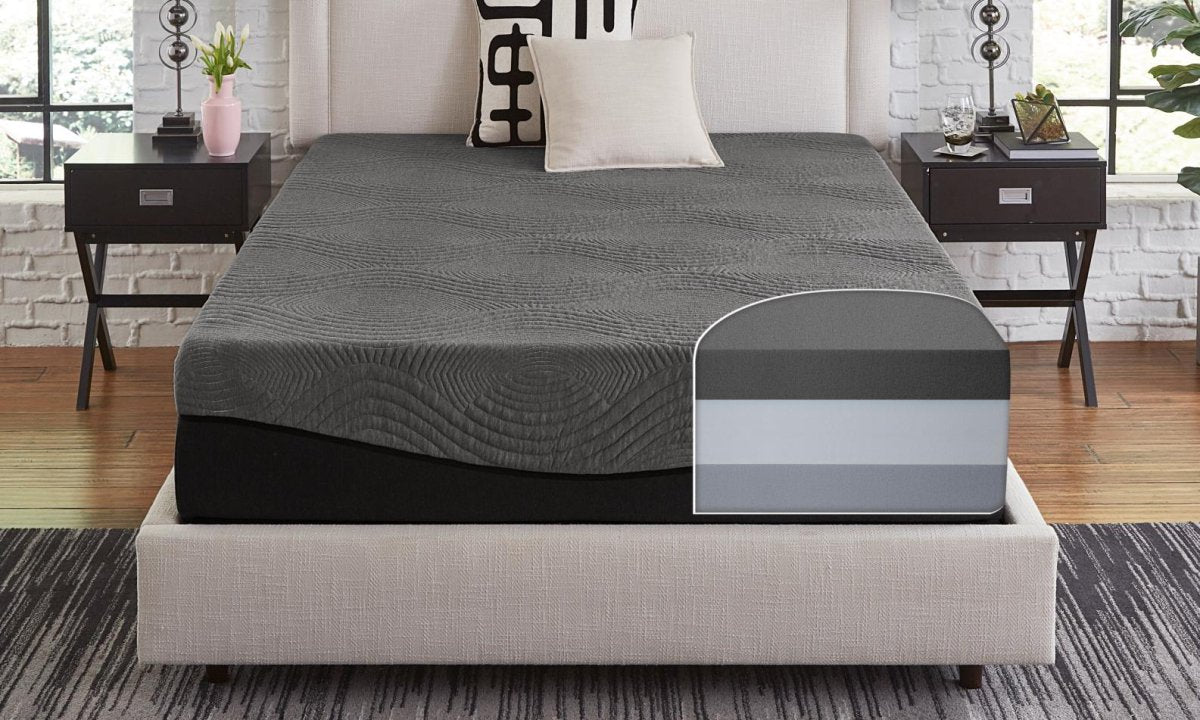
Only older, true two-sided ("double-sided") innersprings are designed to be flipped. When in doubt, rotate—not flip. For construction-specific feel and care, browse mattress builds by type, like our Molecule foam collection or a Sandman 11" NatureFlex Hybrid, to see how comfort layers are arranged.
Rotation and flip rules by mattress type
Memory foam, latex, and hybrid mattresses are rotated but not flipped; one-sided pillow-tops are rotated only; older two-sided innersprings can be flipped and rotated. The table below makes each build independently scannable, synthesizing Sleep Foundation, Dreams, and Mattress Firm guidance.
| Mattress type | Rotate how often? | Flip? | Air-out time | Moisture sensitivity | Notes / warranty flags |
|---|---|---|---|---|---|
| Memory foam | Every 6–12 months (weekly for first 3 months) | No | 8+ hours | High | Never soak; bending can void warranty |
| Latex | Every 6–12 months | No | A few hours to 8+ | Moderate–high | Heavy and resilient; rotate to even wear |
| Hybrid | Every 6–12 months | No | A few hours to 8+ | Moderate | Foam comfort layer up top; one sleep side |
| One-sided pillow / Euro-top | Every 6–12 months | No | A few hours | Moderate | Designated sleep side—rotate only |
| Older two-sided innerspring | Every 2–6 months | Yes (if double-sided) | A few hours | Lower | Flip and rotate to balance wear |
Bottom line: if your mattress has a soft comfort layer on one face—which nearly all foam, latex, and hybrid beds do—rotate it, never flip it.
What foundation or bed base is best for mattress longevity?
A new mattress needs firm, even, properly spaced support to resist premature sagging—and using the wrong base or bending the mattress can void your warranty. Support is the third job of care, and it's the one buyers most often get wrong.
Serta states it directly:
"A new mattress needs the support of a proper foundation to resist sagging over time." — Serta
The same Serta care guidance also cautions that bending the mattress can cause damage and may void the warranty—worth remembering on moving day, when it's tempting to fold a mattress to fit a doorway or stairwell.
What "proper support" actually means
- Slat spacing: most foam and hybrid mattresses want slats close together (typically a few inches apart) so the foam doesn't bulge or wear between gaps. Wide-set slats can leave gaps that cause uneven impressions.
- Center support: queen and king mattresses generally need a sturdy center leg or rail so the frame doesn't bow under the bed's weight.
- Match the base to the build: a solid platform, a slatted wooden frame, an adjustable base, or a compatible foundation all work—as long as they're rated for your mattress and don't flex.
If your concern is a wobbly or wide-slatted frame, the right support resists premature sagging. A solid eLuxury Wooden Platform Bed Frame gives foam and hybrid beds even, close support, while a SmartFlex SF300 Adjustable Base pairs head-and-foot adjustment with firm, mattress-friendly backing. Want to spread the cost? Ask about our financing options—we offer 0% APR financing from $29/month—and our sleep team can confirm base compatibility for the exact mattress you own.
How do you clean a new mattress and handle spills safely?
Strip the bedding, vacuum with an upholstery attachment, spot-clean stains with mild soap and water—never soak foam—and let the mattress dry fully before remaking it. A light, regular clean keeps allergens, dust, and odors from building up in the comfort layers.
The routine clean (every 3–6 months)
- Strip all bedding and wash it on the hottest cycle the fabric allows.
- Vacuum the surface and sides with an upholstery attachment to lift dust, skin, and dander.
- Spot-clean stains as needed (see below), working from the outside in.
- Let it dry completely—remaking a damp bed traps moisture in the foam.
The Sleep Foundation recommends cleaning roughly every 6 months, and more often if you sweat heavily, have allergies, or share the bed with pets.
Spills and stains, by material
The golden rule for foam and hybrid beds: blot, don't soak. The Sleep Foundation specifically warns against getting memory foam or polyfoam too wet, and Serta echoes that saturating foams with liquid cleaners can damage them. For a spill that's gone deeper, Opera Beds suggests mild soap and water—no harsh solutions—followed by full air-drying.
Deodorizing with baking soda
Sprinkling baking soda over a dry mattress, letting it sit, then vacuuming it up is the standard consumer trick for absorbing lingering smells. Treat it as practical advice rather than a tested intervention—it's widely recommended and harmless, but no rigorous study has measured how much it helps.
Bedding hygiene
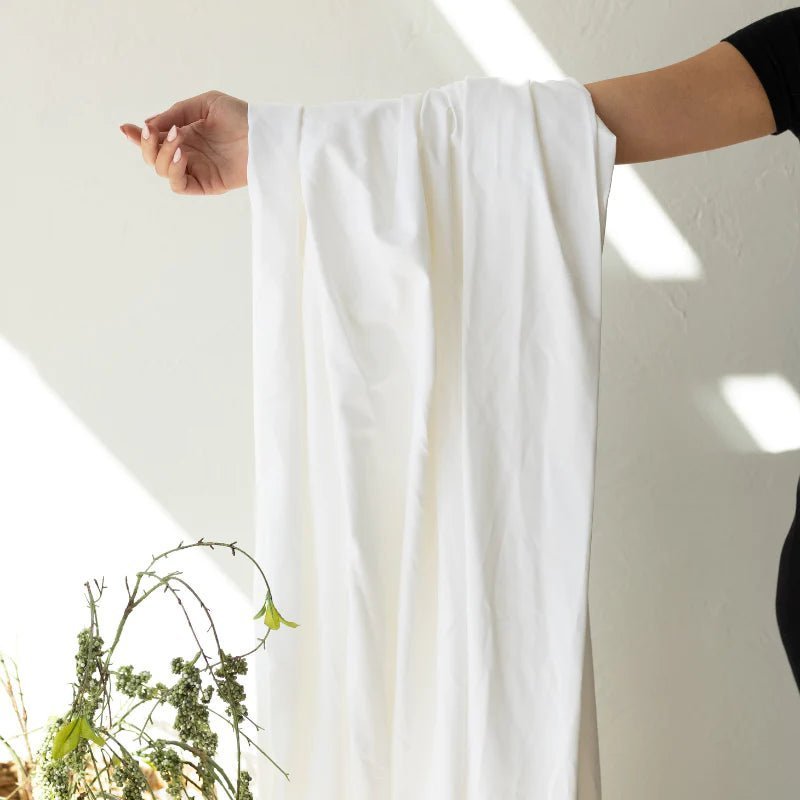
Your sheets do real protective work. The Sleep Foundation advises washing sheets and pillowcases at least once a week, more often if pets share the bed. Clean, breathable sheets—like our long-staple cotton DreamFit Comfort Sheets—keep sweat and oils off the mattress between cleans.
This guidance is general care information, not medical advice. If you have allergies, asthma, or sensitivities, follow your healthcare provider's recommendations on bedding and cleaning.
What should you avoid doing with a new mattress?
Don't soak foam, bend or fold the mattress, skip the protector, use an unsuitable base, let kids jump on it, or ignore the warranty's care terms. Each of these maps to one of the three care goals—and each is fully avoidable.
- Over-wetting foam. Excess liquid can damage memory foam and polyfoam and promote odors—blot and spot-clean instead of soaking.
- Bending or folding it. Serta notes bending can cause damage and may void the warranty—keep it flat during moves.
- Using the wrong base. Wide-set slats or a flexing frame lead to uneven sagging and can affect coverage.
- Letting kids jump on it. Repeated point impact stresses foams and coils beyond normal use.
- Skipping the protector. One spill into bare foam can mean a stain—and a denied warranty claim.
- Ignoring warranty terms. Many warranties require proper support and a stain-free mattress; read yours.
- Never rotating. The busiest sleep zones wear fastest if you don't redistribute the load.
For the fine print on what actually keeps coverage valid, our mattress warranty explainer breaks down the terms most owners overlook.
New mattress care: frequently asked questions
How do you care for a new mattress right after delivery?
Unbox it promptly, lay it flat on a supportive base, and let a new foam mattress air out for at least 8 hours in a ventilated room before adding bedding. Add a protector from the first night, then settle into a normal sleep routine so the comfort layers begin to break in evenly.
How long does it take to break in a new mattress?
Break-in typically takes two weeks to about 60 days, according to Mattress Firm, as the foams and fibers settle under your regular weight. Dreams notes it can take up to 30 nights for your body to adjust, so sleep on it every night and give it a full month before judging the feel.
How often should you rotate a new mattress?
The Sleep Foundation recommends rotating foam, latex, and newer innerspring mattresses every 6 to 12 months, and older innersprings every 2 to 6 months. During the first few months, rotate more often—Dreams suggests weekly for the first three months, then monthly—to help the fillings settle evenly.
Can you flip a new mattress, or should you only rotate it?
Only rotate most modern mattresses—don't flip them. As Mattress Firm explains, modern mattresses have a designated side to sleep on, with the comfort layers on top and the support core underneath. Only older, true two-sided innersprings are built to be flipped; everything else should be rotated head-to-toe.
Do you need a mattress protector on a brand-new bed?
Yes—a protector from night one shields foam and fiber layers from sweat, spills, and allergens, the moisture that does the most hidden damage. Because stains are a common reason warranty claims are denied, a protector also helps preserve coverage. Whether one is strictly required depends on your specific warranty, so confirm the terms.
How do you clean a spill on a foam mattress without damaging it?
Blot the spill immediately—never rub or soak it—then spot-clean with a little mild soap and water, as Opera Beds suggests, working from the outside in. The Sleep Foundation warns against getting memory foam too wet, so use minimal moisture and let the mattress air-dry fully before remaking the bed.
Your next step: get care answers for your exact mattress
Care basics are universal—protect the surface, even out early wear, and preserve the support that keeps your warranty valid—but rotation, flipping, and warranty rules depend on the exact mattress you own. That's the part generic guides blur, and it's where a quick conversation saves you from guessing wrong.
For model-specific rotation, foundation, and warranty answers, text or call our sleep team or schedule a personalized in-store appointment—and know that every mattress you buy helps us donate one to a local family in need. Still choosing your bed? Learn how to test a mattress before buying, and when the time comes, our guide on when and why to replace a mattress covers the longevity question from the other end.
Quick verdict: Just unboxed a foam or hybrid bed? Protect it, air it out, and rotate—never flip. Older two-sided innerspring? Flip and rotate more often. Not sure which rules apply to yours? Bring the model name to our team and get the exact schedule for your mattress.





Leave a comment
All comments are moderated before being published.
This site is protected by hCaptcha and the hCaptcha Privacy Policy and Terms of Service apply.