

Just unboxed an adjustable base and feeling a little overwhelmed? Here's the short version: assemble the base, confirm your frame and mattress will flex with it, learn four core positions, then keep the mechanics maintained. Most bases drop right into a standard frame once you remove the box spring or slats, and a flexible foam or hybrid mattress bends with the base without damage. The strongest health evidence — a 2021 systematic review of 5 controlled trials — supports head elevation for acid reflux, so think of your base as a positioning tool, not a cure-all.
Key takeaways
- Setup is four steps: clear the space, attach the legs, position the base, connect power and sync the remote.
- Your mattress must flex. Foam, hybrid, and latex bend well; many older innersprings don't — run the 30-second flex test first.
- Head elevation has the best evidence — for reflux. A 2021 BMC Family Practice systematic review found it may improve GERD symptoms, though certainty was low.
- Couples with different needs benefit from a split model, but a split king requires two twin XL mattresses.
- Trade-offs are real: more moving parts, occasional upkeep, and possible incompatibility with solid platform frames.
What is an adjustable base and how does it actually work?
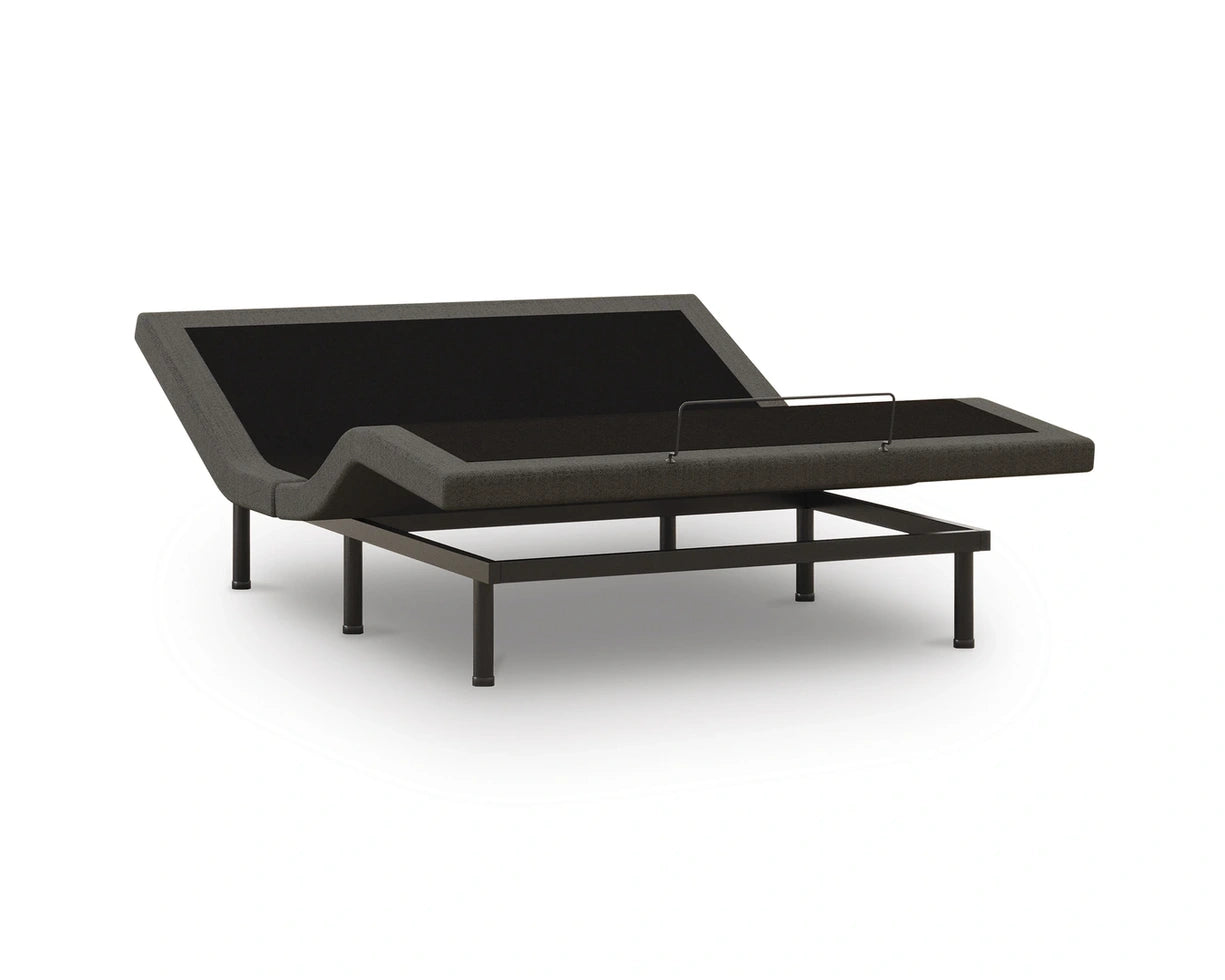
An adjustable base is a motorized or manual mattress foundation that raises and lowers the head and foot sections so you can customize your sleep and lounge positions. Electric models run on a remote or app; manual ones use a hand crank.
Beyond the basic bend, many bases add features like massage, USB ports, under-bed lighting, and voice control. According to AARP's guide to adjustable beds, voice and app control help people with dexterity limitations operate the bed without reaching for a remote — a genuinely useful accessibility feature, not a gimmick.
Treat the base as a positioning tool with condition-specific benefits, not a universal fix. If you want the broader case for why people buy one, our overview of the benefits of adjustable beds covers that; this walkthrough is about setting yours up and using it well.
How do you set up an adjustable base step by step?
Clear your space, remove the box spring or slats, attach the legs, position the base inside or in place of your frame, connect power, and sync the remote. Most bases go together in under 30 minutes with no special tools.
Assembly steps vary slightly by brand, but the sequence in nearly every manual — including Sleep Number's assembly instructions — follows the same logic:
- Clear the area and strip the bed. Remove the mattress and take out any box spring or slats. An adjustable base replaces those — it does not sit on top of them.
- Attach and adjust the legs. Most bases ship with legs you screw into the frame. Many offer more than one height setting, so pick the height that matches your existing headboard and how easy you want it to be to get in and out.
- Position the base. Slide it inside your existing bed frame if the frame's interior clears the legs, or set it up freestanding on the floor.
- Connect power and route the cord. Plug into a nearby outlet and tuck the cord along a leg so it isn't pinched when the base articulates. If your model is a wall-hugger, leave the clearance the manual specifies.
- Pair and test the remote or app. Sync the controller, then run the head and foot through their full range once to confirm smooth motion before you put the mattress back on.
Two safety basics: check the weight capacity (mattress plus sleepers must stay under it) and never let the power cord get crimped by the moving frame. If two people share the bed, add both body weights to the mattress weight when you check capacity.
Can you use an adjustable base with your existing bed frame?
Most adjustable bases fit inside a standard frame once you remove the box spring or slats, but solid platform frames and attached headboards may need brackets or adjustment. The frame type decides how much work it takes.
- Platform beds: A solid platform surface can block the base from articulating. You'll usually run the base freestanding instead, or remove the platform panel.
- Slatted frames: Fine as long as the base's legs fit through or between the slats to reach the floor — otherwise remove the slats.
- Box-spring setups: Remove the box spring entirely. The base takes its place. A retailer's bed-frame compatibility guide covers the same rule for standard frames.
- Headboards: Most bases connect to a headboard using brackets so it stays put as the head rises. If you're keeping an old box spring for height, a low-profile box spring only matters for non-adjustable setups — it does not go on top of an adjustable base.
Bottom line: if your frame has an open interior and you can remove the slats or box spring, your base will almost certainly fit.
Will your mattress work on an adjustable base? Try the 30-second flex test
Foam, hybrid, and latex mattresses flex well on adjustable bases; many older innerspring mattresses don't, so bend a corner to check before you commit. Flexibility is the single biggest compatibility factor.
The flex test: at one end of the mattress, lift and fold the corner up toward where the head section would rise. A compatible mattress bends into a smooth arc and springs back flat. Warning signs are a stiff panel that won't curve, an audible crunch, or coils that feel like they're fighting the bend — those signal a rigid innerspring that can be damaged by repeated articulation.
Why does flex matter mechanically? A 2015 study in Biomedical Engineering Online found that bed design and head-of-bed articulation to 30° and 45° affected how a body migrated along the surface. The takeaway for home use: the base's mechanics and how well your mattress moves with them determine whether you actually hold the position you set instead of sliding toward the foot.
Thickness matters too. Mattresses in the roughly 10-to-14-inch range tend to articulate cleanly; very thick or very stiff builds can resist the bend.
If your current mattress fails the flex test, that's the moment to look at a build designed to move. Flexible foam and pocketed-coil hybrids — including the pairings you'll find in our SmartFlex adjustable base and compatible mattress collection — bend with the articulation instead of resisting it. You can also compare base builds and capacities to make sure the frame you pick matches your mattress and body weight. Every order ships free, so you're comparing builds, not shipping costs.

What are the 4 core adjustable base positions and what is each actually for?
The four go-to positions are Zero Gravity, head-up incline, foot-up elevation, and flat or custom lounge — each suited to different comfort and health goals, with different amounts of evidence behind them.
Zero Gravity
Zero Gravity elevates your head and legs slightly above your heart for a neutral, pressure-distributed position that many people find relaxing. It's the most popular preset on most bases. The evidence here is comfort-and-preference based rather than clinical, so use it because it feels good — not because it's a proven treatment.
Head-up incline (snoring, reflux, congestion)
Raising the head is the best-supported position, specifically for acid reflux. A 2021 systematic review in BMC Family Practice (Albarqouni et al.) of 5 controlled trials found that head-of-bed elevation may improve gastroesophageal reflux symptoms and intra-esophageal pH — though the trials were short (up to 6 weeks) and the certainty was low. Clinical guidance from the RACGP HANDI resource frames head-of-bed elevation as a reasonable non-drug step for reflux. An incline can also feel easier for congestion and light snoring, though evidence there is thinner.
Foot-up elevation (swelling, circulation)
Raising the feet lifts the legs above heart level, a position often used for comfort with swelling or tired legs. This one rests on general positioning logic and comfort reports rather than dedicated home-use trials, so keep expectations grounded and talk to a clinician about persistent swelling.
Flat or custom lounge (reading, TV, relaxation)
Flat is your baseline, and a slight head raise makes a comfortable lounge position for reading or watching TV. Purely comfort-driven — no health claim attached, and none needed. For a deeper look at how positioning intersects with specific conditions, our guide on adjustable mattresses for sleep disorders goes further.
This information is educational and not medical advice. Talk with your healthcare provider before using an adjustable base to manage reflux, apnea, circulation, or any medical condition.
Which adjustable base position helps with reflux, snoring, or back pain?
Head-of-bed elevation has the best evidence — for reflux — while sleep and back-pain benefits look promising but rest on small, preliminary studies. Direct consumer-use research on adjustable bases is limited, so the honest picture is condition-specific.
| Position | Best for | Evidence strength | Caution |
|---|---|---|---|
| Head-up incline | Acid reflux / GERD | Strongest available — 2021 BMC review of 5 trials found possible benefit, low certainty | Trials were short (up to 6 weeks); not a substitute for medical care |
| Head-up incline | Overall sleep duration/quality | Preliminary — a 2022 pilot RCT reported gains vs. prior beds | Pilot study, small sample; results not yet confirmed |
| Slight incline / adjustable | Chronic low back pain | Preliminary/small — 1997 trial reported at least a 1-point pain drop over 4 weeks | Small, young, mildly affected group; not broadly generalizable |
| Foot-up elevation | Swelling / tired legs | Comfort-based — no dedicated home-use trials | See a clinician about persistent swelling |
| Zero Gravity / flat lounge | Relaxation, reading, TV | Comfort-only — preference driven | No clinical claim implied |
Here's the peak most benefit posts skip: a 2022 pilot randomized trial in Sleep reported that an inclined adjustable base improved objectively measured sleep duration and self-reported quality compared with participants' prior beds — genuinely promising, but it was a small pilot, so read it as an early signal, not proof. Likewise, a 1997 trial in the Journal of the Canadian Chiropractic Association (Hagino et al.) reported at least a 1-point drop on a numerical pain scale over 4 weeks for chronic low back pain — in a small, generally young group, so it's preliminary. The one claim you can lean on: head elevation for reflux.
What is the best mattress for an adjustable base?
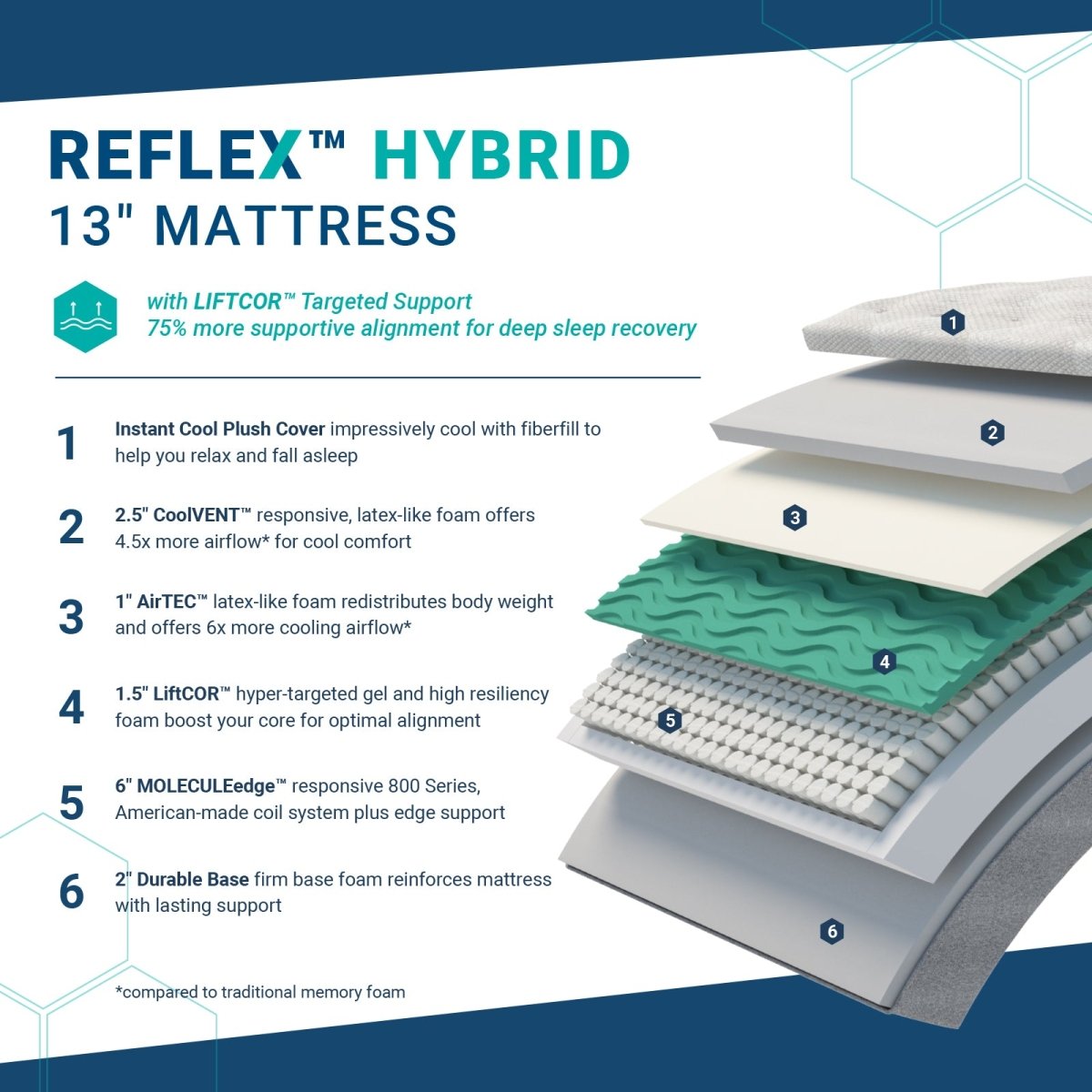
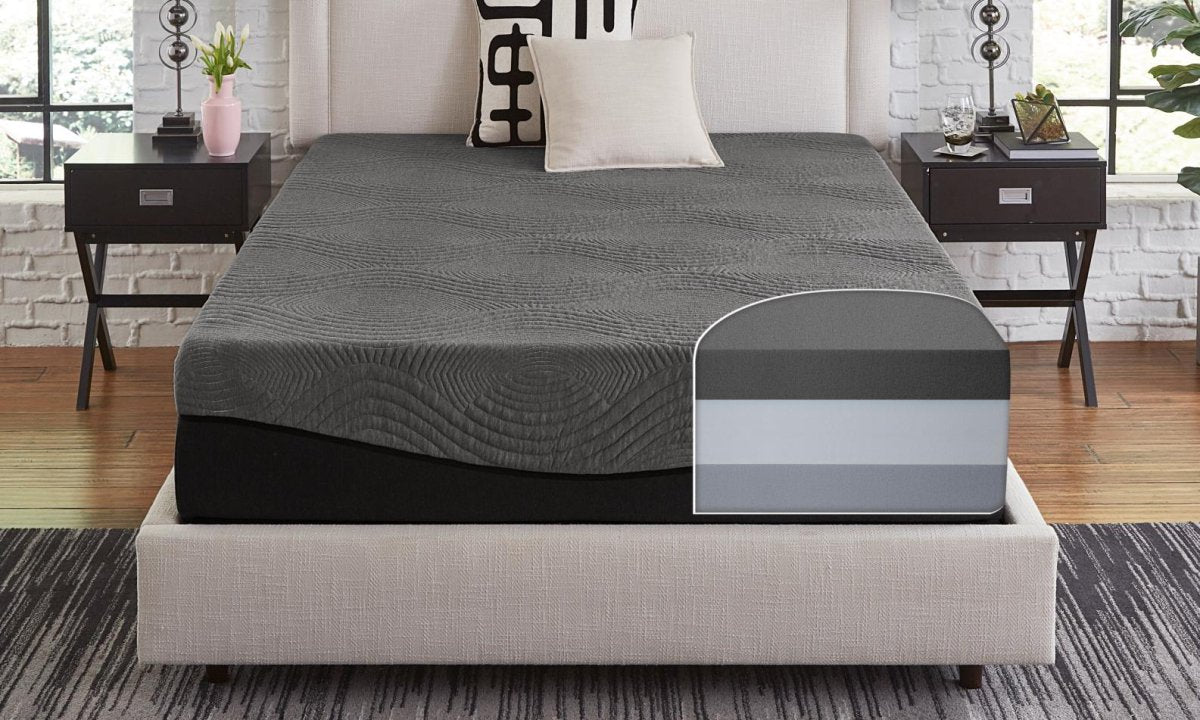
Flexible foam, hybrid, and latex mattresses in roughly the 10-to-14-inch range pair best with adjustable bases because they bend with the articulation without damage. Traditional innersprings with rigid, connected coils are the main mismatch.
| Mattress type | Flexibility on a base | Best for | Notes |
|---|---|---|---|
| All-foam | Excellent — bends freely | Pressure relief, contouring, couples wanting motion isolation | The most forgiving choice for articulation |
| Hybrid (pocketed coils) | Very good — individually wrapped coils flex | Sleepers who want support plus some bounce | Flexes far better than a traditional innerspring |
| Latex | Good — naturally flexible and durable | Eco-conscious buyers, responsive feel | Confirm thickness stays in the flexible range |
| Traditional innerspring | Poor — connected coils resist bending | Not recommended for adjustable bases | Repeated flexing can damage the coil unit |
Why do pocketed-coil hybrids beat old innersprings? Their coils are wrapped and move independently, so the mattress arcs with the base instead of fighting it. Height and weight matter too — very thick or very heavy builds can be harder to articulate and may need a base with a higher weight capacity.
If your flex test flagged your current bed, this is the decision point. Compare builds across our flexible foam and hybrid mattresses made to pair with a base — every order ships free, and 0% APR financing from $29/month is available if you'd rather spread the cost. Not sure which construction fits you? Our breakdown of foam vs. hybrid for adjustable bases walks through the trade-offs, and if back pain is your driver, the guide on how your mattress can support better sleep pairs well with head-up positioning.
Should couples get a split adjustable base?
Split models let each partner adjust independently, making them ideal for couples with different sleep needs — but a split king needs two twin XL mattresses instead of one king. The choice comes down to how differently you two sleep.
A split base has two motors under one frame footprint, so one person can raise their head for reading while the other stays flat. The National Council on Aging's adjustable beds overview highlights independent adjustment as the main reason couples choose a split — one partner's reflux incline doesn't force the other into the same angle.
Split is worth it if:
- You and your partner want different head or foot angles most nights.
- One of you has reflux, snoring, or a comfort need the other doesn't share.
- You're buying king or California king size anyway.
Skip the split if: you and your partner share the same preferred position, you're on a tighter budget, or you'd rather use standard one-piece bedding — a split king means two twin XL mattresses and often a specialty split sheet set. If seams bother you, our bed sheet collection includes options that work for split setups.
What trade-offs and maintenance should you expect with an adjustable base?
Adjustable bases cost more and add mechanical parts that need occasional upkeep, and they can shorten mattress lifespan or clash with solid platform frames. Knowing the downsides upfront keeps expectations realistic.
The NCOA overview notes that adjustable beds carry higher maintenance than standard frames because of their motors and moving components, which can require repair over time.
- Mechanical upkeep: motors, cables, and joints are more to go wrong than a static frame. Keep cords clear of pinch points and check connections periodically.
- Mattress wear: repeated flexing works a mattress harder than lying flat, which can shorten its useful life — one more reason to pick a mattress built to bend.
- Weight and cost: bases are heavier to move and cost more than a basic foundation.
- Frame compatibility: solid platform beds may need modification or freestanding placement.
Who an adjustable base is NOT for: frequent movers who don't want to disassemble a motorized frame, people who genuinely never change position at night, and buyers whose only priority is the lowest possible cost. If any of those describe you, a quality mattress on a simple foundation may serve you better — our mattress buying guide can help you weigh that.
Are adjustable beds covered by Medicare?
Some adjustable beds may be eligible for partial coverage for individuals with a qualifying medical need, but you should confirm with your provider before assuming coverage. Most retail adjustable bases bought for comfort are not covered.
Coverage generally hinges on documented medical necessity, and the specifics depend on your situation and plan. As AARP notes in its adjustable beds guide, eligibility is limited and case-specific rather than automatic. Don't buy expecting reimbursement — check directly with Medicare or your healthcare provider first, and treat any coverage as a possibility, not a promise.
Frequently asked questions about using an adjustable base
Can I use an adjustable base with my existing bed frame?
Usually yes. Remove the box spring or slats, and set the base inside the frame if the interior clears the legs, or run it freestanding. Solid platform frames may block articulation, and headboards typically attach with brackets so they move with the base.
What does the Zero Gravity position actually do?
Zero Gravity raises your head and legs slightly above your heart for a neutral, pressure-distributed feel that many people find relaxing. It's a comfort-and-preference preset rather than a clinically proven treatment, so use it because it feels good to you.
Does my current mattress need to be replaced for an adjustable base?
Only if it doesn't flex. Foam, hybrid, and latex mattresses bend with the base; many older innersprings won't. Run the 30-second flex test by folding a corner toward the head position — stiffness, crunching, or fighting coils mean it's time for a flexible replacement.
Which position helps most with acid reflux or snoring?
Head-up incline. A 2021 BMC Family Practice review of 5 trials found head-of-bed elevation may improve reflux symptoms, though certainty was low. An incline can also ease light snoring and congestion. It's a helpful position, not a replacement for medical treatment.
Can I control an adjustable base with voice commands?
Many electric bases offer app or voice control alongside a remote. AARP notes these features help people with dexterity limitations operate the bed hands-free. Availability depends on the specific model, so check the base's feature list before buying.
How much maintenance does an adjustable base really need?
More than a static frame, but not constant. The motors, cables, and joints can need occasional attention or repair over time, per the NCOA. Keep the power cord clear of pinch points, run the full range of motion periodically, and check connections.
How do you find your adjustable base and mattress match?
Start with a mattress that flexes — foam, hybrid, or latex — then choose a base with the positions and weight capacity you need, learn your four core positions, and plan for light upkeep. That order keeps you from buying a base your current mattress can't handle.
Quick decision guide:
- Reflux is your main reason: prioritize a base with an easy head-up incline and a flexible foam or hybrid mattress — the best-supported use case.
- Couples with different needs: choose a split model and two twin XL mattresses.
- Comfort and lounging: a standard non-split base with Zero Gravity is plenty.
- Budget-focused or you never change position: a quality mattress on a simple foundation may serve you better.
Ready to build your setup? Browse the SmartFlex adjustable bases and compatible foam and hybrid mattresses to compare builds and find your match. Every order ships free, and 0% APR financing from $29/month is available. Not sure on feel? Reach our sleep team with any setup or compatibility questions — we're happy to help you find the pairing that fits your sleep needs. Every purchase also supports a local family through our buy-one-donate-one mission.
This article is for educational purposes and is not medical advice. Consult your healthcare provider before using an adjustable base to manage any medical condition.






Leave a comment
All comments are moderated before being published.
This site is protected by hCaptcha and the hCaptcha Privacy Policy and Terms of Service apply.