

Latex feels buoyant, cool, and responsive; memory foam slowly hugs your body and isolates motion. But the most rigorous evidence here is a caution: a 2021 systematic review of 39 studies found no single mattress type that consistently prevents back pain or improves sleep quality across people. The right pick depends on your firmness needs, sleep position, body weight, and preferences—not the material label. Below, we cite the studies, not the marketing, and match each trade-off to a real sleeper.
Key takeaways
- Feel: latex bounces and lifts; memory foam contours and cradles.
- Evidence: a 2021 review of 39 studies found no universal winner by material—fit beats label.
- Cooling & durability claims are commonly repeated but have limited independent test data; gel and open-cell foams narrow the temperature gap.
- Quick rule: side sleepers seeking pressure relief lean memory foam; back, stomach, and heavier sleepers lean latex.
- Allergy note: true natural rubber latex allergy is real but rare; synthetic latex reduces the trigger.
How do latex and memory foam compare at a glance?
Latex generally wins on bounce, breathability, and durability estimates; memory foam wins on deep contouring, motion isolation, and a lower entry price—though several cooling and durability claims lack independent test data. Use this table to find the dimension that matters most to you, then read that section in full.
| Dimension | Latex | Memory foam | Best for |
|---|---|---|---|
| Feel / responsiveness | Buoyant, springy, quick rebound | Slow contour, "sinking-in" hug | Latex: easy movement · Foam: cradling |
| Contouring & pressure relief | Generalized, gentle support | Deep, body-specific conforming | Foam for pressure points |
| Temperature (commonly claimed; independent evidence limited) | Open, breathable structure | Retains more heat unless gel/open-cell | Latex for hot sleepers |
| Motion isolation | Transfers slightly more bounce | Absorbs movement well | Foam for couples |
| Durability (brand-claimed estimate) | ~15 years (cited by brands) | ~7–10 years (cited by brands) | Latex on longevity estimates |
| Weight | 140+ lbs (heavier to move) | 75–90 lbs | Foam for easy setup |
| Eco-credentials (claim varies) | Natural-sap option exists | Petroleum-based polyurethane | Depends on sourcing—see below |
| Price tier | Higher | Lower entry point | Foam for tighter budgets |
| Allergy considerations | Natural latex protein possible trigger | No latex protein | Foam or synthetic latex for latex-allergic |
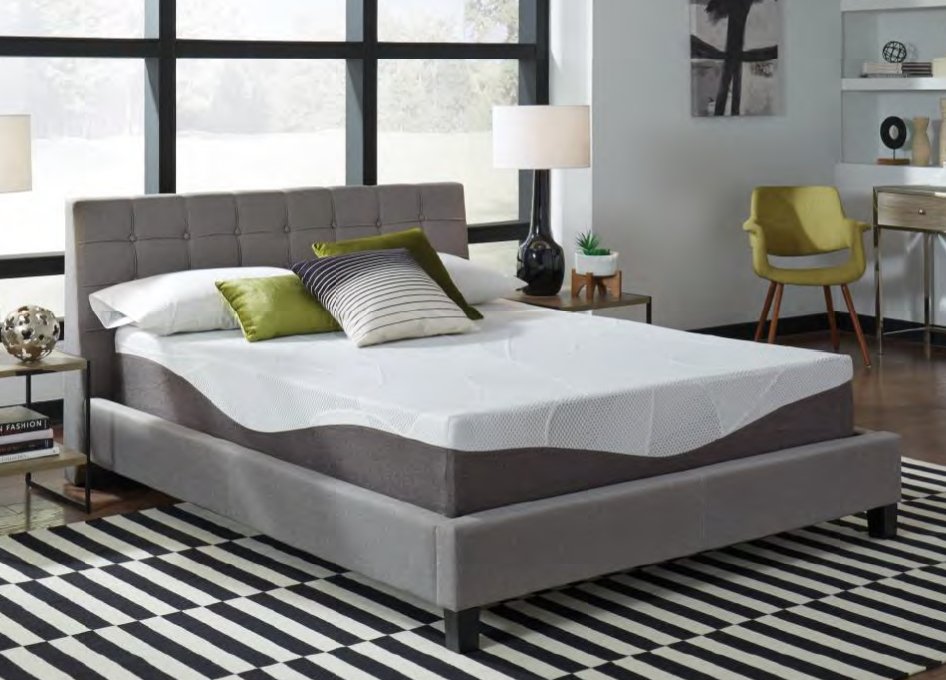
Durability and weight figures above are brand estimates from retailer comparisons such as published material guides, not independent durability testing. If a few of these rows already point you one way, you can browse our curated foam collection to feel how contouring foam builds like Molecule and Moonlight read in person.
What are latex and memory foam actually made of?
Memory foam is viscoelastic polyurethane that softens with body heat; latex is rubber—natural (tree sap), synthetic, or blended—giving it an elastic, springy structure. The chemistry of each material drives nearly every difference you'll feel, from temperature to bounce to lifespan.
Memory foam: viscoelastic polyurethane
Memory foam reacts to your body heat and weight, then recovers slowly once you move—that lag is what creates the signature slow "hug." Because the cells are dense and closed, traditional memory foam holds warmth, which is why manufacturers add gel beads or open-cell structures to vent it.
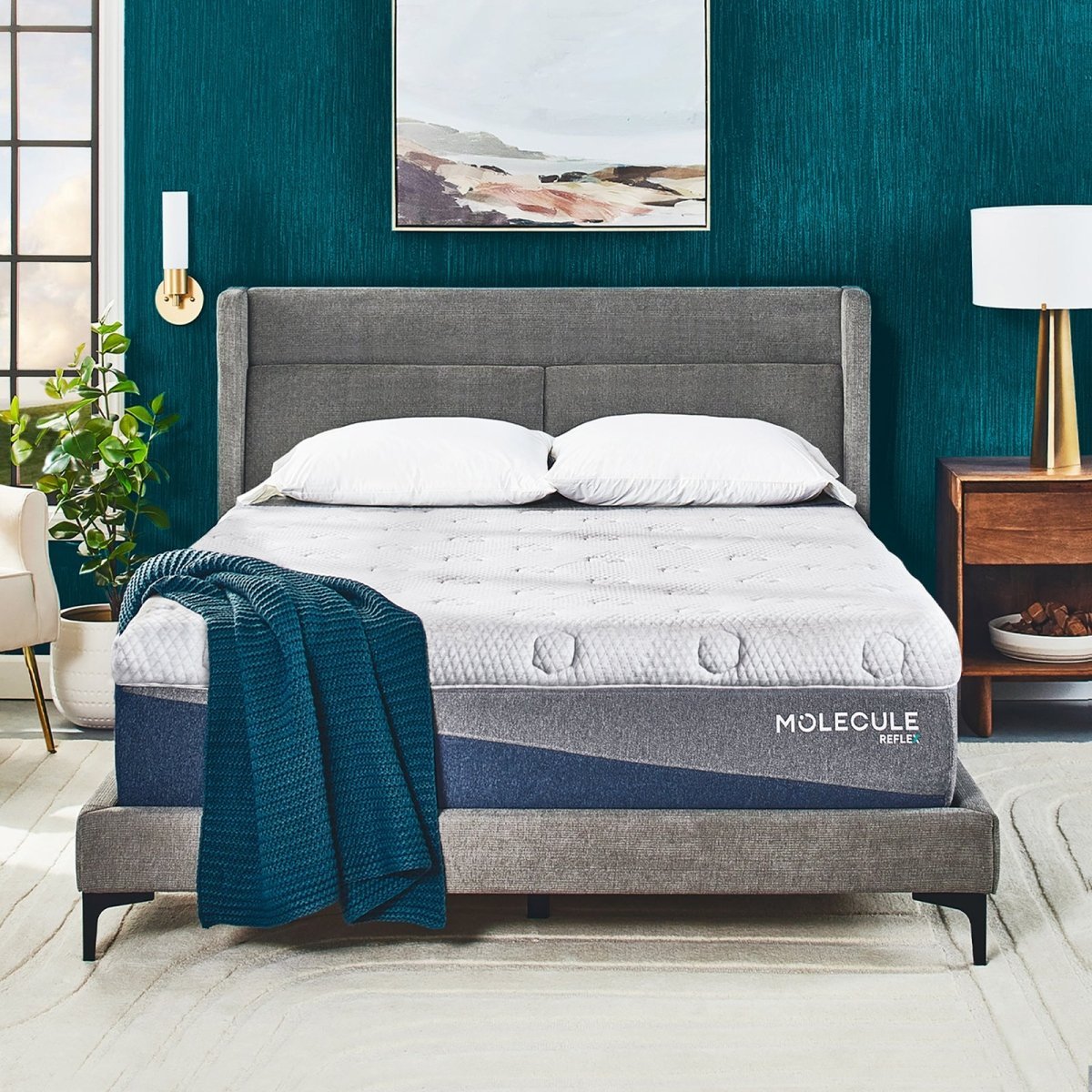
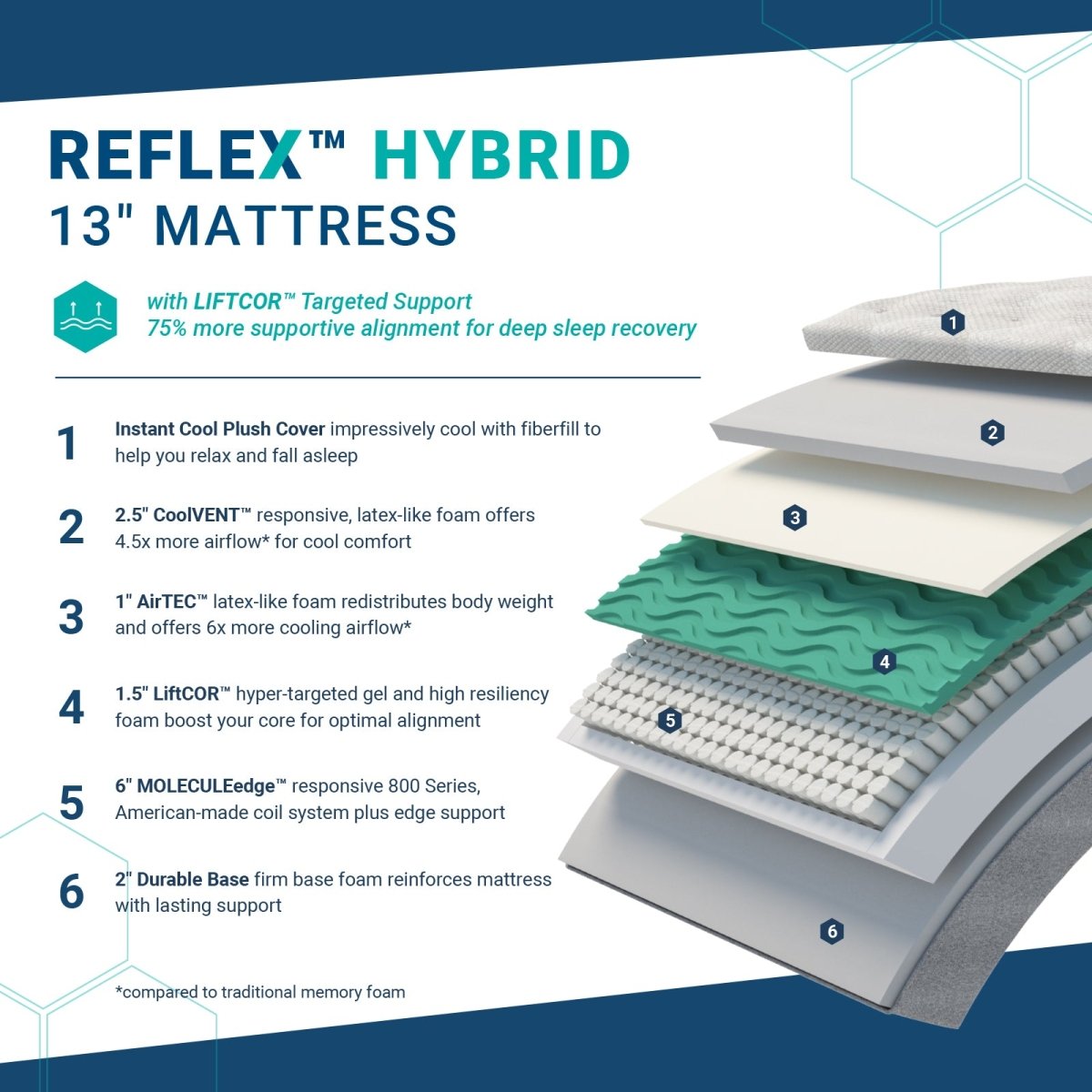
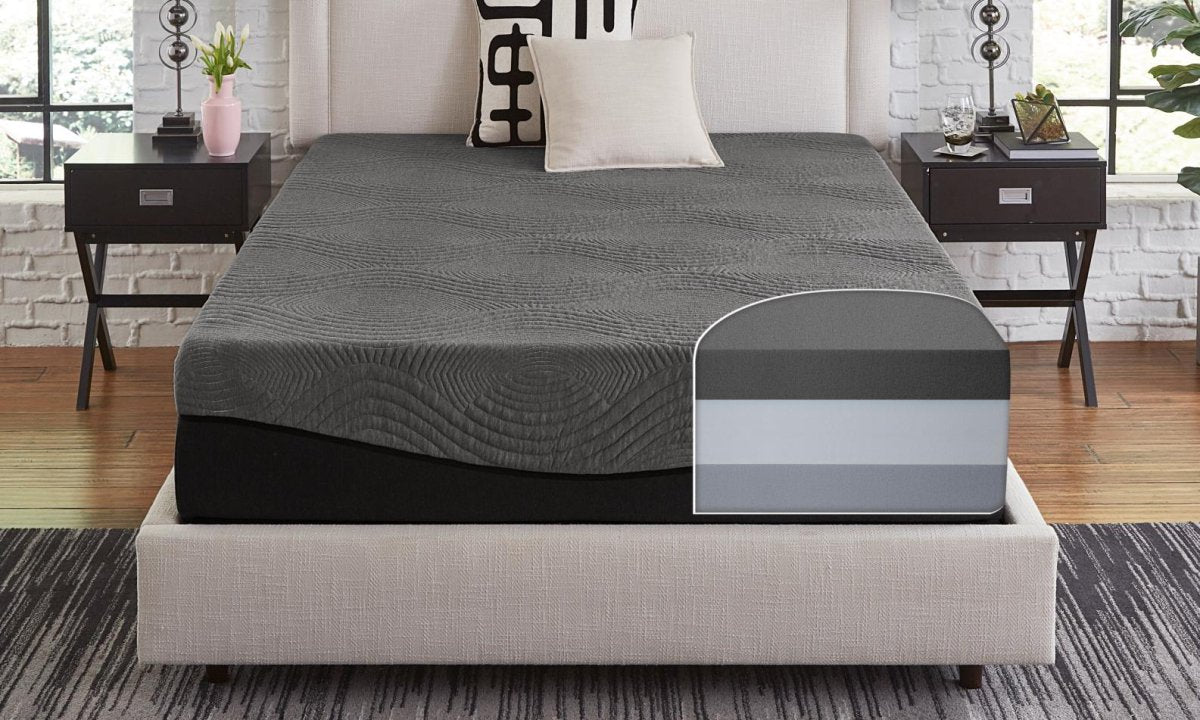
This is the contouring family in our curated foam collection, including builds like the Moonlight Classic 12" Foam and the Molecule Reflex 12" Foam Embrace—designed for sleepers who want pressure relief and deep cradling.
Latex: natural, synthetic, or blended rubber
Natural latex starts as sap from the rubber tree, whipped into foam and cured; synthetic latex is petroleum-derived, and many beds blend the two. One retailer comparison notes that natural latex comes from the sap of the Brazilian rubber tree. Latex's open, elastic cell structure rebounds fast, which produces the bouncy, "lifted" feel and better airflow.
Bottom line: the material category tells you the starting feel, but the firmness and build—not just the label—decide how it sleeps for your body.
How do they feel different—bounce versus hug?
Latex feels buoyant and lifts you up with quick rebound; memory foam slowly hugs and cradles your body, creating a deeper sinking-in sensation. A lighter side sleeper on memory foam will feel their shoulder and hip settle into a personalized pocket; the same sleeper on latex stays closer to the surface and rolls over more easily.
The mattress retailer Golden Dreams sums the split cleanly:
"Latex = Buoyant + cool + quick response. You feel lifted, not stuck." — Golden Dreams Mattress
"Memory Foam = Deep contour + slow hug." — Golden Dreams Mattress
This isn't just marketing language—it tracks with measured differences. A 2016 laboratory study of 20 participants in Applied Ergonomics (PMC5310954) compared latex and polyurethane mattresses and found they produce different body-contact pressure profiles across sleeping postures. The sleep-review site Sleepopolis describes it as latex having "more elasticity and a more generalized hug than memory foam."
If you've never compared the two side by side, our guide on how to test a mattress before buying walks through what to feel for in the first few minutes.
Which mattress sleeps cooler, latex or memory foam?
Latex generally sleeps cooler thanks to its open, breathable structure, while traditional memory foam retains more heat—though gel and open-cell foams narrow that gap considerably. The honest caveat most comparison pages skip: standardized independent thermal testing for consumer mattresses is limited, so treat any "sleeps X degrees cooler" claim with healthy skepticism.
Why the difference exists: latex's open cells let air move, while dense viscoelastic foam traps body heat against you. That's a real mechanism, but engineered cooling foams change the math. A 2019 biomechanical review of 18 articles in PeerJ stressed that mattress research methods are heterogeneous, which is exactly why broad "cooler" claims rarely come with comparable test numbers.
Practical move: heat regulation also comes from what's on top of the mattress. Pairing either material with breathable bedding—like a DreamFit Chill Pillow or cooling sheets—often does more for a hot sleeper than the foam-versus-latex choice alone. If you run warm, our guide to cooler, breathable builds and hybrid options are worth a look before you decide.
Which is better for back pain and by sleep position?
Neither wins universally: side sleepers seeking pressure relief often lean memory foam, while back, stomach, and heavier sleepers often prefer latex's firmer, more buoyant support. The strongest evidence in this whole comparison is a warning against material absolutism.
A 2021 systematic review of 39 studies in PMC8655046 concluded the literature is discordant—no single mattress type consistently prevents back pain or improves sleep quality across populations.
In other words, firmness, spinal alignment, and individual body characteristics matter more than whether the surface is latex or foam. A randomized crossover study of 38 volunteers (PMC7950942) reinforced this, finding that mattress type and body characteristics interact to affect interface pressure and contact area—so two people can need opposite beds.
A practical starting point by position
- Side sleepers: memory foam is usually the better first stop, because deep contouring relieves shoulder and hip pressure points.
- Back sleepers: either works; many prefer latex's even support that keeps the lower back from sinking.
- Stomach sleepers: latex tends to win, since its firmer push-back keeps hips from dropping out of alignment.
- Heavier sleepers (200+ lbs): latex or a latex hybrid resists excessive sinkage better than softer all-foam.
The review site NapLab notes that because memory foam relieves pressure points, "it's suitable for those with neck or back pain and other aches." If aches are your main driver, our overview of support and adjustability for back and joint relief pairs well with the right surface. This article is educational and not a substitute for medical advice—if you have chronic or severe pain, talk to a healthcare provider.
Which is better for couples and motion isolation?
Memory foam generally isolates motion best, absorbing movement so a restless partner is less likely to wake you; latex transfers slightly more bounce. If one of you gets up at 2 a.m. and the other is a light sleeper, that difference is felt nightly.
The mechanism is simple: viscoelastic foam dampens energy as it slowly recovers, while elastic latex springs back and carries some of that motion across the bed. As Saatva puts it, "Memory foam excels in motion isolation, while latex is cooler and hypoallergenic."
The nuance: zoned or hybrid latex builds reduce the gap, so it's rarely a dealbreaker. Couples with different feel preferences can split the difference with a contouring foam like the Moonlight Classic 12" Foam, or take the firmness quiz together to find a shared middle ground.
Which mattress lasts longer and offers better value?
Latex is commonly cited as lasting around 15 years versus 7–10 for memory foam, but those are brand estimates—not independent durability test data. Retailer comparisons such as published material guides repeat the 15-year-versus-7-to-10-year figures, and the same sources note latex often weighs 140+ pounds versus 75–90 pounds for memory foam in comparable sizes.
Here's the information competitors gloss over: weight is a weak proxy for durability, and independent compression-set and sagging data for consumer mattresses is scarce. The 2019 PeerJ biomechanical review of 18 articles flagged exactly this—heterogeneous methods make cross-material durability claims hard to verify. Treat lifespan numbers as ballpark, not guarantees.
What this means for value
- Memory foam is generally cheaper to manufacture and sell, which is why it's often the lower entry price.
- Latex costs more upfront; if its longevity estimates hold for you, the cost-per-year can even out.
- Either way, a quality build with a protector and proper base outlasts a neglected premium one.
You can compare builds across budgets in our curated price-range collection, and spreading the cost is straightforward—Select Mattress Co. offers quality mattresses from $29/month at 0% APR with free shipping, so a longer-lasting latex build doesn't have to be a single large outlay. Ask our sleep team about financing options to confirm current terms.
Is latex really more eco-friendly? The honest answer.
Natural latex from rubber-tree sap has genuine eco appeal, but "sustainable" and "eco-friendly" claims aren't automatic—sourcing, processing, transport, and end-of-life disposal all matter. A bed made of natural sap can still be paired with synthetic blends and adhesives that complicate the footprint.
This is where buyers should read marketing critically. The U.S. Federal Trade Commission's Green Guides set the standard for substantiating environmental marketing claims, and a blanket "eco-friendly" label without specifics doesn't meet that bar. One retailer comparison calls natural latex "more eco-friendly and free from harsh chemicals"—but as the source itself shows, that's a marketing statement, not a verified test result.
What to actually check: ask whether the latex is natural, blended, or synthetic; look for the percentage of natural content; and confirm any certification's exact scope rather than trusting a logo alone. Our deeper write-up on what makes a mattress genuinely eco-friendly walks through these questions.
If sustainability is high on your list, browse our curated latex and eco-leaning collection to compare natural-content builds—and know that every Select Mattress Co. purchase funds our buy-one-donate-one mission, putting a quality mattress in the hands of a local family in need.
Can you be allergic to a latex mattress?
Yes—people with a true natural rubber latex allergy can react to natural latex bedding, though an encased mattress lowers exposure and synthetic latex reduces the protein that triggers reactions. For most shoppers without that diagnosis, it's a non-issue; for those who have it, it's worth taking seriously.
According to the CDC/NIOSH guidance on natural rubber latex allergy, reactions are driven by proteins in natural rubber latex. A few practical points:
- Encasement reduces contact: the latex core is wrapped in covers and bedding, so direct skin exposure is limited. A dedicated mattress encasement adds another barrier.
- Synthetic or blended latex contains little to none of the allergenic natural protein.
- If you have a diagnosed latex allergy, confirm the exact composition before buying, or choose a memory foam build to remove the question entirely.
So which should you choose: latex or memory foam?
Choose latex for a cool, bouncy, responsive feel and easier movement; choose memory foam for deep pressure relief, motion isolation, and a lower entry price. Match the feel to your sleep needs—not the label—and the decision gets simple.
Choose latex if…
- You want a buoyant, "lifted" feel and dislike sinking in.
- You sleep on your back or stomach, or weigh over 200 lbs and need firmer support.
- You run hot and want maximum breathability.
- Longevity estimates and natural-material sourcing matter to you—and you're comfortable with a heavier bed.
Skip latex if: you have a diagnosed natural latex allergy you can't verify around, you're on a tighter budget, or you need top-tier motion isolation for a light-sleeping partner.
Choose memory foam if…
- You're a side sleeper or want deep, body-specific pressure relief.
- You share the bed and want the quietest motion isolation.
- You want a lower entry price and an easier-to-move mattress.
Skip memory foam if: you sleep very hot and don't want to rely on gel/open-cell features, or you dislike the slow "stuck" sensation. You can compare contouring builds in our curated foam collection.
How do you find your perfect match at Select Mattress Co.?
Take our quick firmness quiz for personalized, bespoke recommendations—or book a personalized in-store appointment in Huntsville to feel both latex and memory foam yourself. Since the evidence says fit beats material label, matching feel to your body is the step that actually decides your sleep quality.
- Start here: find your firmness in our quick quiz for a recommendation tuned to your position, weight, and heat tolerance.
- Prefer to feel it first? Schedule a personalized in-store appointment in Huntsville and test both materials side by side.
- Practical reassurance: every order ships free, and quality mattresses start at $29/month at 0% APR—ask our sleep team to confirm current financing terms.
And because we're a mission-driven local company, every mattress you buy helps us donate one to a family in need right here in our community.
Frequently asked questions about latex vs memory foam: which is better?
Which mattress sleeps cooler, latex or memory foam?
Latex generally sleeps cooler because its open, breathable structure lets air move, while traditional memory foam holds more heat. That said, gel-infused and open-cell foams narrow the gap, and standardized independent thermal testing for consumer mattresses is limited—so treat exact "cooler" claims with caution and add breathable bedding for either type.
Which is better for back pain, latex or memory foam?
Neither is universally better. A 2021 systematic review of 39 studies (PMC8655046) found no single mattress type consistently prevents back pain. Side sleepers often prefer memory foam's pressure relief, while back and stomach sleepers often prefer latex's firmer support. Firmness and spinal alignment matter more than the material.
Which mattress lasts longer, latex or memory foam?
Brand sources commonly cite latex at around 15 years and memory foam at 7–10 years, but these are estimates, not independent durability test data. Real lifespan depends on build quality, your weight, and care. Using a protector and a proper base meaningfully extends either material.
Are latex mattresses worth the higher price?
They can be if you value bounce, breathability, and longer estimated lifespan, since a higher upfront cost may spread across more years. But memory foam delivers excellent pressure relief and motion isolation for less. Match the feel to your sleep needs rather than paying more on principle.
Is memory foam better for side sleepers?
Memory foam is usually the stronger starting point for side sleepers because it contours deeply around the shoulder and hip, relieving pressure points that cause numbness and tossing. Heavier side sleepers may still prefer a latex hybrid for extra support, so test your actual firmness preference.
Can you be allergic to a latex mattress?
Yes—people with a true natural rubber latex allergy can react, as the CDC/NIOSH explains the reaction is driven by natural latex proteins. An encased mattress limits direct contact, and synthetic or blended latex contains little to no allergenic protein. If you're diagnosed, verify composition or choose memory foam.
Which is better for motion isolation in couples?
Memory foam typically isolates motion best, absorbing movement so a partner's tossing is less noticeable. Latex transfers slightly more bounce, though zoned or hybrid latex reduces this. For light sleepers sharing a bed, memory foam is the safer default—or take the firmness quiz together to find a shared feel.
How do latex and memory foam compare on off-gassing and odor?
Both can release a temporary new-mattress smell that fades within a few days of airing out, more common with foam. Surveys cited in sleep research (PMC4688575) link only about 7% of sleep problems to an uncomfortable mattress, so a brief initial odor rarely affects long-term satisfaction once it dissipates.


Leave a comment
All comments are moderated before being published.
This site is protected by hCaptcha and the hCaptcha Privacy Policy and Terms of Service apply.