

A comfort layer is the topmost 1–4 inches of a mattress, made of softer conforming materials — memory foam, latex, polyfoam, or micro-coils — that decide plushness, pressure relief, and the bed's very first feel. It's the part your body touches first, but feel is a team effort: a 2023 study (ScienceDirect) of 10 subjects showed the top layer measurably changes interface pressure. Understanding it is how you stop guessing and browse the collection to compare builds and find your match.
Key takeaways
- The comfort layer (1–4 in) is the first thing your body touches and the single biggest decider of how plush or firm a bed feels.
- Feel is built by three layers working together: comfort layer, transition layer, and support core.
- A small 2023 ScienceDirect study found mattresses that get progressively firmer top-to-bottom lower peak and average pressure versus the reverse order.
- A thin comfort layer relative to your body weight lets you "bottom out" onto the firm core — so a bed with a soft top can still feel firm.
- Medium-firm builds have the most consistent research support: a 2015 systematic review reported a 55% sleep-quality gain and 48% less back pain, and a 2025 physiology study reached a complementary conclusion.
What is a mattress comfort layer and why does it matter?
A comfort layer is the topmost 1–4 inches of a mattress, made of softer conforming materials that cushion the body and decide plushness, pressure relief, and the bed's first feel. According to the Sleep Foundation, "comfort layers are the topmost sections of a mattress, and they significantly impact how a sleeper experiences their bed."
Its job is straightforward but powerful: it acts as a buffer between you and the dense support core, redistributing weight away from sharp pressure points at the shoulders and hips. Materials range from slow-contouring memory foam to springy latex, balanced polyfoam, and breathable micro-coils — and each one changes the feel.
Here's the part most shoppers miss: the comfort layer never works alone. It hands off to the layers beneath it, and those handoffs are why two beds labeled "medium" can feel like different planets. Now that you know what to look for, you can browse the collection to compare builds with a sharper eye.
What are the three layers inside every mattress, and what does each one do?
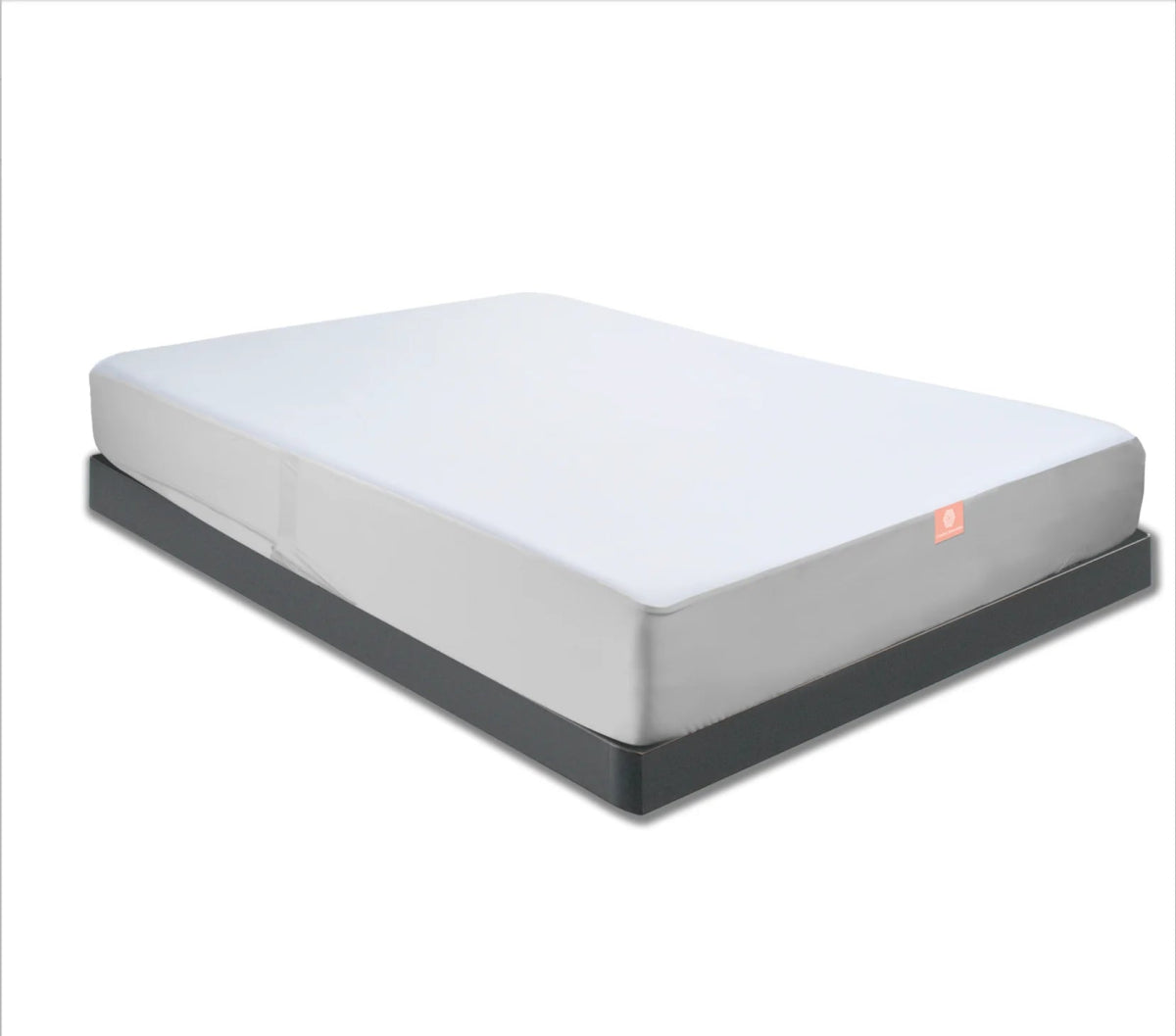
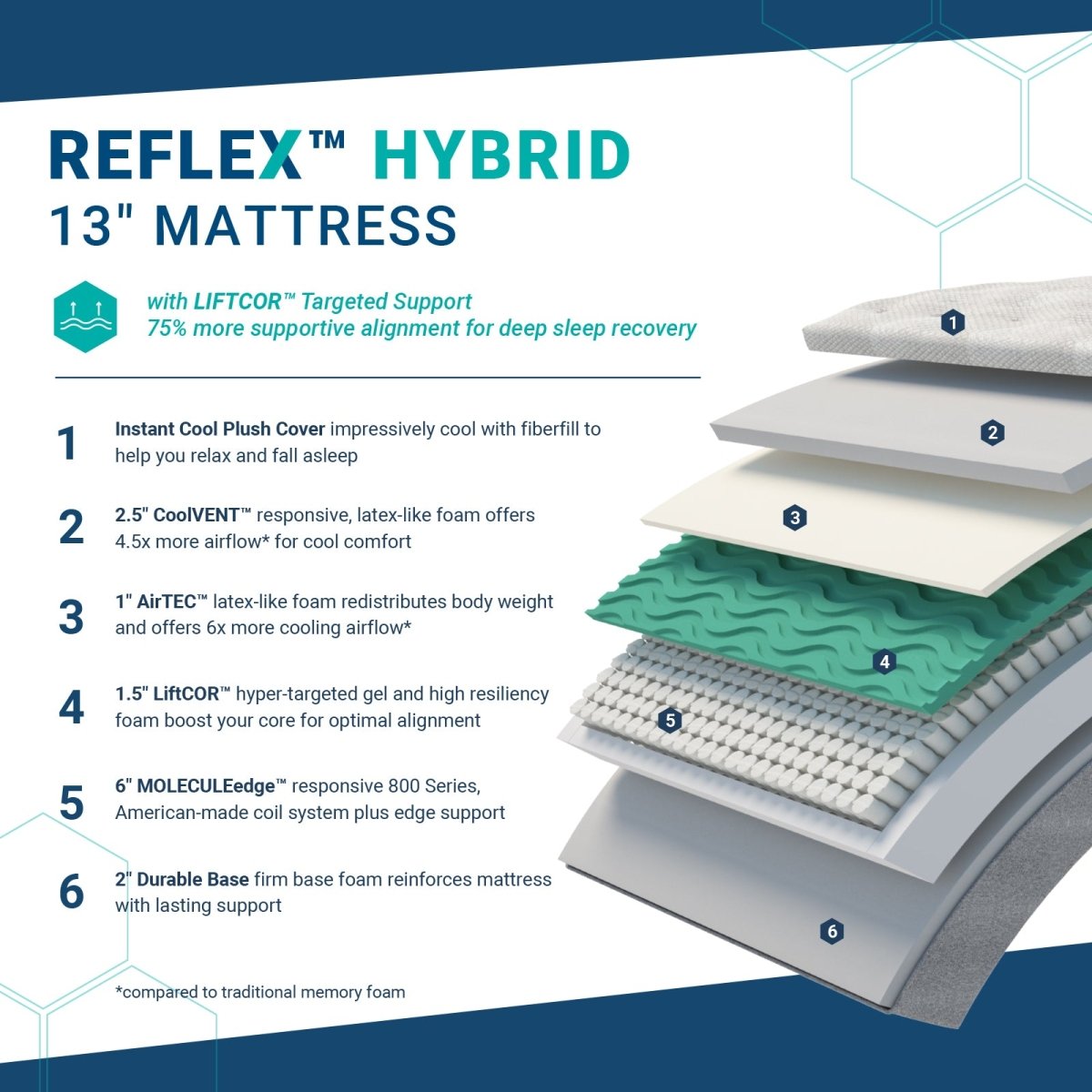
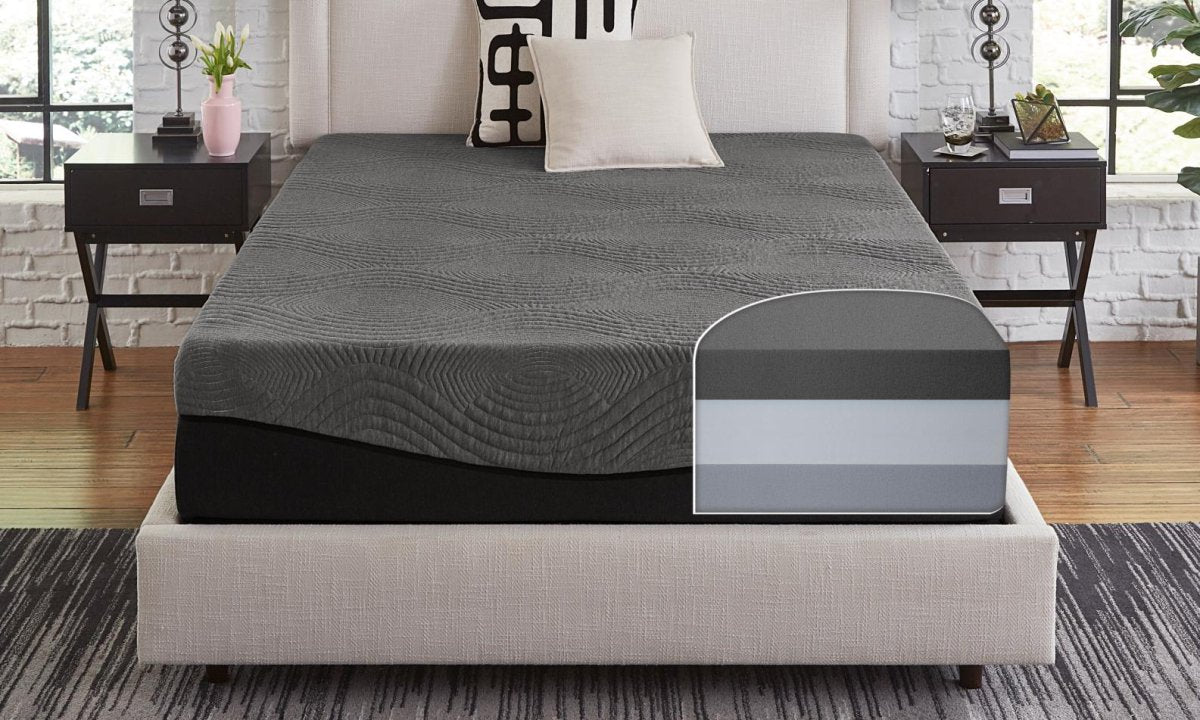
Every quality mattress has three working parts: a comfort layer for feel, a transition layer that buffers sinkage, and a support core that holds your spine in line. Each has a distinct thickness range and a distinct job, and the feel you experience is the sum of all three.
Comfort layer — the first handshake
This is the 1–4 inch top section your body touches first. It controls contouring, initial sinkage, and pressure relief at the shoulders and hips. Soft, close-conforming materials cradle the body; firmer ones limit how far you sink. If a bed feels too plush or too rigid the moment you lie down, the comfort layer is usually why.
Transition layer — the buffer that stops you bottoming out
The transition layer sits between the soft comfort system and the dense core, typically 1–3 inches thick. As the Sleep Doctor puts it, "transitional layers are sandwiched between the comfort and support layers and combine characteristics of both systems." Its real value is buffering: it slows your descent so heavier parts of the body don't compress through to the hard base.
Support core — the foundation
The support core is the dense bottom section, usually 6–10 inches thick, built from high-density foam or steel coils. It prevents sagging, keeps your spine aligned, and largely determines how durable the mattress will be over years of use. When people compare comfort layer vs support core, the simplest split is: the comfort layer decides feel, the core decides support and longevity.
| Layer | Typical thickness | Main job | Common materials | What it decides about feel |
|---|---|---|---|---|
| Comfort layer | 1–4 inches | First-contact feel, contouring, pressure relief | Memory foam, latex, polyfoam, micro-coils, natural fibers | Plush vs. firm, how cushioned shoulders and hips feel |
| Transition layer | 1–3 inches | Buffers sinkage, prevents bottoming out | Medium-density polyfoam, micro-coils | How "supported" the soft top feels; smoothness of the handoff |
| Support core | 6–10 inches | Structure, spinal alignment, durability | High-density foam, pocketed coils | Overall firmness floor, edge support, long-term sag resistance |
For a wider walkthrough of what to weigh before buying, our ultimate mattress buying tips cover construction alongside trial, warranty, and fit.
Why does the comfort layer decide how a bed feels?
Because it's your body's first point of contact, the comfort layer sets initial sinkage and pressure relief — and research shows the top layer measurably changes interface pressure. A 2023 experimental study (ScienceDirect) of 10 subjects compared two layered structures and found the one with hardness progressively increasing from top to bottom increased the low-pressure area and reduced maximum pressure, average pressure, and the overall pressure index versus the reverse arrangement. It's a small trial, so treat it as directional rather than definitive — but it points the same way as the larger reviews below.
In plain terms: the soft layer up top spreads your weight over more surface area, so no single point — a shoulder, a hip — bears the brunt. Sleepopolis sums it up: "the comfort layer determines the feel, temperature, and amount of pressure relief you'll feel on your mattress."
This matters most for side sleepers, whose shoulders and hips jut into the surface and create concentrated pressure. A comfort layer with enough give lets those joints settle in rather than press back. The trade-off — and we'll get to it — is that more give isn't automatically better for every body. If you want to feel this difference yourself before deciding, our guide on how to test a mattress before buying walks through what to notice in the first few minutes.

Why does my mattress feel firm even though it has a comfort layer?
A comfort layer that's too thin for your body weight lets you "bottom out" onto the firm core — and feel isn't decided by pressure numbers alone. Three mechanisms explain why a bed with a soft top can still feel hard:
- Bottoming out. When the comfort layer is thin relative to your body weight, it compresses completely and you feel the dense layers underneath. Heavier sleepers and those who concentrate weight on a small area (side sleepers) reach this point faster, which is exactly when a plush-looking bed reads as firm.
- Layer order matters. The small 2023 ScienceDirect study showed that progressively firmer top-to-bottom layering disperses pressure better than the opposite. A comfort layer placed over the wrong transition or core can feel either mushy or hard depending on how that handoff is tuned.
- Comfort isn't the same as pressure. A 2019 palliative-care study (o-wm.com, 52 patients completed) found the better-comfort mattress scored far higher on comfort items — sinking into bed (3 vs 14) and slipping on the bed (0 vs 16) — even though its measured interface pressure was actually higher (27.0 vs 24.3 mm Hg), and ulcer incidence didn't differ (13.0% vs 17.2%). It's a small sample, but the pattern is telling.
Bottom line: the lowest pressure reading doesn't guarantee the most comfortable bed. Perceived feel comes from how the whole system cradles, stabilizes, and supports you — which is why matching build to body beats chasing a single spec. If you're shopping remotely and want a structured approach, our step-by-step guide to buying a mattress online helps you read builds the right way.
What are the main comfort layer materials, and how does each one feel?
Memory foam contours slowly and deeply, latex feels responsive and cool, polyfoam offers balanced support, and micro-coils or natural fibers add bounce and breathability. Choosing among them is really about choosing a feel.
Memory foam — deep contour, slow response
Memory foam responds to heat and pressure, sinking gradually to hug the body. That deep cradle excels at pressure relief, especially for side sleepers, but the slow response can make repositioning feel like climbing out of a hollow. If you love a "hugged" sensation, our contouring Nest & Wild Original 12" Foam is a good example of how a well-tuned foam top feels, and the broader Nest & Wild collection shows the range.
Latex — responsive, durable, cooler
Latex springs back quickly, so you sleep more "on top" than "in" the bed. It tends to run cooler than dense foam and holds up well to years of use, making it a favorite for combination sleepers who shift positions.
Polyfoam — balanced, all-purpose feel
Polyfoam sits between memory foam and latex: it gives some contour without the deep sink and rebounds faster than memory foam. It's the workhorse of comfort and transition layers and suits sleepers who want a neutral, adaptable feel.
Micro-coils and natural fibers — bounce and breathability
Micro-coils in a comfort layer add gentle spring and airflow, while natural fibers like wool and cotton add breathability and a luxury hand-feel. These tops favor hot sleepers and anyone who dislikes the "sinking" sensation of all-foam beds — the same airflow logic behind wool mattress comfort and wellness benefits.
| Material | Feel | Pressure relief | Cooling | Responsiveness / durability |
|---|---|---|---|---|
| Memory foam | Slow, deep contour ("hug") | Excellent for shoulders/hips | Lower unless gel/open-cell | Slow rebound; good durability |
| Latex | Responsive, buoyant ("on top") | Good, more even | Cooler | Fast rebound; very durable |
| Polyfoam | Balanced, neutral | Moderate to good | Moderate | Medium rebound; varies by quality |
| Micro-coils / natural fibers | Bouncy, breathable | Good with give and support | Best airflow | Springy; durable |
If you already know you want contour, start with our foam mattresses; if you want bounce and airflow, the Sandman 11" NatureFlex Hybrid shows how a coil-and-fiber build sleeps.
Do comfort layers make a mattress sleep hot, and which ones stay cool?
Yes — comfort layer construction strongly affects temperature; open-cell, gel-infused, and natural-fiber tops dissipate heat far better than dense closed-cell foam. Because the comfort layer wraps closest to your body, it's where heat either gets trapped or released.
An experimental thermal study published in 2021 (DOI Serbia) found that the type of temperature-control layer significantly changed cooling performance, cutting the mattress surface temperature relative to indoor air temperature by 1.97°C, 2.46°C, and up to 3.08°C at progressively cooler presets. The takeaway for shoppers: the top layer governs thermal comfort, not just pressure.
The mechanism is airflow and structure. Dense, closed-cell foams hold body heat against you; open-cell foams, gel infusions, and breathable natural fibers create channels for heat to escape. If you wake up warm, prioritize a comfort layer engineered to vent — a cooling-focused hybrid like the Sandman 14" Cooling Hybrid pairs a breathable top with a coil core so heat moves away from the surface instead of pooling under you.
How thick should a comfort layer be for your body and sleep position?
Side sleepers and heavier bodies generally want thicker, softer comfort layers; back and stomach sleepers do best with thinner, firmer ones — and medium-firm wins most often. Plusher beds carry roughly 4+ inches of comfort material; firmer models keep it to 1–2 inches.
- Side sleepers: a thicker, softer comfort layer lets shoulders and hips settle in, preventing the joint pressure that causes numbness and tossing.
- Back sleepers: a moderate comfort layer over a firm core keeps hips from sinking out of line while still cushioning the lumbar curve.
- Stomach sleepers: a thinner, firmer top keeps the hips from bowing into the bed, which protects the lower back.
- Heavier bodies: generally need more comfort-layer thickness (and a robust transition layer) to avoid bottoming out.
The strongest practical case is for medium-firm, and it rests on higher-quality evidence than the small trials above. A 2015 systematic review (ScienceDirect) of low-back-pain trials reported medium-firm mattresses improved sleep quality by 55% and reduced back pain by 48% versus very firm or very soft options. A 2025 sleep-physiology study (PMC) reached a complementary conclusion, finding a medium firmness optimized sleep architecture and reduced sleep-onset latency. These two carry the backbone of the medium-firm case.
Not sure which side of medium you fall on? Find your firmness in our quick quiz rather than guessing from a label. This is general guidance, not medical advice — if you have a diagnosed back or joint condition, talk with your healthcare provider about what suits you. The Harvard Health guidance on mattresses for low back pain is a useful starting point.
Who is each comfort layer build NOT right for?
Deep memory foam isn't for hot sleepers or combination movers, ultra-plush tops aren't for heavier bodies or stomach sleepers, and thin firm layers aren't for side sleepers with shoulder pain. Every comfort layer build trades one strength for a weakness — naming them is how you avoid buyer's regret.
Deep memory foam: skip it if you sleep hot or change positions often. The slow rebound that creates such good contour also traps heat and makes turning over feel like work.
Very thick plush tops: skip them if you're a heavier sleeper or sleep on your stomach. Too much give can let you bottom out anyway, or pull a back or stomach sleeper's hips out of alignment.
Thin, firm comfort layers: skip them if you're a side sleeper with shoulder or hip pain. There isn't enough cushion to relieve concentrated pressure at the joints.
The honest conclusion: there's no universally "best" comfort layer — only the one matched to your body and position. If a label-firm bed kept you sore or a plush one left your back aching, the fix is usually a different build, not a different brand. An adjustable base can also fine-tune feel for sleepers who shift between positions.
How does Select Mattress Co. build feel into its foam and hybrid collection?
Our curated builds pair the right comfort layer to the right support core — foam models like Moonlight Classic and Nest & Wild for contour, hybrids like Sandman NatureFlex for bounce and airflow. The principles above aren't theory here; they're how each mattress is assembled.
On the foam side, the Moonlight Classic 12" Foam and the Nest & Wild Original 12" Foam use contouring comfort layers over supportive cores — the kind of progressively firmer top-to-bottom build the 2023 ScienceDirect study tied to better pressure dispersion. If you want a deep, pressure-relieving cradle, that's where to look in our foam mattresses.
On the hybrid side, the Sandman 11" NatureFlex Hybrid layers a breathable comfort system over coils for bounce and airflow — the build hot sleepers and combination movers tend to prefer. Every mattress we sell also supports our buy-one-donate-one mission, so a better night's sleep for you helps a local family get one too. Free shipping comes on every mattress, with 0% APR financing from $29/month if you'd rather spread the cost.
How do you find the comfort layer and feel that fits you?
Match build to your body and sleep style: a thicker, softer comfort layer for side sleepers and heavier bodies; a thinner, firmer one for back and stomach sleepers; and lean medium-firm when in doubt, since it has the most consistent research behind it. Then confirm the feel before you commit.
- Side sleeper or shoulder/hip pain: thicker, softer comfort layer — start with a contouring foam build and browse the collection to compare builds and find your match.
- Hot sleeper or combination mover: a breathable hybrid like the Sandman 14" Cooling Hybrid for airflow and bounce.
- Back or stomach sleeper: a thinner, firmer comfort layer over a firm core to keep hips aligned.
- Not sure: find your firmness in our quick quiz, or schedule a personalized in-store appointment in Huntsville to feel the builds side by side.
Online or local, there's a path: free shipping on every mattress, 0% APR financing from $29/month, and expert guidance whenever you want it.
Frequently asked questions about mattress comfort layers
What is the difference between a comfort layer and a transition layer?
The comfort layer is the top 1–4 inches your body touches first, controlling plushness and pressure relief. The transition layer (1–3 inches) sits just below it, buffering the soft top from the dense support core so you don't sink straight through. Comfort decides feel; the transition layer keeps that feel from collapsing under your weight.
Can a comfort layer be too thin and cause bottoming out?
Yes. When the comfort layer is too thin for your body weight, it compresses fully and you feel the firm core beneath — a sensation called "bottoming out." Heavier sleepers and side sleepers, who concentrate weight on smaller areas, reach this point sooner, which is why a soft-looking bed can still feel hard to them.
Is a thicker comfort layer always better for comfort?
No. A small 2019 study found a mattress can feel more comfortable even when its measured pressure isn't the lowest, so thickness alone doesn't guarantee comfort. Too much soft material can let heavier bodies bottom out or pull a back or stomach sleeper's hips out of alignment. The right thickness depends on your body and sleep position.
Do comfort layers help with temperature regulation and cooling?
Yes. Because the comfort layer wraps closest to your body, its construction largely sets how hot or cool you sleep. A 2021 thermal study found temperature-control layer design lowered the mattress surface temperature relative to indoor air by up to 3.08°C. Open-cell foams, gel infusions, and natural fibers vent heat far better than dense, closed-cell foam.
What role does the comfort layer play in spinal alignment?
The comfort layer cushions pressure points, but spinal alignment is mostly the job of the transition layer and support core working with it. A comfort layer with the right give lets shoulders and hips settle just enough to keep the spine neutral; too soft and the hips sink out of line, too firm and pressure builds. Medium-firm builds balance this best for most sleepers.
How do natural fibers like wool and cotton compare to foam in a comfort layer?
Natural fibers like wool and cotton add breathability and a luxury surface feel, venting heat better than dense foam — a plus for hot sleepers. Foam, especially memory foam, offers deeper contouring and pressure relief but can trap warmth. Many premium beds combine both: fibers near the surface for airflow, foam or coils beneath for cushioning and support.



Leave a comment
All comments are moderated before being published.
This site is protected by hCaptcha and the hCaptcha Privacy Policy and Terms of Service apply.