Best Mattress for Arthritis: Firmness and Material Guide
By Select Mattress Co
If you wake up stiffer and sorer than when you went to bed, your mattress may be working against your joints. The most defensible answer from the evidence: a medium-firm mattress that prioritizes pressure redistribution is the safest starting point for most people with arthritis — not the firmest model, and not the softest. It supports your spine while still cushioning tender joints. A 2003 randomized trial in The Lancet of 313 adults found medium-firm beat firm for pain and disability.
Key takeaways
Medium-firm is the best starting point for most people with arthritis and joint pain — it balances support with cushioning.
Pressure redistribution matters more than the material name — no single material has been shown to consistently outperform others.
The strongest evidence comes from chronic low-back-pain research, not arthritis-specific trials — treat mattress advice as informed guidance, not treatment.
Too firm can backfire on swollen joints, and too soft lets the spine sag and traps stiff sleepers.
An adjustable base can ease flare-ups by letting you elevate sore knees and hips into a "zero-gravity" position.
What firmness is best for arthritis and joint pain?
The strongest evidence behind medium-firm comes from low-back-pain research. A 2003 randomized trial published in The Lancet (Kovacs et al., n=313) found that adults with chronic non-specific low-back pain reported less pain and disability on a medium-firm mattress than on a firm one. A 2022 NIH/NCBI evidence review reached a similar conclusion across one systematic review covering 9 studies on therapeutic mattresses for chronic low-back pain: medium-firm was associated with better outcomes than firmer options.
Here's the honest part most guides skip: direct, arthritis-specific mattress trials are sparse. The same NIH review notes the mattress evidence base is limited and centered on low-back pain, not arthritis. So firmness advice for arthritis is extrapolated from broader chronic-pain research — useful, but not proof that a mattress treats the condition.
Why medium-firm? Too firm leaves a gap under the lumbar curve and presses into the hips and shoulders. Too soft lets the heavier middle of the body sink, bowing the spine and making it harder for stiff joints to shift. Medium-firm sits in the middle: enough give to cradle pressure points, enough support to keep your spine neutral.
If waking up sore sounds familiar, it helps to compare a few pressure-relieving builds side by side — our curated Molecule pressure-relieving foam collection is a good place to see how medium-firm feel translates into real mattresses.
Why does pressure relief matter more than the mattress material?
Pressure redistribution — how evenly the surface spreads your body weight off tender joints — is the most consistent factor in easing arthritis discomfort, not the material name itself.
When you lie down, your weight concentrates at the heaviest contact points: hips, shoulders, and knees. A surface that contours spreads that load across more area, so no single joint bears a sharp pressure spike all night. That's the mechanism behind feeling "cradled" instead of "perched."
"Although no mattress material has been shown to consistently outperform others for joint pain, mattresses that provide pressure redistribution — often foam or latex-based designs — may help alleviate arthritis symptoms." — Howell, AARP
This is why chasing a "best material" is the wrong question. Foam, latex, and hybrid can all relieve pressure well when built thoughtfully — what matters is how a given mattress feels against your joints in your sleep position. AARP also notes that medium-firm mattresses "may help reduce joint pain upon waking" compared with firmer options.
Bottom line: shop for the feel and pressure relief, then let material be a secondary detail. Our top-10 mattress-buying essentials guide walks through how to judge feel without getting lost in spec sheets.
Foam vs. latex vs. hybrid: which is better for joint pain?
Foam and latex excel at pressure relief, while hybrids add bounce that makes shifting positions easier for stiff joints — each suits a different sleeper. There's no universal winner, only a best fit for how your joints behave.
Memory foam contours deeply and slowly, cushioning sensitive joints and absorbing motion. Latex contours too but springs back faster and tends to sleep cooler. Hybrids pair a foam comfort layer over coils, adding the bounce that AARP notes "can make changing positions easier, which may help if you have joint pain or stiffness."
Material
Feel
Pressure relief
Ease of movement
Temperature
Best for
Memory foam
Deep, slow-contouring "hug"
Excellent
Slower — can feel "stuck" if you shift often
Warmer unless gel-infused
Sleepers who stay put and want maximum cushioning at hips/shoulders
Latex
Buoyant, responsive
Very good
Easy — springs back quickly
Cooler, naturally breathable
Those who move at night and want pressure relief without the sinking feel
Hybrid (foam + coils)
Supportive with bounce
Good — depends on comfort layer
Easiest — coils help you reposition
Coolest, airflow through coils
Stiff sleepers who struggle to turn over, or couples with mixed needs
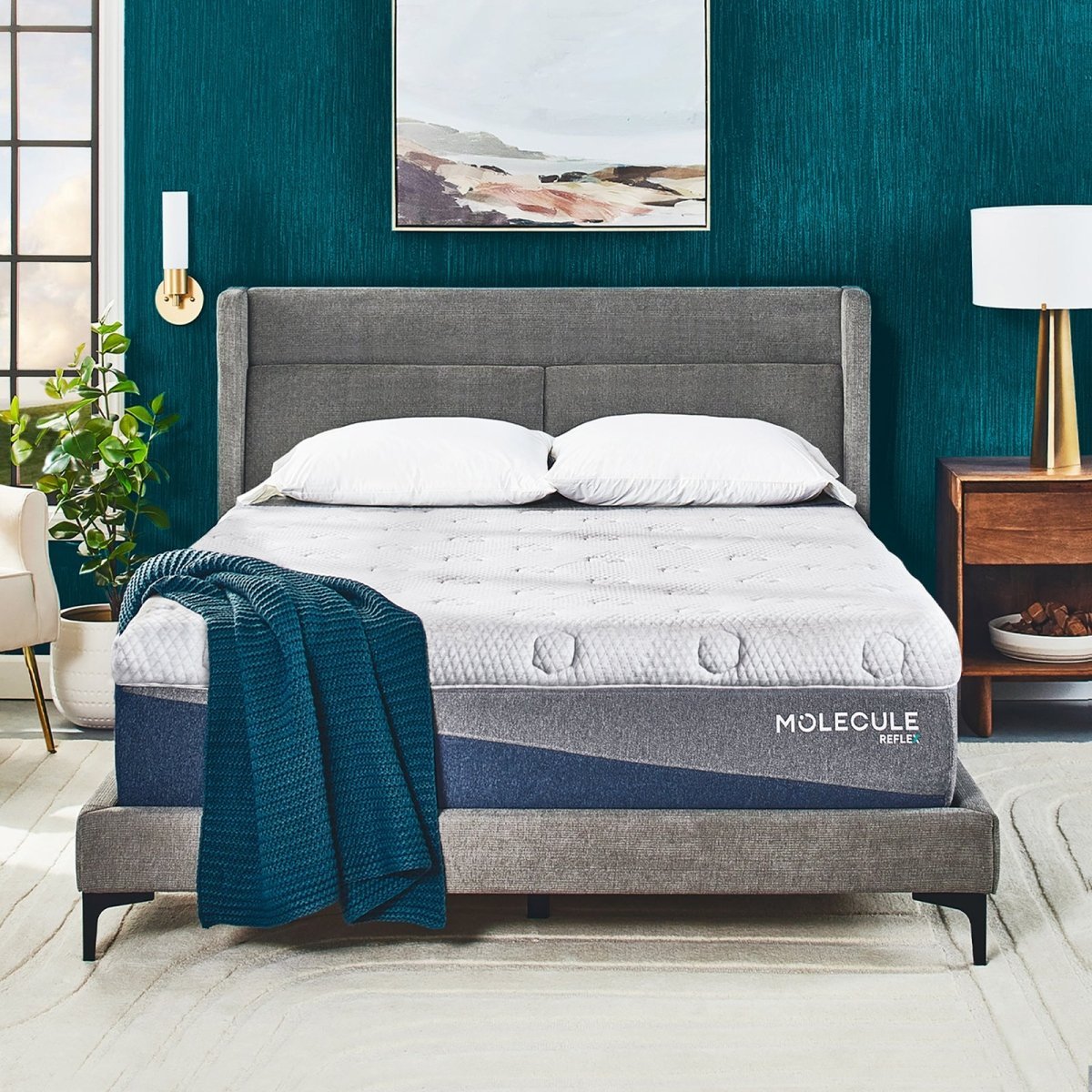
If slow-recovery cushioning sounds right, a contouring Molecule Reflex 12" Foam Embrace leans into deep pressure relief. If you toss, turn, and need help repositioning sore joints, a balanced build like the Moonlight Classic 12" Hybrid adds the bounce that makes turning over easier. The Sleep Foundation emphasizes the same theme: prioritize pressure relief and the support your body needs, rather than a single "best" material.
Should you pick a soft or firm mattress for swollen joints?
For actively swollen or sensitive joints, an overly firm mattress can backfire — a slightly softer, contouring surface usually feels better during flare-ups.
Firmness is a trade-off, not a virtue. Here's how it shakes out:
Firm can help — but isn't for everyone. Firm support may suit lower-back arthritis, but NCOA notes it can feel too hard and press painfully into swollen or sensitive joints. Skip very firm if you have inflamed knees, hips, or shoulders that flare.
Very soft can backfire too. A bed that lets your spine sag also makes it harder to push up and turn over — rough for stiff mornings. Skip very soft if you need help getting in and out of bed or already feel "trapped" at night.
Medium-firm is the safe middle. It cushions the pressure points while keeping your spine aligned, which is why it's the most-recommended starting point.
Because flare-ups change what feels good week to week, comfort is personal — and worth testing rather than guessing. Our complete guide to testing a mattress before buying shows how to evaluate a surface against your own pressure points.
One trust note: a mattress can ease discomfort, but persistent or worsening joint pain deserves a conversation with your doctor — no bed is a substitute for medical care.
Does osteoarthritis need a different mattress than rheumatoid arthritis?
Possibly — osteoarthritis often tolerates slightly firmer support, while rheumatoid arthritis, with inflamed joints, usually feels better on a softer, more contouring surface. Treat this as guidance to test against your own comfort, not a hard rule.
The reasoning comes down to mechanism. Osteoarthritis is largely mechanical "wear-and-tear" of cartilage, so steady support that keeps joints aligned can feel reassuring. Rheumatoid arthritis is inflammatory, meaning joints can be swollen and acutely tender — and a surface that presses into them feels worse, so more contouring usually helps. AARP reflects this general pattern in its firmness guidance.
Important caveat: no peer-reviewed trials compare mattresses head-to-head by arthritis type. This is extrapolated expert guidance, not proof — and your comfort on the day matters more than the label on your diagnosis. The point isn't to find the "osteoarthritis mattress"; it's to use your type as a starting hypothesis, then trust how your joints actually respond. Better sleep tends to support overall emotional health and daily comfort, which makes getting the feel right worth the effort.
How does your sleep position factor into the choice?
Side sleepers usually need a slightly softer surface to cushion hips and shoulders, while back and stomach sleepers do better with firmer support. Your position decides where pressure concentrates.
Position changes the geometry of contact:
Side sleepers load the shoulder and hip hardest. They need enough give for those joints to settle in without bottoming out — too firm creates sharp pressure exactly where arthritis hurts. The Sleep Foundation notes side sleepers often prefer a slightly softer feel for this reason.
Back sleepers need the surface to fill the lumbar curve while supporting the hips — a balanced medium-firm usually nails this.
Stomach sleepers need firmer support so the midsection doesn't sink and bow the spine, which strains the lower back and neck.
If you sleep on your side and wake with shoulder or hip soreness, our guide on how the right mattress supports back health covers the alignment side of the equation in more depth.
Translating all of this — firmness, material, position, arthritis type — into one mattress is where most people get stuck. The fastest way through is to find your firmness in our quick quiz, which turns your sleep habits into a personalized shortlist.
Can an adjustable base ease arthritis pain?
An adjustable base lets you raise the head and knees into a "zero-gravity" position that takes pressure off the spine and joints — genuinely useful during flare-ups and stiff mornings.
The benefit is positioning, not treatment. Elevating the knees slightly relieves lower-back tension; raising the head helps with breathing and reflux; and the gentle incline makes it easier to get in and out of bed when your joints are stiff first thing in the morning. The Arthritis Foundation stresses that a comfortable, supportive sleep environment is part of managing the sleep disruption arthritis can cause.
An adjustable base also lets you fine-tune your position night to night as flare-ups come and go — something a flat foundation can't do. If that flexibility appeals to you, the SmartFlex SF300 adjustable base offers head-and-foot positioning, and you can compare options across our adjustable mattress benefits overview.
Who should skip it: if you sleep flat comfortably and your pain is steady rather than flare-driven, the added cost may not earn its keep — a well-matched mattress alone may be enough.
What other features help stiff joints at night?
Foam response time, zoned support, and gel-infused cooling all influence how easily you move and how comfortable stiff joints feel through the night. These are the details that separate two beds of the same firmness.
Response time. Slow-recovery memory foam cushions beautifully but can make you feel "stuck," which is rough if arthritis already makes turning over hard. Faster-responding foam or a hybrid helps you reposition without fighting the bed — a point most guides overlook.
Zoned support. Some mattresses build in firmer support under the lumbar zone and softer give under the shoulders, targeting comfort where each part of the body needs it.
Gel-infused foam. Standard memory foam can trap heat; gel-infused versions are designed to run cooler while keeping their pressure-relieving feel. The Sleep Foundation lists temperature regulation among the features worth weighing.
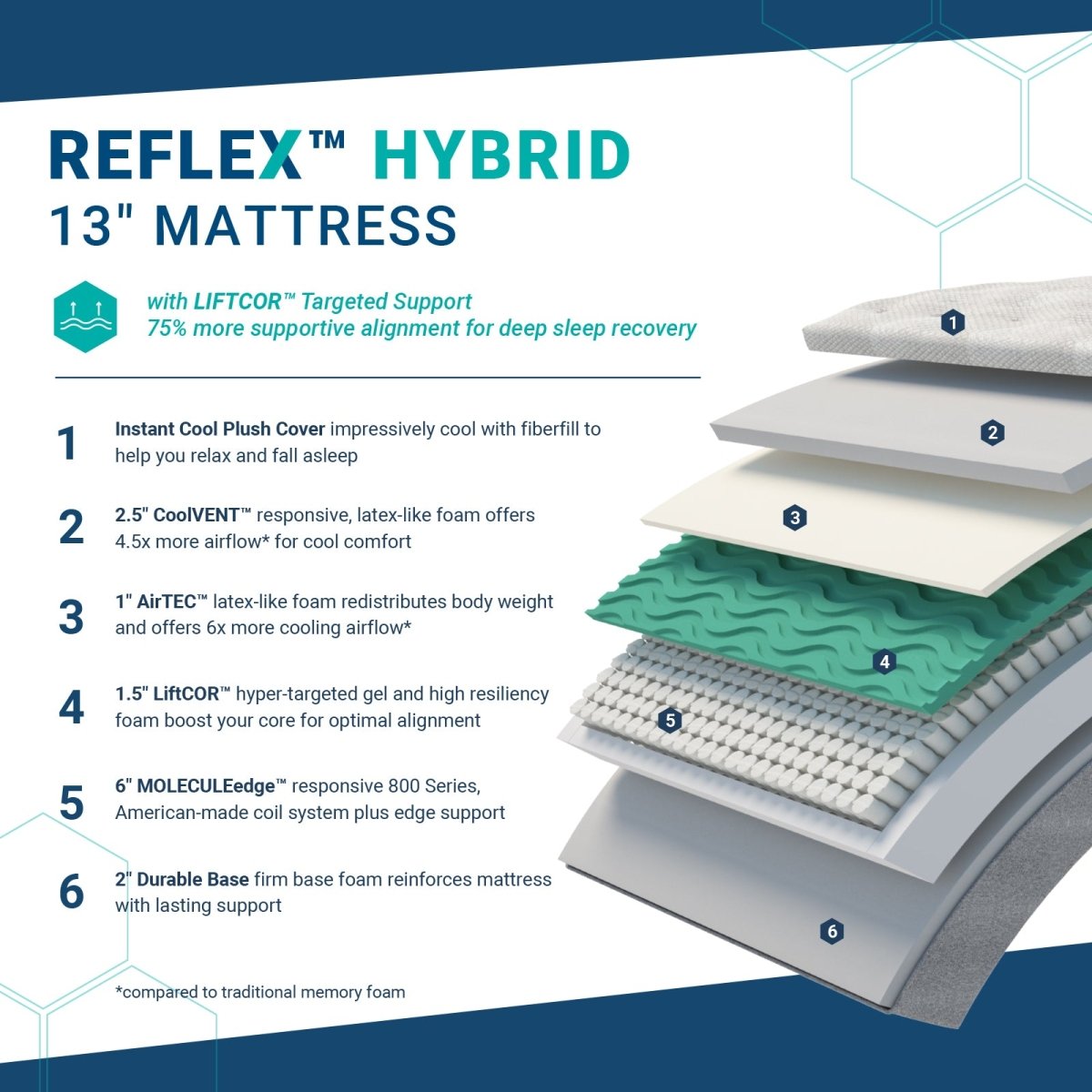
If you tend to overheat or shift positions all night, a build that pairs cooling with easy movement — like a Sandman 14" Cooling Hybrid — addresses both at once.
When is it time to replace your mattress for joint pain?
If you wake stiffer and sorer than when you went to bed, or your mattress sags and your old pain has crept back, it's likely time to replace it. Use this quick self-check:
Run the morning test. Do you wake up more sore than when you lay down — and does that soreness ease once you're up and moving? That pattern points to the surface, not just your joints.
Look for visible sag. Body impressions, a dip where you sleep, or a midsection that no longer springs back means the support is gone.
Notice pressure points. If your hip or shoulder wakes you, the mattress is no longer redistributing your weight.
Check the age. Many mattresses lose meaningful support after roughly 7–10 years; older beds rarely cushion joints the way they once did.
Compare against a good night elsewhere. If you sleep noticeably better in a hotel or guest bed, your mattress is the likely culprit.
While you're upgrading the bed, tighten up the rest of your sleep routine too. The Arthritis Foundation notes that Dr. Weiss recommends trying "sound machines, sleep masks or humidifiers" to build a comfortable sleep environment — small changes that compound with the right mattress for better rest.
How does Select Mattress Co. help you find your match?
We pair personalized in-store testing in Huntsville with a quick firmness quiz, free shipping, and financing so you can find the feel that fits your joints — without the guesswork of buying blind.
Because comfort with arthritis is so personal, the single most useful step is lying down on a few pressure-relieving builds yourself. Schedule a personalized in-store appointment in Huntsville to test medium-firm foam, latex, and hybrid options hands-on with our sleep team — find our location and book your visit here. Prefer to shop from home? You can browse the curated pressure-relieving collection online with free shipping on every order.
To make the investment easier, ask about our 0% APR financing from $29/month — and know that every mattress you buy helps a local family rest easier through our buy-one-donate-one mission. Want to talk it through first? Text or call our sleep team any time and we'll help you narrow it down.
A note for trust, not a sales line: a well-matched mattress can ease discomfort, but it isn't medical treatment. If joint pain is persistent or worsening, talk with your doctor.
Frequently Asked Questions
What firmness level is best for arthritis and joint pain?
Medium-firm is the best starting point for most people. It balances support with cushioning to keep your spine aligned while relieving pressure at the hips and shoulders. This reflects randomized evidence from chronic low-back-pain research, where a 2003 Lancet trial of 313 adults found medium-firm beat firm for pain and disability.
Is memory foam better than latex for arthritis?
Neither is universally better. Memory foam contours deeply and slowly for maximum cushioning, while latex is more responsive and tends to sleep cooler. AARP notes no mattress material has been shown to consistently outperform others — pressure redistribution matters more than the material name. Choose based on how each feels against your joints.
Do hybrid mattresses help with joint stiffness?
Yes, for many people. Hybrids pair foam over coils, and AARP notes the added bounce "can make changing positions easier, which may help if you have joint pain or stiffness." If turning over at night is hard, a hybrid's responsiveness can make repositioning sore joints noticeably easier than slow-recovery foam.
Should I choose a soft or firm mattress for swollen joints?
Lean slightly softer for actively swollen or sensitive joints. NCOA notes a firm mattress can feel too hard and press painfully into inflamed joints. A medium-firm-to-medium surface that contours usually feels better during flare-ups, while still supporting your spine enough to avoid sagging.
Can an adjustable bed base reduce arthritis pain?
It can help with positioning. Raising the head and knees into a "zero-gravity" position takes pressure off the spine and joints, and the incline makes getting in and out of bed easier on stiff mornings. It manages comfort during flare-ups rather than treating arthritis itself.
Why do some experts say no mattress material is universally best for arthritis?
Because the evidence is limited and indirect. A 2022 NIH/NCBI review found the mattress evidence base centers on low-back pain, not arthritis, and AARP notes no material consistently outperforms others. What's consistent is that pressure redistribution and a supportive medium-firm feel help — so fit beats brand or material every time.




Leave a comment
All comments are moderated before being published.
This site is protected by hCaptcha and the hCaptcha Privacy Policy and Terms of Service apply.